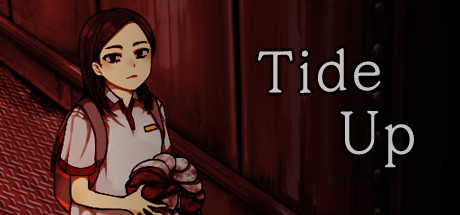
Tide Up is a haunting, surreal horror adventure developed and published by Gustav that uses minimalist design and symbolic storytelling to explore trauma, guilt, and the haunting echoes of memory. Built in RPG Maker, it may appear at first glance to be a simple pixel-art title, but beneath its modest surface lies a deeply emotional and psychologically disturbing experience. The game follows a young girl who awakens in a dark, unfamiliar forest with no clear sense of how she arrived there. Her only guide is the faint glimmer of scattered pearls—objects she must collect to find a way out. What begins as a straightforward task quickly unravels into a nightmarish journey through distorted memories, abstract spaces, and grotesque manifestations of fear and loss.
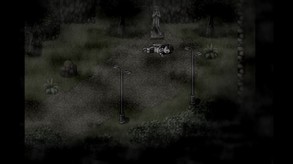
The world of Tide Up feels like a fever dream, where every area pulses with quiet menace. The environments are both beautiful and unsettling: overgrown forests lit by pale moonlight, empty corridors lined with faceless mannequins, and rooms that seem to shift and breathe as you pass through them. The pixel art, though simple, is meticulously crafted to evoke a sense of unease through contrast—childlike visuals paired with mature, even horrific, undertones. The use of darkness and color is particularly striking; areas bathed in soft blues and reds hint at emotional states rather than physical settings. The ambient soundtrack deepens this atmosphere, weaving low drones, whispers, and eerie environmental sounds that seem to echo from the protagonist’s subconscious. The result is an experience that feels claustrophobic, lonely, and deeply personal, as if the game world is not a place but a mind unraveling.
Gameplay in Tide Up focuses on exploration and subtle problem-solving rather than combat or fast-paced action. The player moves through interconnected zones, solving puzzles, finding keys, and uncovering fragments of story hidden in cryptic objects or dialogue. The central mechanic revolves around collecting pearls, which serve as both a narrative symbol and a tangible goal that marks progress through the game. Each new pearl brings the player deeper into the mystery, unlocking new areas and triggering strange encounters with hostile entities. These encounters often take the form of chase sequences or environmental hazards rather than traditional fights, heightening the tension while keeping the player vulnerable. The puzzles vary in design, ranging from pattern recognition to timing-based reflex challenges, all integrated smoothly into the eerie rhythm of exploration. None are overly complex, but they maintain engagement and reinforce the feeling of moving through an unstable, dreamlike space.
What sets Tide Up apart from other indie horror titles is its storytelling approach. The narrative is fragmented and deliberately opaque, encouraging players to piece together meaning from symbols, setting, and sparse dialogue. There are no long expository sequences or direct explanations—only scattered clues that suggest a dark family tragedy buried beneath the surface. Letters, imagery, and environmental cues point toward themes of domestic abuse, neglect, and psychological trauma. As you progress, it becomes increasingly clear that the world itself may be a manifestation of the protagonist’s guilt and grief. The recurring motifs of drowning, pearls, and broken dolls take on layered meanings, each representing memories and emotions that the protagonist has tried to suppress. The story unfolds less like a linear mystery and more like a therapy session within a nightmare, where each revelation feels like an emotional wound being reopened.
The game’s pacing supports this introspective tone. It is relatively short—typically completed in two to three hours—but this brevity works in its favor, preventing the tension from dissipating. Every room, every sound, every visual detail feels intentional, as though designed to maintain the fragile psychological pressure that drives the narrative forward. The lack of explicit direction means players must engage actively with the world to understand it, but this ambiguity also allows for interpretation. Some may see the game as an allegory for guilt and reconciliation, while others might interpret it as a portrayal of trauma-induced dissociation. This openness gives the story longevity beyond its runtime, as players continue to debate its meaning long after the credits roll.
Visually and technically, Tide Up makes impressive use of its limited engine. The art design blends innocence and horror seamlessly, using small pixel details to convey surprisingly powerful emotions. Characters may lack facial expressions, but their movements and surroundings speak volumes. The contrast between quiet, empty spaces and moments of panic or distortion heightens the psychological tension, making even simple encounters feel significant. The sound design deserves particular praise—each ambient effect and musical cue feels carefully chosen to reflect the protagonist’s emotional state. Silence often does more than sound here; long stretches of quiet punctuated by faint echoes or soft sobbing keep the player constantly on edge.
Tide Up is not a game for everyone. Its lack of clear answers and reliance on interpretation may frustrate players who prefer straightforward storytelling. Its pacing is slow, and its mechanics simple, which can make it feel more like an interactive work of art than a traditional horror game. But for those willing to embrace its atmosphere and engage with its emotional undercurrents, it offers a profound and memorable experience. It invites empathy, introspection, and discomfort in equal measure, exploring the quiet horror of memory and the way the mind can trap itself in its own guilt.
In the end, Tide Up stands as a haunting piece of interactive art—a minimalist journey into trauma and healing disguised as a nightmarish fairy tale. Its atmosphere lingers long after completion, its imagery seeping into memory like a dream that refuses to fade. Through its use of symbolism, sound, and understated storytelling, Gustav has crafted a game that transcends its technical simplicity to deliver something emotionally resonant and quietly devastating. Tide Up may be short, but it leaves a deep impression, reminding players that sometimes the scariest monsters are not found in shadows, but in the memories we cannot escape.
Rating: 8/10