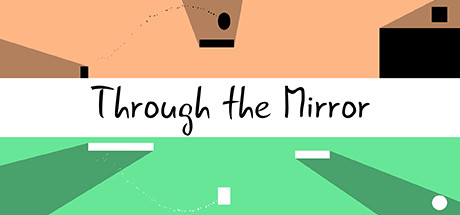
A hard, mind bending platformer based on imagination and quick reflexes.
Modeled estimate, not a reported figure. How we estimate →
Media

About
Stats
All-time low is the lowest price we've recorded for this game since we started tracking it.
Languages: English
Engagement
Hours played at review time, across 40 reviews with recorded playtime.
Reviews
Themes across 40 recent reviews and how positive each mention is. A keyword signal, not full sentiment analysis.
positive critical· bar length = how often the theme comes up
Reviews
Left and right? Up and down? Mere contrivances. Constructions of the mortal mind that hold no sway in the realms beyond the mirror.
Задумка игры интересная. Играл, в начале было интересно, но прошёл в итоге, как я понял, половину игры, а потом какое-то время не играл и скипнул, так как уже не было особого желания проходить дальше. Застопорился на одном уровне в середине, потратил какое-то количество попыток, но так и не прошёл)) Оценю на 6\10 только за задумку и неплохие уровни, которые проходил.
7/10
Through the Mirror, developed by Cleiton Oliveira and published by Volens Nolens Games, is a puzzle-platformer built almost entirely around a single idea: navigating two mirrored worlds at once. It’s the kind of concept that sounds simple until you actually try to execute it, and the game leans heavily on that tension—forcing players to constantly think in opposites, anticipate consequences, and adapt to a control scheme that deliberately works against instinct. The core mechanic defines everything. Movement in one world is mirrored in another, often inverted, meaning that a safe step in one space can create danger in the other. From the very beginning, the game teaches players to think beyond a single perspective, encouraging them to visualize both environments simultaneously. Early levels ease players into this dual-awareness, but the difficulty escalates quickly as hazards become more complex and timing becomes more critical. What starts as a simple coordination challenge evolves into a test of spatial reasoning and mental flexibility. Level design is structured to emphasize this growing complexity. Each stage introduces new obstacles or tighter sequences that demand more precise control and planning. The game rarely overwhelms with new mechanics; instead, it builds on its central idea, refining and intensifying it over time. This approach keeps the experience focused, but it also means that variety is limited. Players are not learning entirely new systems—they are becoming better at interpreting the same one under increasing pressure. There is a distinct satisfaction in mastering this system. When both sides of the mirrored world align and movement becomes intuitive, the gameplay flows smoothly, creating moments where the player feels fully in control despite the inherent difficulty. These moments are where Through the Mirror is at its strongest, demonstrating how a single mechanic, when carefully developed, can carry an entire experience. At the same time, the game’s reliance on repetition can be a double-edged sword. Progress often comes through trial and error, particularly in later levels where precision is essential. While failures are usually fair, they can feel frequent, especially when small mistakes lead to immediate resets. The relatively short length of the game helps mitigate this, preventing frustration from building too far, but it also highlights the limited scope of the experience. Visually, the game takes a minimalist approach. Environments are composed of simple shapes and clean lines, prioritizing clarity over detail. This makes it easy to track movement and understand spatial relationships, which is crucial for a game built on mirrored mechanics. However, the lack of visual variety or atmosphere can make the world feel somewhat sterile. There is little sense of place or progression beyond the increasing difficulty of the levels, and the aesthetic does not evolve alongside the gameplay. The audio design follows a similarly restrained path. Background music and sound effects are functional, providing feedback without drawing attention. While this supports the game’s focus on mechanics, it doesn’t add much to the overall experience. Over time, the repetition in audio can become noticeable, reinforcing the sense that presentation is secondary to gameplay. Another limitation is the lack of replay value. Once the levels are completed, there is little incentive to return. There are no alternative modes, additional challenges, or significant variations to explore. The game feels designed as a single, contained experience rather than something meant for extended engagement. This isn’t necessarily a flaw, but it does place a ceiling on its longevity. Ultimately, Through the Mirror is a game that succeeds by committing fully to its central idea. It offers a focused, challenging experience that rewards patience and spatial awareness, delivering moments of genuine satisfaction when its mechanics click into place. However, its limited variety, minimal presentation, and short runtime prevent it from reaching a broader level of depth. It stands as a strong example of how a simple concept can be explored effectively, even if it doesn’t expand far beyond its initial premise. Rating: 7/10
необычный дизайн, но при этом довольно интересная задумка
да
Первая игра в мире(нет)
просто хороший платформер с необычной цветовой гаммой
Through the Mirror (2017, разработчик и издатель — Cleiton Oliveira) — пазл‑платформер с зеркальной механикой. Суть: одновременно управлять двумя объектами (кругом и квадратом) в зеркально отражённых пространствах, проходить уровни, координируя движения. Ключевые особенности: 27 уровней (3 главы по 9 уровней); зеркальное управление: объекты движутся в противоположных направлениях; простая схема управления (клавиши WASD и пробел); минималистичная графика (чёрные платформы и шипы); атмосферный саундтрек (пиано, арфа, электроника); достижения Steam (3 штуки); одиночный режим; платформа: PC (Windows). Минусы: высокая сложность на поздних уровнях; необходимость запоминать маршруты методом проб и ошибок; устаревшая графика без стиля; короткие повторяющиеся музыкальные петли; нет регулировки громкости, только вкл/выкл; проблемы с интерфейсом (нельзя управлять меню геймпадом, фиксированный размер окна). Итог: необычный пазл‑платформер для любителей испытаний на координацию. Из‑за технических ограничений и цены лучше брать по скидке.
Mesmo que passar por esse jogo seja quase impossível, ainda recomendo. Pode ser frustrante por morrer repetidas vezes. É realmente desafiador. Tem controles simples, só as flechas. Pelo preço, você pode ter horas de jogo (a menos que você faça ragequit). Ou você pode comprar com promoções por alguns centavos, como eu fiz.
Related
Related
Trends
Modeled estimate over time, reconstructed from Steam's monthly review histogram.
Momentum
Pace estimated from the game's recent review growth (our daily snapshots) at its own sales-per-review ratio — a momentum signal, not booked sales.
Audience
Estimated from the language of this game's reviews — a proxy for where players are, not official Steam demographics.
Related
| Gothic Murder: Adventure That Changes Destiny | $12.5K | 66 | 97% | $11.99 |
| Pixel Town: Akanemachi Sideshow | $12.5K | 68 | 87% | $7.99 |
| Human-powered spacecraft | $12.5K | 887 | 94% | $0.49 |
| Salvor DEEP | $12.5K | 156 | 91% | $4.99 |
| Myha: Return to the Lost Island | $12.5K | 54 | 80% | $14.99 |
| The Legacy: The Tree of Might Collector's Edition | $12.5K | 79 | 94% | $9.99 |