Through Abandoned: The Forest is a quiet, deliberately minimal point-and-click adventure that embraces an older style of design, focusing on atmosphere and puzzle-solving rather than narrative complexity or mechanical variety. Developed by Igor Krutov and published by Conglomerate 5, it continues the broader Through Abandoned series’ approach of placing the player in a strange, fragmented world with little direct explanation, relying instead on exploration and observation to slowly piece together meaning. It is a game that feels intentionally stripped down, almost to the point of austerity, which both defines its appeal and exposes its limitations.
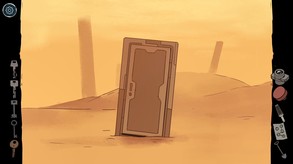
The gameplay is built around a static, first-person perspective where movement is handled through clicking between pre-rendered scenes. Each screen acts as a small puzzle space filled with objects to examine, items to collect, and clues to interpret. There is no free movement or real-time interaction; instead, the experience unfolds one frame at a time, giving it a slow, methodical rhythm that encourages careful attention. Progression depends on solving inventory-based puzzles, often requiring players to combine items or identify subtle environmental hints in order to unlock new areas. This structure will feel immediately familiar to players who have experienced classic browser-era or early PC adventure games.
What stands out most is the game’s atmosphere. The forest setting is not presented as a conventional natural environment, but as a surreal, almost dreamlike space that feels disconnected from reality. Locations are quiet and empty, with no characters to interact with and very little text to guide the player. This absence creates a strong sense of isolation, making exploration feel introspective rather than adventurous. The story, such as it is, unfolds indirectly through environmental details and the gradual discovery of new areas, leaving much of the interpretation up to the player. This approach can be engaging for those who enjoy piecing together fragmented narratives, though it may feel too vague for players who prefer clearer storytelling.
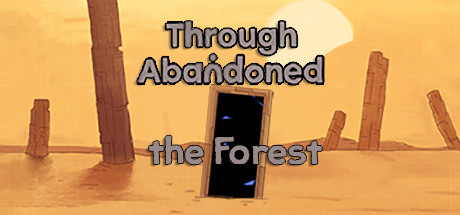
The visual design plays a significant role in maintaining this atmosphere. Each scene is hand-crafted with a soft, painterly style that emphasizes mood over detail. The environments often feel abstract, with unusual structures and compositions that reinforce the sense of being in an unfamiliar world. While the graphics are static and relatively simple, they are effective in creating a cohesive tone. Combined with subtle audio cues and ambient sound, the game achieves a calm, slightly eerie ambiance that carries much of the experience.
However, the same minimalism that gives the game its identity also leads to its most noticeable weaknesses. The puzzle design can be inconsistent, sometimes relying on obscure logic or requiring players to experiment through trial and error rather than clear reasoning. Without a hint system or strong visual cues, it is easy to become stuck, and the game offers little assistance in these moments. This can interrupt the flow of exploration, turning what should be a contemplative experience into one of frustration, especially for players unfamiliar with this style of puzzle design.
Pacing is another aspect that may divide players. The slow, deliberate structure can feel relaxing and immersive in short sessions, allowing players to absorb the environment and think through each puzzle at their own pace. Over longer periods, however, the lack of mechanical variety becomes more apparent. The gameplay loop—click, observe, collect, solve—remains unchanged throughout, and the absence of new systems or evolving challenges can make the experience feel repetitive.
The game’s relatively short length works as both a strength and a limitation. It prevents the repetition from becoming overly exhausting, but it also means that the narrative and mechanics never fully develop beyond their initial concepts. The experience feels more like a single chapter or fragment of a larger story rather than a complete journey, which may leave players wanting more depth or resolution.
Despite these shortcomings, Through Abandoned: The Forest succeeds in delivering a very specific type of experience. It captures the essence of minimalist adventure design, focusing on mood, exploration, and quiet problem-solving rather than spectacle or complexity. It is not a game that aims to challenge the genre or introduce new ideas, but rather one that refines a simple formula and presents it with a consistent tone.
For players who appreciate slow-paced, atmospheric adventures and are comfortable with abstract storytelling and occasionally opaque puzzles, it offers a modest but engaging experience. For others, its lack of guidance, limited variety, and minimal narrative structure may make it feel underwhelming.
In the end, Through Abandoned: The Forest is best approached as a small, self-contained exploration of mood and puzzle design. It does not aim high in terms of scope, but it remains consistent in its vision, offering a quiet journey through a strange and isolated world that lingers more in tone than in substance.
Rating: 6/10