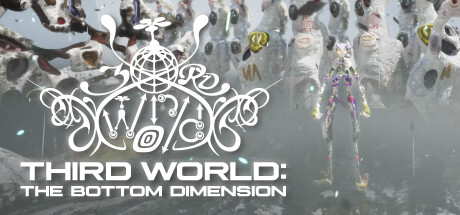
Explore a fantastical world designed by visual artist Gabriel Massan & collaborators that draws on their experience of Brazil’s colonial legacy. This art-game is an experiment in non-linear storytelling and collaborative world-building that invites you to open your mind.
Revenue comes from in-game items and microtransactions, which our price-based model doesn't estimate. Copies below reflect the player base, not paid sales.
Media

About


Genres
Stats
Languages: English, Portuguese - Brazil
Reviews
This 'game' is a companion piece to an exhibition by Serpentine Galleries in London, and is as textbook an example as can be found of artists attempting to create games while having absolutely no comprehension of how they are made, how they work, why people play them, or what elements about games have catapulted them into being the largest entertainment medium on the planet. A criticism of the game's artistic merits and the messages its creators intend to convey would be pointless, as I did not tolerate this software long enough to form a comprehensive opinion. The technical faults are so outrageous that it was completely insufferable: Hideous UI; appalling menu interface; broken and slippery geometry; VERY rudimentary sound design (generic Unreal Engine sound effect for jumping..?); the game runs like tar (ultra settings Tekken 7, but this attempt at the Avant Garde is unsurvivable for my machine apparently); and it also commits the cardinal sin of being a walking simulator. Despite the alarming snippet about NFTs, it seems it's really just talking about taking screenshots and uploading them either for other players to see, or for people to see in the gallery in Kensington. I certainly don't think this is a scam game by any means, just a well-intentioned but poorly executed art project.
Related
Related
Trends
Concurrent players on Steam, sampled daily since tracking started.
Playing this game from the perspective of both an artist and a gamer, I have a few thoughts about the experience: - All of the character designs are incredibly detailed and beautiful, which feels super unique and elegantly tied to the artist's Brazilian background. - The areas that you inhabit are incredibly dense, alongside the game as a whole being really badly optimised, leading me to pretty constantly use the "arrow" tool that shows you where you're supposed to go. This transformed the discovery of the spaces into a pretty bleak slog, simply walking from figure to figure, snatching up new parts of the story. - Although the majority of the game is walking from place to place, which I did kind of expect from a video game that's primarily an artwork (see LuYang's recent video games that have far less interactivity than this work) in the second area, Sòfo, there are several game elements, from dodging the attacks from a mini boss to jumping from rock to rock down into a cavern. It was a shame that these more game-y elements weren't more present throughout, although because the game did not run well at all for me, these game-y moments were a bit more of a struggle than they should have been. After watching an interview with the artist this was of course intentional, where in the first level you're an explorer and in the second you're a full-on coloniser, so there are more enemies in the second half, but even so it would have been nice to see more game elements in the first level, perhaps some platforming or otherwise. I've had amazing experience exploring spaces in games like Grow Home, Abzu and Everybody's Gone to the Rapture, so this doesn't have to be any different just because it's an art game. - I really liked the overarching story, putting you in the position of the coloniser and polluter (similar to many of Danielle Brathwaite-Shirley's art video games, forcing you into the position of aggressor). Perhaps there is a way of progressing through this game by not stealing resources, but I was hesitant to discover it due to the previously mentioned bad optimisation. So for me, there was no way of "winning" without simultaneously "loosing", akin to games like Papers Please and This War of Mine. It kind of lacked the depth of those other titles though, it felt like there was only the one option, rather than providing the player with a series of morally grey choices. Perhaps that's the point, though, that whatever you do you're the coloniser, and there's no way of changing that, other than to simply put down the controller and refuse to play. - The cut scenes throughout were really great, especially in Sòfo, and did make me wonder whether this game should have been a film instead, or just given more time to be better optimised before being released to the general public. Perhaps the game runs incredibly well on the systems that they have at Serpentine North Gallery in London, UK, where this work is being exhibited, but I've not been able to visit in person to confirm this. Also I wonder whether there are accompanying films at the exhibition, fleshing out this world more than the game was able to do for me. In any case, I'm sure that experiencing the game within the exhibition would be the "optimal" way of engaging with it. - A lot of the information about the world, alongside the different equipment that you pick up along the way, is kind of forgettable as it's only said to you once, without any real tutorial as such. I got by, but to really make an impact story-wise it would have been nice to have understood slightly more, with the world-building occurring throughout the game-play experience. Overall I would definitely recommend the game, as perhaps you have a better PC than I do to play it. It offers a rich and vibrant world to explore with some really interesting character models, but the poor optimisation does make an impact. A lot of video games made by artists aren't really games at all, due to them being made by one-person teams with little to no funding. I feel like, due to funding from Serpentine, this experience has had the time and space to be transformed into a game of sorts, not one that I would return to, but something that was an interesting experience nonetheless. I'm interested to see what Gabriel Massan makes next.
This game is a technical disaster, never have I seen a video game so poorly designed in my entire life. - The game fails to utilise even half of my computer's resources, putting an unnecessary burden on my CPU. This results in awful performance. - The game maxes out VRAM after just minutes of gameplay, the textures are extremely compressed and obviously dont require more then the 8gb of VRAM on my card - One of the game's characters causes a nauseating visual bug when approaching them, this is extremely distracting and breaks any kind of immersion this game had. - The specs listed on steam are just... Wrong... You don't need 50+ gigabytes of space to run the game. - Multiple untextured squares litter the landscape As for game design, this game doesn't have any. I say this with 0 hyperbole, this is not a game, it's a test environment full of textures and models. - Navigating the space is frustrating to say the least, the level is not built with the user experience in mind, your character will constantly become stuck on dips in the terrain or poorly implemented collisions. - There is no motivation to go anywhere other than your constantly ticking down health pool that forces you to find purple blobs around the level (some of these are even clipped into the landscape, these were obviously rushed and have no design philosophy behind them) - I get the feeling this was a vanity project for the dev, I don't believe any concern was taken to make the user experience pleasant or fun. This serves it's purpose I suppose, It's just supposed to sit in an exhibit and be presented to people who have never played a game in their lives... And sell NFTs I guess... The art of the game are probably it's strongest (and only) appealing feature. The UI and models are very visually unique, the inspiration from game like zelda is clear and the models look to be inspired by creatures from No Mans Sky. The graphics however are once again a technical mess, the developer went into unreal and turned up every default option to it's maximum setting with no regard for visual style. The over-abundance of post effects make looking around the level impossible, volumetric rays washing out everything they touch and lens flares bigger and brighter than our actual sun. And that's all i could stomach... Please don't encourage the development of this kind of pretentious e-waste.
hope is not nft/crypto game
I was a bit wary of trying yet another art game, as those tend to be wonky to say the least. I am a contemporary artist and a game designer myself, and progressively have grown tired of seeing half-assed pseudo "games" that troll game mechanics that they do not understand. However, this is not the case here. One can tell that despite its technical flaws (the game is terribly badly optimized and would certainly not run on the recommended specs, I tried it on my laptop and even the home screen does freeze), it tries to do its job as being beautiful. The art direction is very beautiful and expressive, which at least would be what to expect from an actual art game. I am not too sure about the sound design. I also happen to be Brazilian and be a fan of LYZZA, so I was interested in what was coming by, unfortunately it’s not very polished and sounds are just superimposed on each other. As it is, this game is just a nice prototype with good text, art direction and exploring direction, but really does suck mechanically and technically. I do suspect that the ways art projects are funded (that is, with very little money, and very little time) is mostly responsible for this. Players must be aware that artists do not have as much time as classic developers to put in their art. The economy of contemporary art demands pretty short-timed production, so iteration really isn’t an option in that type of field. This is already exceptionally polished given the time frame, and I understand the artists to have preferred to privilege an aesthetic approach as the work is shown as a spinoff of an exhibition. It is sad for people who cannot afford to just go to London see what’s up at the Serpentine. One of the reasons I do like games as an artist is that distribution doesn’t depend on museums and that basically anyone with a computer can run your content, but this being so badly optimized even my computer struggles to run it. Given the thematic about Black-Brazilian experience and the whole connection with the favelas that the group of artists have, I do find that quite sad, as it’s really hard to afford proper hardware in Brazil if you aren’t in the richest 20% of the population (and I’m being optimistic here). I still do recommend it as it’s a fun little experience to play starting from a GTX 1060 with 6GB of VRAM. It still stutters, but it’s manageable. It is nothing like omg new mechanics, it’s basically a linear action-adventure platformer without much action, but some interesting aesthetic takes. It would deserve to have a more fully-fleshed gameplay loop and better animations, but well.
good game if you focus more on the lore, extremely jank and poor from a gameplay point of view. fun fact, i got it to crash in under 10 minutes and refused to touch it after the crash. the rest of the time was spent trying to ♥♥♥♥ around in the settings because of how poorly optimised it is
very beautiful and unusual, but this is definitely not a game, but a juicy picture to admire for a short time
Third World: The Bottom Dimension isn't a game, it's an art exhibition that's been dumped on Steam, presumably because the local art galleries took out a restraining order on the "artists" who had no other choice but to pay Valve $100 to dump this on Steam. All you do in this bit of software is look around some pre-baked scenes and reveal some narrative, which is cool and all and might even be awesome if it was structured as a game. It's somewhat irrelevant to discuss the quality of the art here, this is a game review, not an art review, and, unfortunately, Third World is not a game, which is really a massive problem. For those unfamiliar with what actually makes something a game, a "game loop" describes the interaction and feedback a gamer has when playing a game. Tetris, for example, has a game loop where a random block appears, the gamer interacts with the block to position it, and then the game decides if that finishes a row or not, increases the players score if any rows were completed, then gives the gamer another block to position. Counter-Strike has a game loop where a player seeks another player, tests their skill against that player by shooting them or being shot, the computer rewards the player if they win, and then if the player survives, they repeat that loop. There's no loop here, no true interactive feedback. It simply is not a game, it cannot be "played". So, should you download this non=game "art installation"? Is this one of the best of the 100,000+ products on Steam? Third World: The Bottom Dimension has no upfront cost, but just because something doesn't have a price tag doesn't mean it's valuable. This isn't worth downloading. While this won't cost you any money, you get what you pay for, and sometimes, even when the game is free, it's still not enough. I can only recommend things which are games to gamers, regardless of price.
Görsel sanatçı Gabriel Massan ve işbirlikçilerinin Brezilya'nın sömürge mirasına ilişkin deneyimlerinden yararlanarak tasarladığı fantastik bir dünyayı keşfedin. Bu sanat oyunu, sizi zihninizi açmaya davet eden, doğrusal olmayan hikaye anlatımı ve işbirlikçi dünya inşası üzerine bir deneydir.
Open your [b]mind[/b], percieve the message. Close your mind, do you feel [b]consciousness[/b] ? Are you ready ? No need for words. Take it.
Related
| Soulmask | $22.2M | 22K | 77% | $29.99 |
| Emberward | $2.3M | 3.8K | 97% | $19.99 |
| Kindergarten 2 | $1.7M | 5.7K | 98% | $14.99 |
| Vagante | $1.6M | 5K | 89% | $14.99 |
| Blazing Beaks | $1.1M | 2.6K | 83% | $14.99 |
| Journey to the West | $774.2K | 1.7K | 81% | $19.99 |