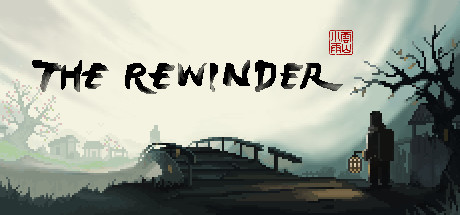
The Rewinder is a story-driven puzzle adventure that distinguishes itself through its strong connection to Chinese folklore, supernatural mystery, and memory manipulation. Developed by MistyMountainStudio and published by Gamirror Games, the game follows Yun, a rewinder with the unusual ability to communicate with spirits and enter the memories of other people. Rather than using this power only to advance the plot, the game incorporates it directly into its puzzles, making the investigation of past events an essential part of both the narrative and gameplay.
Yun’s journey begins after the Spirit Wardens send him to investigate a soul that cannot reincarnate. His search eventually takes him to an abandoned village that was thriving only several years earlier. The settlement is now filled with restless spirits, while a mysterious woman remains inside a teahouse waiting for someone who may never return. From this unsettling beginning, Yun must uncover what happened to the village, why its inhabitants disappeared, and how the events of seven years ago are connected to the supernatural problems affecting the present.
The ability to enter memories provides The Rewinder with its most interesting gameplay concept. Yun can explore moments from the past and influence the intentions of people involved in them. Instead of simply traveling backward in time and directly changing everything, the player manipulates circumstances that can encourage characters to make different decisions. This creates puzzles based on understanding relationships between actions and consequences. Progress frequently requires observing what characters want, determining what prevents an event from occurring, and finding a way to redirect the sequence.
This approach gives the puzzles greater narrative relevance than conventional item-based adventure-game obstacles. A solution can reveal another piece of a character’s history while simultaneously changing the direction of a memory. The difficulty is generally manageable, with the game placing greater importance on observation and experimentation than exceptionally complicated logic. Players looking for extremely demanding puzzles may find some challenges relatively straightforward, but the accessible design prevents the mystery from constantly losing momentum.
Chinese mythology is central to the identity of the experience. The story incorporates supernatural figures and concepts associated with death, spirits, reincarnation, and the afterlife, including the Spirit Wardens, Ox-head and Horse-face Guardians of the Beyond, and Tudi Gong. These elements establish rules for the supernatural world rather than appearing merely as references. They also give the adventure a cultural character that feels noticeably different from fantasy games built around more familiar European mythological traditions.
The visual presentation complements this direction exceptionally well. The Rewinder uses pixel art influenced by traditional Chinese ink painting, producing environments that are simultaneously retro and atmospheric. Rural landscapes, old structures, supernatural locations, and deserted spaces establish a quiet sense of isolation. The game rarely needs excessive horror imagery because the emptiness of the village and presence of spirits already create tension. There is an underlying sadness to many environments, suggesting that the player is exploring the aftermath of human tragedy rather than simply wandering through a haunted location.
The storytelling benefits from gradually reconstructing that tragedy. Instead of immediately explaining why the village was abandoned, the game encourages players to discover the answer through exploration, conversations, memories, and supernatural encounters. Characters who initially seem like small pieces of the mystery become increasingly important once their experiences are understood. This structure gives emotional weight to the memory sequences because Yun is not investigating an abstract historical event; he is uncovering decisions, misunderstandings, relationships, and regrets that affected individual lives.
The atmosphere does not remain relentlessly grim. There are lighter character moments and touches of humor that prevent the adventure from becoming excessively oppressive. This tonal variety works well because it makes the inhabitants feel more human and gives the darker developments greater impact. The narrative is ultimately concerned as much with people and their choices as it is with ghosts and supernatural forces.
Its limitations mostly come from the same focused approach that makes the game appealing. The adventure is relatively directed, so players expecting extensive freedom or a large open world will not find that kind of experience here. Puzzle enthusiasts searching for relentlessly difficult challenges may also consider its mechanics somewhat forgiving. Likewise, the deliberate pixel-art presentation prioritizes atmosphere and artistic identity over technical spectacle. None of these characteristics seriously undermine the game, but they make its intended audience clear.
The Rewinder works best for players who appreciate narrative adventures where exploration and puzzle solving contribute directly to understanding the story. Its memory system gives familiar point-and-click concepts a clever supernatural variation, while its folklore provides far more than an attractive backdrop. The mystery of the abandoned village continually encourages further investigation, and discovering how individual characters contributed to its fate gives the story an effective emotional foundation.
As a complete experience, The Rewinder succeeds through cohesion rather than sheer scale. MistyMountainStudio builds its puzzles, mythology, visual style, characters, and central mystery around compatible themes of memory, consequence, death, and unresolved history. Gamirror Games serves as the publisher, while the developer’s distinctive artistic and cultural direction gives the title an identity that is easy to remember. It is an engaging choice for anyone interested in atmospheric puzzle adventures, Chinese mythology, supernatural mysteries, and stories in which understanding the past becomes the key to changing the present.
Rating: 9/10