
The Magician's Research
The MAGICIAN'S RESEARCH is an RPG style IDLE - INCREMENTAL - MANAGEMENT Game! The Experiments of the Mage's Guild have broken out and you are tasked with tracking down, researching, and disposing of them before they can disturb the nearby towns or multiply!
Estimated lifetime revenue
Free-to-play
Revenue comes from in-game items and microtransactions, which our price-based model doesn't estimate. The player count below is how many people own it, not what they spent.
Est. players
60
people who own it
Reviews
0
Review score
58%
5.8/10
Concurrent players
1
read Sep 18, 2026, 15:00 UTC
Followers
About
About the game

The MAGICIAN'S RESEARCH is an RPG style IDLE - INCREMENTAL - MANAGEMENT Game! The Experiments of the Mage's Guild have broken out and you are tasked with tracking down, researching, and disposing of them before they can disturb the nearby towns or multiply!

- Choose between 10 MAGICIANS with unique bonuses to play.
- Unlock Support slots to use more than a primary mage to make a party of bonuses.
- Click Enemies, Heal Yourself, Use Potions!
- (Or use the AUTO-CLICKS if you’d like).
- Auto Move that magically toggles on for you while you’re away. (If you want).
- Expand your power through the SKILL TREE by leveling your Magician
- Donate ARCANE SCRAP to the Mage’s Guild for Rewards.
- Complete numerous QUESTS and Campaign Quests that reset Weekly and can be found as extras!
- Spend Liquid Gold on Magical Upgrades.
- Trade Runes, Dragon Eggs, and Cursed Amulets for even more power!
- Combine Ingredients in the Alchemy Lab to create buffs!
- Gain Reputation with each Faction for extra PERMANENT bonuses!
- Go back in time resetting to only HALF of your max Stages reached NOT STARTING AT the very beginning!
- Gain 2 different prestige currencies for extra power, plus permanent bonuses.
- Choose between pushing and prestiging more or less often depending on your preferences.
- Earn Trophies
- Unlock Badges for MORE Permanent rewards!
- Offline Gains for up to 7 Days!
- Offline progression to help with busy lives!
- Idle chest that gives some extra loot for your play time!
- Daily Login Rewards
- Weekly Login Rewards
- Leaderboards!

You’re on your way to the Mage’s Guild as the newest recruitee when you run into Aliseth the Master of the Mage’s Guild. He informs you that somehow the magical experiments of the mage’s tower have broken free and seems to be magically multiplying by the moment. He needs every able body out to research and then dispose of the experiments before they can disturb the nearby towns or duplicate infinitely!
You, being the eager Mage-ling you are, decide to oblige your new boss and head off into the fields of the surrounding areas to slay some mighty beasties!

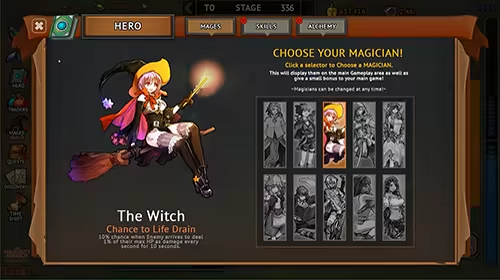
Well… Now that’s the question isn’t it? Choose from one of 10 magician’s, each with their own special bonuses! (You can change at any time). Play as the one you think looks the best, the one with your favorite bonus, or be a changeling and flip around as they suit your situation.
You can then unlock SUPPORT slots where you can use other mages but at half of their normal power. This lets you combo some of their bonuses to create your custom gameplay style. Unlock up to 4 additional slots for a total of 5 mages to mix together.

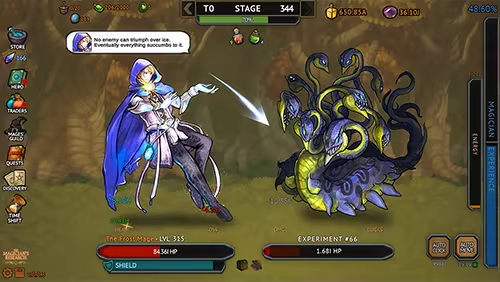
Well you and the enemy both have health, so be careful! You’ll want to try to stay alive to get to the next experiments to research. You can tap the enemy with a left click to do damage. If your health gets low you can click heal yourself or drink a health potion! Use DPS potions for extra short term damage and energy regen for extra clicking!
(Automation: You can also use the auto-clicks that will click for you - There's even a Mage that can help those do more damage! The auto-move will attempt to progress you forward every 30 minutes until you’re defeated again).

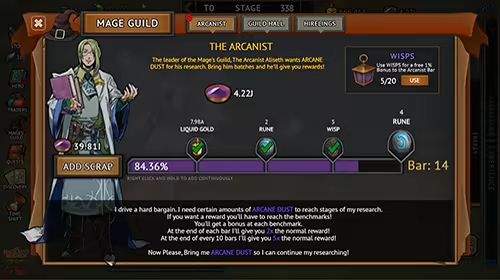
You give it to someone who wants it, but don’t give it for free! Make sure they give you something to make you a better Mage!! Always try to be a better Mage.
At the TRADERS you can trade Liquid Gold, Runes, and Dragon Eggs. These all have different advantages. Dragon Eggs give powerful buffs with low caps and the unspent Dragon Eggs stay with you through Time Shifting. Runes give small bonuses but you'll find a lot more of them, you trade them to the fairies for Boons that stack up and up and up. Liquid Gold powers up your Spells. These are your main source of progression, they give you health, damage, defense, loot bonuses, clicking, and more!
Every TRADER gets a PERMANENT bonus too! They're called WINDOW FACTIONS. You get them just for using the Traders! You trade in enough goods with them and they just give you a bonus. Trade in enough liquid gold and you'll find yourself finding more. Trade in enough Dragon Eggs, they might magically not reset when you time shift!
Watch out for that Curse Eater though, she may be cute but she’s super scary! Who puts a bow on a pink skull? ...Who has a pink skull?? She'll take your Cursed Amulets you find and trade them in for all kinds of extra loot. They're cursed so they like to cling to you, they don't reset on Time Shifting either.


Go find some more experiments! Get stronger, do more research. Level up and get some skill points. Spend them to get good bonuses from the SKILL TREE.
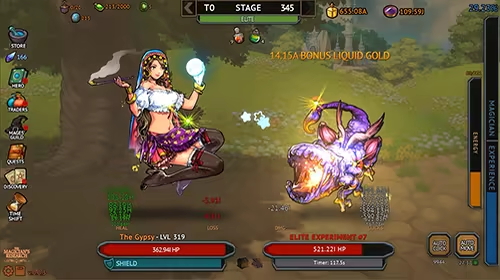
Be careful of those ELITE EXPERIMENTS though. They might have some cool rewards but they hurt!
You don't need to be here all the time either! Tab out, take a break, come back and see your Mage doing his or her job fighting the baddies! Spend all that loot they have saved up for you and watch them burst down some enemies in a haze.

In The Magician's Research when you Rebirth/Prestige it's called Time Shifting and you only go back to HALF of the max stages you've ever reached instead of starting ALLLL the way back at the very beginning. Why waste all that time climbing back up? You still get to burst down some mobs and feel epic but then you get to get back to the fight and whack some baddies much sooner!
The prestige currencies in the game come in two shapes and both stack up everytime you Time Shift:
You have one that rewards your pushing called KNOWLEDGE POINTS. You get these for every new Mage Level you reach. Every first time you reach a new Mage Level you get one of these bad boys to add to the pool. These increase your experience yields for ALLL future runs. So essentially every time you get more knowledge points you level faster getting you back up to where you were faster!
Then you have your "farming" reward called MONSTER POPULATION. You get these for EVERY stage you pass every Time Shift you go through! They increase your health and damage permanently for all future runs too. You even get bonuses to that run's gains every 250 Stages you pass. AND after you time shift and you start at that HALF your max stages EVER reached, you get a starting booster bonus to your gains so you're not missing out on what you would have earned if you had started from Stage 0 (and you get it much quicker than if you had to start all over again!).
Between the two currencies you can shoot back up and push push push. If you're starting to slow down you have two options. If you're really tenacious you can wait for another mage level or more Liquid Gold, Runes, etc and push out a few more Stages or hit a burst of power and grab some more Knowledge points, or time shift and try for more Monster Population and store your bonuses that you gained from your last run. Time Shift more, or less ,depending on how you like to play, slow and steady, fast and furious, or somewhere in between!
This game is all about playing how you like to play and finding your own pace and strategy for your idle and management experience. We hope you enjoy!