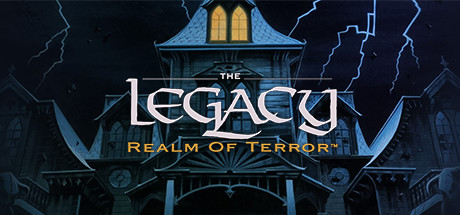
For the past 400 years, your evil ancestors have been planning this housewarming party just for you. And it's one party you may never leave! This horror classic blends elements of RPG and Adventure games in a one-of-a-kind, spine-tingling package.
Modeled estimate, not a reported figure. How we estimate →
About
Stats
All-time low is the lowest price we've recorded for this game since we started tracking it.
Languages: English
Reviews
A gaming man’s [i]What Remains of Edith Finch[/i]. A swan song of a company specializing in text adventures, bought and forced into making an RPG by the changing reality of the expanding early 1990s gaming market. Between simpler, more accessible (not to mention more 3D) [i]Alone in the Dark[/i]s, and soon to be released [i]Clock Tower[/i]s and [i]Resident Evil[/i]s of the world, this genre chimera of a game was doomed to fail. Way too much RPG complexity for the general crowd of the budding survival horror genre. Way too adventure game-like for your average witness of the Computer Role Playing Game™. Well, fuck them all. [i]The Legacy[/i] is a fantastic experience. Generations of magical perversity layered on top of each other in a house on the shores of New England, for you to untangle. A classical American double feature – Poe slowly bleeding into Lovecraft. Hard but not perplexing, complex but not complicated. Like with any game that is not a part of the default mainstream of the week, in order to enjoy it for what it is and accept its rules, you need to put yourself into a certain mindset. What mindset exactly? Let me illustrate from the contrary. In the year of our Lord 2008, a co-founder of the blessed independent video game journalism outlet Rock Paper Shotgun, Alec Meer [url=https://www.rockpapershotgun.com/retro-the-legacy-realm-of-terror]returned to the Winthrop manor[/url] for sentimental reasons of having played this game as a teenager. Here are some of his impressions: [quote=Alec Meer] So there I am, punching a zombie in the face by clicking on these two little buttons, dealing out a minute amount of damage per successful thump. The zombie only hits back once every ten seconds or so, but whenever he does he demolishes a good quarter of my health bar. Bloody zombies. Bloody Legacy. Now I remember why I never finished this game – it’s ridiculously hard.[/quote] Now, had Mr. Meer taken a passing look at the game’s manual (as he undoubtedly did back in 1994), he would have seen what it suggests. Run and hide. It is reiterated multiple times. And it is crucial to understanding [i]Legacy[/i]. Because it commits the ultimate blasphemy of all CRPGs. It offers no experience for killing enemies. You get it only for progressing through the game: solving puzzles, exploring new areas and winning major battles. Which in turn means you don’t need to fight except as an absolute last resort or when forced in order to progress. Furthermore, those ‘bloody zombies’? If you explore the ground floor thoroughly, you will find a [spoiler]Voodoo Fetish[/spoiler] that makes the living dead like you. And – guess what? You can do that for 80% of enemy types in the game. There’s always some cool way to dodge a fight – you just have to figure it out. These guys made a poor deal with an eldritch god – now they’re trapped in here – free them! Those fellas you can dress up as! These things deal sound damage, so find a boom box, repair it, blast Sad FM so that it’s audible from Pluto and see them gawk in confusion! Fighting is also an option – but you have to maneuver and gear up. [quote=Alec Meer]Against one wall of the cellar, there’s a weird blue glow. I should know better really, given this game’s sadistic tendencies, but I stumble into it. Zap! And I’m in another dimension, just like that. It’s hard not to admire Legacy’s excess. It’s crude and confused, but it’s got a portal to another dimension in the basement. More games should have portals to other dimensions in the basement. Trouble is, my weak-minded soldier freaks out about his reckless hopping through time and space, his mental anguish somehow removing another quarter of his severely diminished health. Well, this is no fun. Forced fear’s an odd mechanism to have in a game. True, it’s something to consider other than the usual health and energy and ammo, and is a potentially ingenious way of ensuring the player doesn’t feel like some detached super-human meathead. At the same time, if what’s scaring the character isn’t remotely unnerving the player, it’s just an annoyance. A beastie jumping out of the darkness I could understand, but I – and thus my character – [i]chose[/i] to walk through that blue hole in the wall. So this kind of punishment just feels unfair, like I'm being penalised for having fun. Well, one thing I'm not doing is having fun.[/quote] Mr. Meer doesn’t know the half of [i]Legacy’s[/i] excess. As the game goes on, you’ll learn to open these portals all throughout the house yourself – and it becomes a means of fast travel. The damage you take from entering the astral plane is a kind of tax you have to pay for this luxury – unless you find a way to evade it, that is. Now, had Mr. Meer taken the trouble to skim the manual, he would have known that the ‘forced fear mechanism’ is not there for cheap thrills of a penny dreadful nature. Instead it’s a hidden stat that checks and (if the check fails and your character enters shock) levels up every time you see something out of this world. The stat is designed with three purposes in mind: 1. To make fighting high-tier enemies harder at the beginning of the game where they will hinder your actions by the very fact of their existence. 2. To simulate the slow adaptation of your character to all the occult sodomy at play. 3. To make you feel cool when Բելֆեգոր surfaces out of its own pocket DMT dimension in all its power and glory, and all your protagonist feels about that fanfare is weary contempt. But why do I keep mentioning the manual? Am I supposed to [i]read[/i] before I play? Imagine you invite a couple of your intimate friends on a beautiful spring Saturday morning for a weekend-long game of [i]Twilight Imperium[/i]. And then you go like: ‘Know what? Fuck the rules! Whoever rolls higher on 3d6 wins.’ 15 seconds later you’re all scratching your heads as to how it came to be that this game sitting on top of all lists of best 4X boardgames brought you here where the one thing you’re not doing is having fun. [quote=Alec Meer]Wandering through the blue ether, I’m suddenly approached by a two-mouthed Lovecraftian demon thingy. If only I could talk to the monster. But I can’t. I can only punch and punch and punch and punch and punch. It does nothing as I do so, least of all die. Around thirty punches in, it decides to finally take a bite out of me. Just the one. And that’s it. All over. I don’t bother to reload a save game this time, and with a sigh I exit.[/quote] Let’s not judge Mr. Meer too harshly: after all, back in 2008 he was a professional game journalist. The paths we take when we’re young… Now, I too have a story to tell about a foray into the ‘blue ether’. Stuck and looking for ways to progress, my heroine (one of the premade options provided by the game), Ms. Charlotte Kane, the CEO of Golgotha Holdings, ventured in there – a zebra-skin Zulu shield in her left hand, a samurai cuirass covering her chest, an anti-magic circlet on her forehead, sun smiling upon her with eternal malice. She met an elder god roaming the void, and she cut it down with a katana infused with ancestral spirit. She didn’t have to. She felt like it. All those objects were acquired via puzzles or following clues. Review character limit is upon us, so I’ll be brief. -Use guides if necessary, but better take notes. Puzzles are simple, all you need is thorough exploration, attention and memory. It’s not a Sierra adventure. -You [b] need [/b] magic to beat the game (manual warns you). So pick whatever stats you want, but save some for arcane arts. -Savescum without shame. -The game sports WASD movement and an automap. It’s 1992, they’re catering to us casuals. -I haven’t mentioned the drama and the characters. But not for lack thereof. The first sentence of this review is there for a reason. Let’s join our hands in communal prayer that the prodigal Mr. Meer visits his ancestral home once again. Meanwhile, run and hide. And then go forth and kill.
let the DOS wash over you. for real though hard game but really fun to unravel the story and gameplay. There is no difficulty setting which is huge plus balancing seems to be really well done with any class being a solid choice.
It goes without saying that, where games that have a particular horror setting involving the more cult-like behaviours that often give way to excellent storytelling in said scary genre of movies and books, I have an unusual fondness when it comes to such titles as what can be seen here with The Legacy: Realm of Terror, least not of all because of it primarily being what many would consider to be an 'ancient' game of sorts from the MS-DOS days as it were! Seeing how this is also an old-fashioned RPG of sorts, bearing a vague resemblance to the classic Dungeons & Dragons games with it's labyrinth structure and facing wandering monsters that can either be fought or evaded in whatever manner you deem fit for the specific encounter, noting that this game features early 3D graphics when exploring the map unlike D&D's 2D labyrinths, no doubt approaching this from the perspective of somebody who has easy access to a vast array of modern games at their disposal is already going to make this a hard sell for most here in 2024. But yes, what exactly is this old DOS game all about anyhow? Seeing as games like these were made during what I would call more 'experimental' times back when the average game developer didn't really have a solid grasp on what made a game truly appealing to not just hardcore nerds of the time but to a much wider casual audience, the 'golden ticket' to a big hit for said company as it were, hence various games from the late 80's up to around the late 2000's being a huge promoter of various creative games where one didn't know what kind of fun and wacky experience they'd get during these more brave times and all! So, not delaying any further on delivering what many are keen to hear, The Legacy: Realm of Terror centres around a solo character who has been given a large manor as per right of inheritance, although this very much becomes evidently a 'trap' of sorts as you find the massive estate to not just be haunted but downright dangerous as each of the floors of this mansion are roaming with various enemies, each having their own manners of attacks to harm you as well as defences/weaknesses to work out when doing combat with them although, as noted before, combat is often a matter of whether you have the resources to safely fight them whether by means of ammo or enough health/healing items to get by with close-range combat. To touch upon what makes this an RPG though, starting off is a fun little character selection screen whereby you can choose one of eight characters who will represent you in-game via traditional RPG manner, by which I mean it shows each of the character's five stats to highlight their strengths and weaknesses. Going into this further, Stamina is the most simple with increasing how much HP your character has. Next is Willpower that determines how much 'magic' you can use before requiring replenishing via magic crystals spread throughout the mansion as well as how easily 'scared' your avatar is of new foes and needing more time to get accustomed to them. Strength is attributed to the 'melee' builds that focus on pummeling enemies with the use of fists and blunt weapons alongside being able to force most doors open through sheer strength, followed by Dexterity that focuses on more agile skills such as the usage of sharp blades and ranged firearms as well as dodging more efficiently. Finally there is Knowledge which emphasizes the usage of spells and amount of magic power/health restored from magic crystals/first aid kits alongside repairing of electronics and mechanical items. Since the latter-three all each have four sub-skills of their own, most of these have their uses when it comes to the general gameplay throughout your time spent inside of the mansion, although I could not figure out for the life of me for what purpose 'Lift' has in this game, also similarly useless is the 'Throw' skill that does indeed allow you to throw items further away but, outside of a couple of specific cases where throwing a specific type of item at an enemy will instantly kill them, I couldn't find much of any reason to invest my hard-earned experience into those two sub-skills. On that note, how does gaining experience work in a RPG with a horror setting anyhow? Since practically almost all RPGs encourage the player to engage in combat, either to become tougher with increased levels and more gold for the purchasing of more powerful gear to take on bosses that then allow access to even more dangerous areas, so on and so forth? Well in an interesting twist to the genre, you do not gain ANY experience at all by fighting enemies of all sorts in the entirety of the game as, instead, you must read all manners of letters, documents and even maps spread throughout this game's 11 floors in order to gain sufficient experience to improve either one of twelve sub-skills or one of the five core stats (Strength/Dexterity/Knowledge help to raise all sub-skills slightly alongside it's main stat whilst for Stamina/Willpower it is exclusively the main stat) to further improve your character's chances of survival, something that is quite unusual when game progression via 'levelling up' is tied directly to the exploration of a large environment and reading important notes about the overall plot and lore of the game gives you said needed experience to face off against more dangerous threats the further you stray away from the 1st floor of the mansion. No doubt this makes replaying The Legacy: Realm of Terror quite the fun experience as far as experimentation goes, although it does go without saying that I do have some issues with this game, one of them quite serious that can essentially make all progress pointless. To start on the more nitpicky side of things though, the graphics do look interesting enough for a DOS title of it's time but, as is to be expected for a game that originally released over 30 years ago, one could hardly call this genuinely terrifying as graphics have advanced to a point where, for some, the graphics don't gel so well with more modernized gamers that fancy realistic portrayals of various monsters, something I can't fault MicroProse for back when they were developing this horror RPG on quite limited technology at the time. Also The Legacy: Realm of Terror is guilty of having to not just backtrack a lot to get items of various random purposes for puzzles, but the actual puzzles themselves are, more often than not, quite obscure and most will likely need a guide at some point to get them truly started in this old DOS game! Though my harshest criticism comes from the game design itself in relation to progressing the story, seeing as the game's stats presents it's gameplay in such a manner that various different classes are completely valid ways of playing the game that offer not just differing challenges of combat but also unique solutions to puzzles that require the use of certain sub-skills to progress more efficiently. The keyword there being 'more efficiently' as most puzzles do allow you to use items to get where you need to go and the few instances where you have to use a sub-skill often means wasting time or resources to give it more attempts, however one crucial puzzle at the 4th floor requires the use of a particular spell to cast on three potent items to make more progress, something my melee/ranged character had no access to due to low Knowledge/Willpower. It's a shame at that, since I had picked up multiple spells but could not even attempt to cast them, resulting in something of a 'softlock' scenario for me, which is somewhat disheartening after putting a good solid few hours into my 3rd character that I finetuned the skills I wanted, however if you have at least some background knowledge to explore this game properly, then I can say that it is at least a decent retro look into older horror RPGs that, with some patience, can be it's own rewarding experience and offer decent gameplay for a DOS title of it's era!
I first played this game back in '93 when it came out. My entire family (save for mom) got into it, and it took forever to finally figure out how to beat it -- like at least a decade! Definitely gives you a creepy sense of isolation playing this, and even with dated graphics, the monsters give you the heebie-jeebies something fierce. Perfect old-school horror game, 10/10 recommended!
A fun little game, can be tricky in some parts but you can't help but go back for more. If you don't mind the old school interface and presentation then it's worth giving The Legacy a try. For my First Impressions of The Legacy: Realm of Terror, check out my video here: https://youtu.be/WXqEZUOmVuE
It is like Call of Cthulhu Eye of the Beholder. It is good.
this game is one of my ultimate favorites. Many hours spent learning all the tricks and solving the puzzles.
Played this back in '93; glad it's on Steam. This is quite a difficult game, but there are multiple ways to navigate the story. It's frustrating at times, and you can 'ruin' your adventure/character with point allocations that ultimately only work for ONE thing in the story and never really needed again. Points are limited, items are limited. There's no respec for your character, and some of the objects for puzzles are easy to overlook. There's 'combat', but it's not really an action game. All that being said though, this is still my favorite horror game (maybe a tie with original Alone in the Dark). If you love horror, haunted houses, cosmic-horror/Lovecraftian monsters - check this one out.
This is a brutal, fascinating fusion of dungeon crawler and horror that feels ahead of its time. Taking the Wizardry-like formula and dropping it into a haunted hospital setting was a genuinely fresh idea in the early ’90s, and it still stands out today for its eerie atmosphere and unsettling tone. Exploration feels tense and unpredictable, and there’s a real sense of being thrown into the deep end with little guidance. The UI is definitely cumbersome and adds to the challenge - sometimes more than intended - and not having the manual readily available makes the learning curve even steeper. That said, if you’re willing to push through the rough edges (and maybe lean on a walkthrough here and there), there’s a rewarding, unique experience underneath it all. It’s a snapshot of early PC horror experimenting with ideas that would evolve later in the decade, and for fans of retro games, it’s a fun and memorable ride.
The Legacy: Realm of Terror, developed by Magnetic Scrolls and MicroProse and later published by Ziggurat, is an early attempt at blending role-playing mechanics, adventure-style puzzles, and horror into a single cohesive experience. Released during a time when genre boundaries were still being explored, it stands as a bold but imperfect experiment, one that aimed to create tension through atmosphere and systems rather than spectacle. Even today, it remains an intriguing example of how developers approached horror before the genre settled into more recognizable forms. The premise places the player inside a sprawling mansion inherited under mysterious circumstances, only to quickly reveal itself as a trap filled with supernatural threats. The story unfolds gradually through exploration rather than direct exposition, relying on environmental clues, scattered notes, and the player’s own curiosity to piece together what has happened. There is no strong narrative guidance, which enhances the sense of isolation but can also leave players feeling uncertain about their objectives. This ambiguity contributes to the atmosphere, making the mansion feel unpredictable and dangerous. Gameplay is built around a hybrid system that combines real-time combat, character progression, and puzzle-solving. Unlike many role-playing games of its era, the player controls a single character, which reinforces the feeling of vulnerability. Combat requires managing weapons, spells, and positioning while dealing with an interface that can be cumbersome, particularly under pressure. At the same time, the game includes traditional RPG elements such as stats, skills, and inventory management, creating a layered but sometimes disjointed experience. These systems offer flexibility in how challenges are approached, but they do not always integrate smoothly. One of the most distinctive features of the game is its approach to horror. Instead of relying on sudden scares, it builds tension through atmosphere and psychological elements. Characters can react to fear, becoming panicked or temporarily unable to act when confronted with certain threats. This mechanic adds a layer of unpredictability to encounters, making them feel more dangerous even when the player is otherwise prepared. The mansion itself plays a significant role in this, with its interconnected rooms, hidden areas, and shifting sense of scale contributing to a constant feeling of unease. The environment is one of the game’s strongest aspects. The mansion is large and varied, with multiple floors and areas that gradually open up as players progress. Exploration is encouraged, but it often requires careful navigation and attention to detail. Puzzles are scattered throughout, some of which are logical and rewarding, while others can feel obscure or unintuitive. This inconsistency can lead to moments of frustration, particularly when progress depends on trial and error rather than clear reasoning. The interface is another area where the game shows its age. While it was innovative at the time, allowing players to customize window layouts and manage multiple systems at once, it can feel clunky by modern standards. Interacting with inventory, switching between actions, and managing resources often requires more effort than expected, especially during combat situations where timing is critical. This can disrupt the flow of gameplay, turning otherwise tense moments into exercises in managing the interface. Despite these issues, the game succeeds in creating a memorable atmosphere. The combination of limited guidance, psychological mechanics, and environmental storytelling results in an experience that feels genuinely unsettling. The absence of modern conveniences forces players to engage more deeply with the world, which can be both rewarding and demanding. The presentation, while dated, contributes to this effect, with visuals and sound design that reinforce the sense of isolation and danger. The balance between its different gameplay elements is uneven, but it is also what makes the game unique. It does not fully commit to being a traditional RPG, nor does it function entirely as an adventure or horror game. Instead, it exists somewhere in between, drawing from each genre without fully mastering any one of them. This lack of refinement can make the experience feel inconsistent, but it also gives it a distinctive identity that sets it apart from more polished titles. Ultimately, The Legacy: Realm of Terror is defined by its ambition and willingness to experiment. It attempts to create a complex and immersive experience using the tools available at the time, and while it does not always succeed, it leaves a lasting impression. Its atmosphere, sense of isolation, and innovative ideas make it a noteworthy entry in the evolution of horror and role-playing games. In the end, it stands as a compelling but challenging experience, one that rewards patience and curiosity while demanding tolerance for its dated systems. It may not appeal to everyone, especially those accustomed to modern design standards, but it offers a unique glimpse into a formative period of game development. Rating: 7/10
Related
Related
Trends
Concurrent players on Steam, sampled daily since tracking started.
Momentum
Pace estimated from the game's recent review growth (our daily snapshots) at its own sales-per-review ratio — a momentum signal, not booked sales.
Related
| Alexa's Wild Night | $2K | 52 | 83% | $4.99 |
| Mini Words: Top Games | $2K | 83 | 83% | $1.99 |
| Elder Chaos | $2K | 84 | 46% | $0.99 |
| Eron | $2K | 235 | 66% | $0.49 |
| Try to survive Today | $2K | 79 | 68% | $1.09 |
| _dive | $2K | 65 | 63% | $1.99 |