HG101: "Like the beloved games of bizarre gaming auteurs, you kind of have to meet it by its own standards and not your own, and even then you may not like it. But if you do end up liking it, you may end up liking it a lot."
Modeled estimate, not a reported figure. How we estimate →
Media

About
Stats
All-time low is the lowest price we've recorded for this game since we started tracking it.
Languages: English**languages with full audio support
Engagement
Hours played at review time, across 43 reviews with recorded playtime.
Reviews
Themes across 43 recent reviews and how positive each mention is. A keyword signal, not full sentiment analysis.
positive critical· bar length = how often the theme comes up
Reviews
Well. If someone tried, he could actually make a very good game out of this. But all the forced sarcasm (which is funny if not unnecesarily self-destructive), lack of story consistency, trying to be alternative at all costs and all the bugs and unfinished features in the game make it trash, sadly. The game wanted to be an alternative, independent satiric game made mostly by one person, who is clever enough to see many mistakes of the present world, focused on the apocalypticism that is not clear whether he criticize or is fascinated by. It is a satiric game targeting some cliche of game industry and lamenting about how humanity is screwed (it is, by the way, i just hope that people realizing this like the author of this game will not help to self-destroy it, unnecessarily - knowing the bad news and dangers does not mean one should jump into them and help the hell end it). The most annoying were the time-consuming elements like bugs that make you start again, scenes you cannot click through although you have watched them several times already, not working entering shortcut into the first chapter or missing menu and controls in many scenes (you learn how to go to menu later but when repeating the previous scenes you find the controls are not working in them). Also I was forced to play the alternative ending twice, although the game knew that I already went through it - for your knowledge, there is no way to skip it or exit it - that is how amateurish the game is. I spent three times more time on the game than was necessary, just because of its trashy bugs and unfinished stuff. Once I entered the game and wandered around, I started to fall out of map repeatedly and had to force quit the game from windows several times. Many things are not working how they should be, even in the tutorial scene. If you don't want to restart the game many times, better do not explore the edges too much. I had fun in the alternative ending until I had to repeat it several times. I also liked the castle scene, pretty moody and artistic, nicely done. Unfortunately, probably from my mistake, I couldn't find the entrance to castle, climbed through buggy rocks to the other side of prohibited area and walked around the castle, taking nice screenshots, found a stairway that was not possible to climb and found myself stuck again by the same invisible wall, just from the other side of it. I could talk longer about the funs and bugs I experienced, but time is precious so I finish now.
what the ♥♥♥♥ just happened
Lack of mouse invert option. Developer denied implement it ever at all.
Nice One
amk oyunu 7 saattir düşüremedi bir kartı (yazdıktan 10 dk sonra düştü)
💋
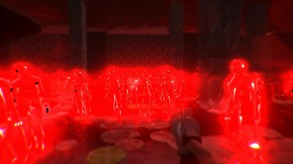
The Last Dogma, developed and published by Sasha Darko, stands as one of the most unapologetically strange and ambitious indie experiments to appear on Steam. It is a first-person narrative adventure that deliberately bends the boundaries between game, art, and philosophical provocation, weaving an experience that feels more like a fever dream than a structured story. At its core, it presents itself as a surreal exploration of morality, religion, politics, and human delusion, framed through a fractured lens of absurdist satire. It is a work that resists categorization; it is not simply a shooter, nor an adventure game, nor a walking simulator, but a chaotic blend of all three. Darko’s vision is not to comfort or entertain in any conventional sense—it is to disorient, to provoke, and to leave the player questioning what they just witnessed. The story follows Sebastian Arise, an ATF agent operating in an alternate 1999 where reality and madness have become indistinguishable. What begins as a routine mission to track down arms dealers quickly unravels into a journey that transcends time and space, leading the protagonist into a medieval world filled with cults, demons, and prophetic insanity. The narrative leaps between timelines and worlds without warning, often blurring the lines between dream and reality. Its structure feels intentionally fragmented, forcing the player to piece together meaning from scattered symbols and cryptic dialogue. Rather than offering a coherent plot, The Last Dogma immerses you in a hallucinatory spiral of conspiracies, apocalyptic visions, and biting social commentary. It becomes clear that the story is less about what happens and more about how it makes you feel—alienated, unsettled, and strangely curious. From the moment you begin, it is apparent that The Last Dogma takes joy in subverting expectations. It mocks both itself and the player, frequently breaking the fourth wall or shifting tone without warning. One moment, it feels like a grim, nihilistic descent into human corruption; the next, it erupts into parody, mocking authority, religion, and even the very idea of storytelling. The dialogue is filled with satirical jabs and surreal exchanges, some absurdly funny, others deeply unnerving. This unpredictability gives the game its distinct personality, but it also creates dissonance—moments of brilliance are often buried beneath uneven pacing and scenes that feel more cryptic than profound. It’s a narrative that embraces chaos as both theme and method, and while that makes it compelling as an artistic statement, it can also make it frustrating to follow. Visually, the game occupies an eerie, liminal space between the real and the abstract. The environments are dark, sparse, and unsettling, filled with distorted architecture and strange symbolic imagery. There is a rawness to the presentation that feels intentional; textures are rough, geometry imperfect, and lighting harsh. This visual austerity lends the game an atmosphere of decay and dreamlike unease, reinforcing its sense of otherworldliness. At times, though, the ambition exceeds technical execution. Some levels feel unfinished or lack visual cohesion, and bugs or clipping issues can occasionally break immersion. Yet, there is an undeniable artistry beneath the rough edges—a kind of grim beauty that emerges from the game’s imperfections, as though the world itself is collapsing under the weight of its ideas. The gameplay mirrors this same philosophy of contradiction. It operates as a mix of exploration, light combat, and environmental interaction, but none of these elements are conventional or refined. You wander through desolate landscapes, interacting with objects, deciphering cryptic messages, and occasionally engaging in minimal combat. The controls are serviceable but stiff, and progression can feel obtuse, as the game rarely provides clear objectives or guidance. This lack of structure can be both maddening and fascinating. It challenges players to approach the experience on its own terms—to navigate not by logic, but by instinct. For those willing to engage with its ambiguity, this design choice can heighten immersion, transforming confusion into discovery. For others, however, it may simply feel like aimless wandering through disjointed spaces. Sound design and voice work play a crucial role in sustaining the game’s surreal tone. The voice acting, though inconsistent in delivery, contributes to the atmosphere of absurdity, often blurring the line between sincerity and parody. The soundtrack is a strange collage of ambient tones, industrial drones, and unnerving melodies that shift unpredictably with the scene. Sometimes the music builds tension; other times, it undermines it entirely, as though the game itself were mocking your attempt to take it seriously. The use of silence is equally deliberate—long stretches of quiet punctuated by sudden bursts of sound amplify the sense of disorientation. These audio contrasts heighten the game’s dreamlike quality and reinforce its central motif of instability, both thematic and emotional. As an experience, The Last Dogma is divisive by nature. It is a game that thrives on contradiction: it is both profound and absurd, thought-provoking and nonsensical, immersive and alienating. Some will find its experimental narrative fascinating—a rare example of interactive media embracing avant-garde storytelling without compromise. Others will see only an incoherent, technically flawed project that mistakes confusion for depth. The truth lies somewhere in between. The game’s greatest strength is its commitment to its own madness, its refusal to dilute its vision to fit player expectations. It is not an experience that seeks to entertain in a conventional sense; it seeks to challenge perception, to evoke discomfort, and to linger in your thoughts long after the credits roll. In the end, The Last Dogma feels less like a video game and more like a digital hallucination, a piece of outsider art crafted by someone unafraid to risk ridicule in pursuit of expression. Its themes of faith, apocalypse, and human folly unfold like fragments of a broken sermon, leaving the player to interpret what meaning—if any—remains. For those willing to surrender to its chaos and embrace its imperfections, it offers a strangely captivating journey through darkness and absurdity. For everyone else, it may feel like an indecipherable experiment that refuses to explain itself. Either way, Sasha Darko’s creation stands as a bold testament to what can happen when a developer uses the medium not to conform, but to confront. The Last Dogma is not easily loved or understood, but it is impossible to forget. Rating: 5/10
дерьма дерьмом бляяяяяяяя
Cool game
Ucuza alıp kartlarını satıp kar elde edebileceğiniz tarzda bir oyun. Bunun gibi oyunları öğrenmek isterseniz incelemelerimde çok daha fazlası var.
Related
Related
Trends
Modeled estimate over time, reconstructed from Steam's monthly review histogram.
Momentum
Pace estimated from the game's recent review growth (our daily snapshots) at its own sales-per-review ratio — a momentum signal, not booked sales.
Audience
Estimated from the language of this game's reviews — a proxy for where players are, not official Steam demographics.
Related
| Sci-Futa | $5.9K | 86 | 80% | $1.99 |
| Angels Cove | $5.9K | 106 | 75% | $2.99 |
| Chaos Sector 混沌宙域 | $5.9K | 97 | 82% | $1.99 |
| JARS | $5.9K | 177 | 69% | $1.79 |
| ZeGame | $5.9K | 86 | 95% | $3.99 |
| Levitation Simulator | $5.9K | 70 | 80% | $2.99 |
Related
| 7 Days to Die | $425.3M | 403.7K | 87% | $44.99 |
| Euro Truck Simulator 2 | $421.6M | 932.6K | 97% | $19.99 |
| Mount & Blade II: Bannerlord | $309.8M | 294.1K | 88% | $49.99 |
| Palworld | $279.6M | 449.9K | 94% | $20.99 |
| The Forest | $254.8M | 678.7K | 96% | $19.99 |
| Project Zomboid | $239.1M | 461.1K | 94% | $19.99 |