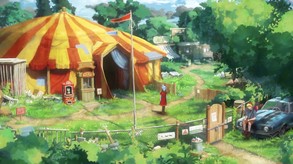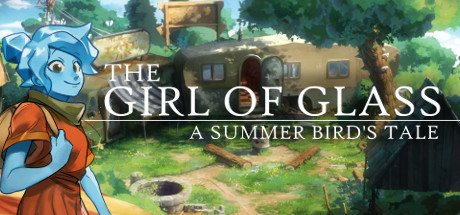
Join Kristal as she sets out on her journey to better understand herself and the world around her in a point and click adventure game, featuring turn-based combat and hand-painted environments.
Modeled estimate, not a reported figure. How we estimate →
Media

About


Stats
All-time low is the lowest price we've recorded for this game since we started tracking it.
Languages: English**languages with full audio support
Engagement
Hours played at review time, across 44 reviews with recorded playtime.
Reviews
Themes across 44 recent reviews and how positive each mention is. A keyword signal, not full sentiment analysis.
positive critical· bar length = how often the theme comes up
Reviews
The Girl of Glass: A Summer Bird's Tale is a one-of-a-kind game, for better and worse, but while it has its rough spots its various parts all add up into something special that I'm very glad I played, and that's stuck with me ever since I finished. It's a hybrid of point-and-click adventure and turn-based tactical battler, and while those two genres have rarely (if ever) mixed gracefully before now, the combination mostly works here. Kristal, the main character, is made of glass--in her daily life she is fragile, unable to defend herself and forced to use her wits to stay hidden from danger, though laying low is at odds with her outsize personality, passion for life, and strong sense of right and wrong. In her dreams she confronts threats as an avenging-angel figure in a vivid fantasy landscape, summoning imaginary companions to help her face down the fears that plague her in the waking world. The two gameplay styles--light-hearted point-and-click puzzle solving and aggressive fantasy combat--don't always mesh perfectly, but for this story, at least, they make sense together. The combat is *hard*, and sometimes frustrating, but if you stick with it it's absolutely beatable; you can also adjust the difficulty if you'd rather move through it quickly. Still, the game's inventive character design really shines during the combat sections, with a whole array of fantastical creatures from golems to elementals to floating eyeballs alternately opposing and aiding Kristal in each battle. The hand-drawn art is fantastic across the board, with scenes often looking like something out of an animated film, and the soundtrack is beautiful; the story is moving and the characters, especially Kristal, are memorable. The lack of voice acting (aside from the wonderful narrator) detracts a bit from the immersion factor, but not enough to be a dealbreaker. All in all it's a sweet, lovely game that I'd recommend to anyone who can handle a more experimental approach, and who doesn't mind puzzling and combat served side-by-side.
A The Girl of Glass a point 'n' click kalandjátékot keveri a körökre osztott harccal, mindezt egy festői grafikai környezetben. Ezeknek a stílusoknak a keveréke teszik igazán érdekes színfolttá 2020-ban. Ami persze nem biztos, hogy mindenkinek bejön, én viszont marhára élveztem, számomra az év egyik nagy meglepetése lett! A point 'n' click rész nem fogja az agyunkat leégetni, szépen lehet haladni, legfeljebb nem minden rejtett tárgyat találunk meg. A történet alapvetően aranyos, néha meglepően mély gondolatokkal teli, a második fejezettől kezdve viszont élesen elkülönül a két játékstílus. A narratíva minősége kicsit egyenetlen, de alapvetően nem ront az összképen. A látvány pedig tényleg hajaz a nyíltan inspirációként megjelölt Ghibli-mesékre. A karaktereket is csak dicsérni tudom, minél jobban belelátunk a szereplők fejébe, annál érdekesebbé válnak, a problémáikkal, múltjukkal együtt. A körökre osztott harcok nincsenek túlbonyolítva lehetőségek terén, viszont nehéz fokozaton lehet szenvedni – én amúgy ezt a szintet választottam, gondoltam, könnyítek a nehézségen, ha nagyon nem megy, vagy nem tetszik, de végül sikerült így is végigvinni a játékot –, amúgy szépen megtanít a játék mindenre ezzel kapcsolatban, és fokozatosan bővíti a játékos lehetőségeit. A harc három alappillére a támadás, a védekezés, és a mozgás, ezek fejlődnek a történet előrehaladtával. Akiket ez a rész nem vonz, azoknak a könnyű szint javallott, az állítólag elég egyszerű… Talán mondanom se kell, de harc mindenképp van, a narratíva fontos része. Az egyetlen negatívum ezzel kapcsolatban, hogy a szereplők néha sokat beszélnek a harc közben, megtörve a dinamikát, és ezek egy sikertelen küzdelem során is újra-újra előkerülnek. Ahol van jelentősége, mit mondasz, ott érthető, hogy miért van így, ahol nem, ott igazán kimaradhatna. Szerencsére ezeket a párbeszédek lehet léptetni. Nem tudom, hogy mennyi mehetett el a játékból, de pár hónap után már elérhető volt 50%-os kedvezménnyel, ami nem túl biztató. Jelenleg a Steam téli vásáron 60%-kal olcsóbban vásárolható meg, vagyis 6 euróért, ami nevetséges összeg érte. Most már a zenéje is megvásárolható külön, ami szintén remek lett, sokat tesz a hangulathoz.
Phew, that's a tough one. Pro: [list] [*] The narrative comes with some twists, is quite multi-layered and delivers a refreshing mundane but at the same time unconventional story. Some reviewers critizied how heavily it jumps between light-hearted story telling appropriate for children, and a gloomy presentation of topics which are definitely unsuitable. I actually liked that, and it made sense in hindsight. [*] For JPRG-ish turn-based combat the system quite complex, multidimensional and innovative. [*] The Point&Click parts are fairly easy and even come with an well-made hint system. [*] The game is oozing passion from every pore. [/list] Con: [list] [*] Some of the twists can be foreseen from miles away. Many topics are presented heavy-handed or quite bluntly, or even both. And hell, it's sooo incredibly cheesy! The game even makes some ironical remarks about that, which is fine, but doesn't make it any less cheesy. Dispite the different art-style I think it's for people who are into animes: Lenghty monologes full of self-exposition, edginess in every dialog (with combats full of them), a cheesy ending wth some corny music - you've got it all covered here. [*] Do yourself a favor and turn down the combat difficulty to easy. It's completely borked and feels more like a mixture of gambling and strategic game theory - always expect the enemies to counter what you're doing, and plan the counter-actions for THAT in advance. For some battles that isn't enough and you've got to go through the combat (filled to the brim with unskippable dialogs) multiple times and learn the patterns so you can anticipate them at your next attempt. It doesn't help that there's quite an elaborate rock paper scissors system of strengths and weaknesses, but often you can't really tell by color or art which kind of element applies, and even if you would, you'ld require a pokemonical table to keep track of what beats what (example: is a treemonster strong or weak against an earth attack?). [*] The Point&Click parts consist mostly of pixel-hunting (to make things worse there are hotspots which only appear later) and convoluted, unrealistic moon-logic puzzles. Example: [spoiler]You want to sneak in somewhere to steal something. So what's the first thing to do? Right, you've gotta fix that lawnmower next to the backdoor and even use it, so it breaks and gives you the next item you need. Yeah ... we all remember the lengthy lawn-mowing section in the Thief series.[/spoiler] [/list] In the end, it's hard not to recommend it. It's unconventional in many ways, it's ambitious in many ways, and while it also falls flat in many ways, it would feel wrong to judge it too hard for that. It leaves a remaining impression, and even the cardboard characters with their ham-fisted exposition grow dear to you heart somehow - that's more than, say, Life is Strange accomplishes.
The Girl of Glass is gorgeous. It has a beautiful story, likable characters whose fates are in your hands, and 3 different endings. I genuinely liked the visual novel part of the game. The narration was nice, and I liked how it unfolded. It was really fun to get to know the characters and get involved in their stories. The point-and-click puzzles were fun, too. At times, they were a bit too obvious, but it wasn’t a big deal. I liked the way the puzzles were integrated into the story. The turn-based RPG part of the game, well, was tedious and a pain. I eventually got the hang of it and I’m planning to go for the “hard mode” for my second playthrough (for the sake of the achievement mostly), but it was such a pain that I almost gave up on the game millions of times. I liked the dream world where the combats took place and the alternative looks of the characters, but that’s it. I simply hated the rest. I really can’t recommend the game, but I can’t pick the “not recommended” button either. Go for it only if you like a mixture of visual novels with a bit of dark and political twist, point-and-click puzzles, and a truly challenging turn-based RPG. And note that the game does not support steam cloud. Don't repeat my stupid mistake and beat the game first before changing your operating system (Or at least find the saves location and backup your saves).
Related
Related
Trends
Modeled estimate over time, reconstructed from Steam's monthly review histogram.
Momentum
Pace estimated from the game's recent review growth (our daily snapshots) at its own sales-per-review ratio — a momentum signal, not booked sales.
Audience
Estimated from the language of this game's reviews — a proxy for where players are, not official Steam demographics.
Related
| Klang 2 | $17.4K | 62 | 98% | $14.99 |
| Fuzz Force: Spook Squad | $17.4K | 63 | 89% | $14.99 |
| Airport Simulator 2019 | $17.4K | 153 | 29% | $3.99 |
| Mother Daughter Pleasure Pets | $17.4K | 120 | 63% | $9.99 |
| Hardwar | $17.4K | 56 | 93% | $9.99 |
| Mega Knockdown | $17.4K | 72 | 99% | $9.99 |
Related
| 7 Days to Die | $425.3M | 403.5K | 87% | $44.99 |
| Mount & Blade II: Bannerlord | $309.8M | 294K | 88% | $49.99 |
| Palworld | $279.6M | 447.5K | 94% | $20.99 |
| Clair Obscur: Expedition 33 | $263.7M | 178K | 95% | $47.99 |
| Project Zomboid | $239.1M | 460.8K | 94% | $19.99 |
| Terraria | $187.5M | 1.5M | 97% | $9.99 |