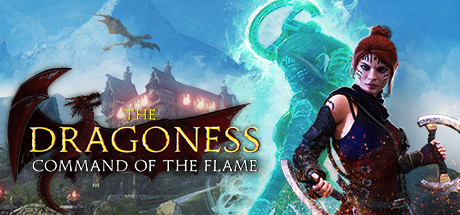
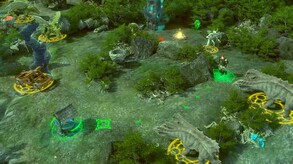
The Dragoness mixes HOMM-like exploration, city-building and turn-based strategic combat, with a roguelite twist. Choose your battles, paths and skills as you explore a world ravaged by war. Gather and manage your army of beasts, collect resources and expand your city.
Modeled estimate, not a reported figure. How we estimate →
Discounts
Every price cut of more than 20% we have observed, in each market that quoted one, with this game's chart position on either side of it. These are episodes, not a model: a sale is one event, and one event cannot tell you what the next one will do.
About


Sums Steam only; Xbox, GOG, Nintendo publish no volume signal, so the true total is higher by an unknown amount.
| Store | Price | Audience | Score | Chart | Est. revenue |
|---|---|---|---|---|---|
SteamYou are here | $0.99−95% | 171reviews | 70% | — | $3.5K |
| $19.99 | 35ratings | 74% | — | not modelled | |
Engagement
Reviews
Themes across 42 recent reviews and how positive each mention is. A keyword signal, not full sentiment analysis.
Reviews
The Dragoness: Command of the Flame is an ambitious indie strategy title that aims to revive the spirit of classic fantasy strategy games while layering in modern roguelite progression and city management systems. Developed by Crazy Goat Games and published by PQube, the game clearly wears its inspirations on its sleeve, drawing heavily from the design philosophy of older titles where careful planning, army composition, and long-term resource management were just as important as battlefield tactics. The result is a multifaceted experience that is rich in ideas, occasionally rough in execution, but undeniably distinctive in its scope and intent. The game’s narrative framework establishes a dark fantasy setting shaped by war, ruin, and draconic dominance. You take on the role of a Commander serving under the enigmatic Dragoness, tasked with reclaiming and rebuilding the shattered capital of Níwenborh while pushing back hostile dragon factions across the Drairthir Peninsula. Rather than focusing on deeply personal character arcs, the story functions primarily as a strategic backdrop, providing motivation and context for your actions. Dialogue and story beats are delivered through illustrated scenes and voice acting, giving the campaign a sense of scale and continuity even if the writing itself leans toward familiar fantasy tropes rather than nuanced storytelling. Exploration takes place on a turn-based overworld map, where every movement consumes resources and time. This structure forces players to weigh risk versus reward constantly, deciding whether to pursue distant objectives, engage roaming enemies, or return to safety before resources run dry. The pacing here evokes classic strategy titles, where progress feels deliberate and methodical rather than immediate. While this approach enhances the sense of planning and consequence, it can also feel slow, particularly during longer missions where backtracking or repeated encounters stretch playtime without introducing new dynamics. Combat unfolds on grid-based battlefields and forms the tactical core of the experience. Players command armies composed primarily of beast units, each with specific roles, strengths, and abilities that reward thoughtful positioning and synergy. In theory, battles offer meaningful strategic depth, encouraging experimentation with army composition and ability usage. In practice, however, combat can sometimes feel plodding. Animations are functional but lack impact, and encounters can drag on longer than necessary, reducing tension and making repetition more noticeable over extended play sessions. Still, when systems align and unit abilities complement one another, the tactical layer delivers satisfying moments of calculated victory. One of the game’s most distinctive features is its city-building and progression layer. Reconstructing Níwenborh serves as the long-term backbone of the campaign, with buildings unlocking new units, bonuses, and strategic options. This persistent development creates a strong sense of advancement that carries across individual runs, reinforcing the roguelite structure. Even when a campaign ends unsuccessfully, progress made in the city helps future attempts feel stronger and more informed. While not as deep as a dedicated city builder, this system adds meaningful context to exploration and combat, making victories and failures alike feel consequential. Visually, The Dragoness: Command of the Flame adopts a stylized, somewhat restrained presentation. Environments and units convey the fantasy setting clearly, but the overall aesthetic lacks the polish and dynamism of higher-budget strategy titles. Interface design is dense and occasionally unintuitive, presenting a learning curve that can be discouraging for newcomers. Tooltips and explanations are present but not always sufficient, leading to moments where mechanics feel opaque rather than challenging. For players willing to invest time into understanding the systems, this complexity eventually becomes manageable, but it remains one of the game’s most frequently cited hurdles. Replayability is built into the game’s structure through procedural elements, branching objectives, and persistent progression. Each campaign offers slightly different challenges and opportunities, encouraging players to adapt strategies rather than rely on a single optimal approach. However, the balance between handcrafted content and procedural variation is uneven, sometimes resulting in runs that feel either overly familiar or awkwardly paced. This inconsistency can make replay sessions feel unpredictable in both positive and negative ways. Ultimately, The Dragoness: Command of the Flame is a game defined by its ambition. It attempts to merge turn-based exploration, tactical combat, city management, and roguelite progression into a single cohesive experience, and while it doesn’t always succeed seamlessly, the effort is evident throughout. For fans of classic fantasy strategy games who are willing to accept slower pacing, dated presentation, and occasional mechanical friction, it offers a deep and rewarding strategic loop. It may not reach the heights of its inspirations, but it stands as a passionate and content-rich entry that values long-term planning and strategic commitment over instant gratification. Rating: 6/10
Media

Related
Related
Price dynamics, follower growth, revenue and sales trajectories with interactive tooltips
This and every other Pro feature is free until October 20, 2026. A free account is all it takes.
Reviews, worldwide (the counter carries no country): 0.14/day in the week to Jul 31 → 0/day in the week after.
For scale, across Steam · Top Sellers · Brazil over the last 30 days: the 26 chart moves that followed a price cut of more than 20% went a median of 7 places towards #1, and the 2,400 moves with no price cut behind them went 2 away. One store, one chart, one country — it is the only place we have enough observations to say even that.
Prices outside the United States have been collected since 6 August 2026 and chart positions since 19 July 2026, so a cut older than that has no market to compare and a market that joined later has no history yet. Nothing here is converted between currencies.
Genres
Stats
All-time low is the lowest price we've recorded for this game since we started tracking it.
Languages: English*, French, German, Spanish - Spain, Simplified Chinese, Russian, Polish, Japanese*languages with full audio support
| $2.99−85% |
| 22ratings |
| 72% |
| — |
| not modelled |
| $17.99 | — | — | — | not modelled |
Matched by title — a reused name can pair the wrong games. * is a critic aggregate. Prices and positions are each store's United States storefront; Epic charts worldwide. Audience and Score too, except Steam's, which is worldwide.
Hours played at review time, across 43 reviews with recorded playtime.
positive critical· bar length = how often the theme comes up
Хорошая игра чтобы скоротать вечерок-другой. По ходу прохождения наткнулся на пару багов ( не работают артефакты если поменять выбранные в городе на миссии, в миссии выбора пути можно попасть в ситуацию когда попадаешь в ловушку и не можешь выйти и еще по мелочи)
I bought this game for two reasons. First, I wanted to play something similar to Heroes. Second, Dragons. And I was disappointed. The entire time I was playing, I felt like I was playing a mobile game, not a PC game. The idea was original, even, but the execution... poor. The graphics were okay, but the game didn't offer the opportunity to delve deeper into the details; it was impossible to get any closer, or at least I couldn't. The music was okay, but that was about it. The food concept was interesting, especially at the beginning, and then in later missions... There were so many rations that they became irrelevant. Only in one mission did I run out of rations. The shield idea, which refreshes after each fight, was a really cool idea; I liked that aspect the most. Another good aspect, even better, was the heroine's level reset after each mission, which provided a sense of challenge... and only a sense of challenge. I played on the highest difficulty level, and the game was simply too easy, and I got bored. The challenges that could be completed every mission and that granted additional rewards were simply completed during the first playthrough, and that was it. Only one mission, probably the Necropolis, had to be repeated because it was impossible to complete all three at the same time. The most buggy location was Dragon Cradle. The heroine would get stuck entering combat when a stone pillar was rising right behind her. This happened to me a dozen or so times. You had to click on an enemy and open the menu again. Repeat this process several times to unlock it... Units. An interesting mix of creatures, but terribly randomly designed, especially the granting of abilities. This was terribly random. The creature, which looks like it wants to eat itself, has the ability to heal... The fire-breathing dragon has the ability to give another unit a buff, increasing its damage triple on its next ranged attack. Half of the ranged units deal more damage in melee than at range. Some of these units only have a few shots... Units that are "war machines" operate automatically and there's no way to control them or combine them into a more powerful version. This doesn't encourage them to be in a team at all. None of the dragons fly! For me, the hit/evasion probability in the combat system works poorly. I've never seen 5% and 10% evasions succeed so often. And in succession. The system of combining two such units to create one more powerful unit was also a good idea, but aside from boosting their base stats, it didn't do much else. Another blunder: The full unit stats could ONLY be viewed during combat. What a given spell does, also ONLY during combat... The best starting unit combination is two Griffins and one Werewolf. Then you swap the Werewolf for a Bat and you can complete most missions without a problem. Artifacts... There's an artifact that only helps when fighting Treants... And then it's useless. The idea of combining the same artifacts was also okay... At first, it seemed like the developers had some kind of idea for the game, but the point got lost somewhere... The game's plot was just there for the sake of it, nothing more. There were four characters in total, and only three of them had anything to say. The main character... well, aside from the fact that she comes from the elven empire, we don't really know anything. In fact, I'm not even sure what the whole game was about. I bought the game on sale. I wouldn't pay more than 25 złoty for it. 3/10.
Fun enough HoMM-Like with some cool ideas, quite janky though. Please never make an enemy like the umber dragon again.
The Dragoness: Command of the Flame is a turn-based “army tactics” game wrapped in a classic adventure-map loop. You travel across a world map, pick fights and events, gather resources, and build up a stack of units that you deploy in battles. The vibe is closer to old-school Heroes-like strategy than to a tight, squad-based tactics game. A big part of the experience happens between fights. The overworld is where you choose your route, decide which encounters are worth the risk, and try to arrive at the hard battles with enough strength and momentum. It creates a steady feeling of journey and planning, even when the individual battles are fairly straightforward. The game also leans into a roguelite structure: runs are meant to be repeated, and your path choices shape how powerful you become over time. Instead of one long campaign with perfectly controlled growth, you’re often working with what you’ve got, adapting your army based on what you can recruit and what your run offers you. That “make the best of this run” mindset is the main hook. Combat is turn-based and focuses on placement, matchups, and keeping your army alive. You’re generally thinking in terms of “what unit counters what” and “how do I trade efficiently,” rather than mastering complex combos or deep multi-turn tactics. When it clicks, it’s satisfying in a clean, board-game way—set up advantages early and let the fight tilt in your favor. The base-building and metaprogression layer is present, but it’s not an enormous management sim. It works more like a hub that turns your run rewards into upgrades and new options, so the next attempt starts with more flexibility. If you like light, tangible progression without heavy spreadsheets, it’s a comfortable middle ground. Where the game can lose people is variety and intensity. Some players will find that battles start to feel similar after a while, and the strategic layer may come across as “good enough” rather than especially deep. If you need constant mechanical novelty, you might feel the repetition more sharply than the game intends. Overall, The Dragoness: Command of the Flame is best for someone who wants the adventure-map fantasy of recruiting and growing an army, with a run-based structure that encourages repeating and improving. It’s less ideal if you’re looking for top-tier tactical complexity or highly varied encounter design. Treated as a relaxed, Heroes-flavored strategy roguelite, it can be an enjoyable niche pick.
N'est pas M&M Heroes qui veut ... N'ayant plus trop de jeux du genre depuis Heroes VII, c'est vers Dragoness que je me suis tourné par hasard en naviguant sur Steam. Finalement ce n'est pas à la hauteur du tout pour plusieurs points : -Un héros sans charisme qui ne retient rien mission après mission ! Toujours niveau 1 sans sort que dalle où on recommence comme pour la Mission 1, mission après mission ! -Un scénario qui est juste là pour avoir mis un scénario mais qui franchement ne casse pas trois pattes à un canard. -Une seule faction repartie avec des "Bêtes" par clan... -On nous dit qu'on doit gérer des ressources et une ville ? La ville on gère que dalle si ce n'est faire quelque babiole entre les mission et les ressources ramassé en mission sont perdu et on récupère qu'une fraction de ces dernières pour améliorer cette pseudo-ville, bref c'est inutile Sinon graphiquement en 2880p dldsr option full c'est pas foufou mais ça passe et c'est bien optimisé. Durée de 16 missions surement les 20h mais j'ai beau essayer, me forcer, ça passe pas... Bref une mauvaise surprise et une mauvaise découverte : 6/20
The differences towards HoMaM and King's Bounty: - It's a roguelite game. After each map you may tweak little things at your city, but you start each map with almost nothing and character level 1. - Ranged attackers are mostly useless. Enemies must pass half the battleground, so that these units do full damage. Else the damage is meaningless. - Considering tha game is made by a small indie studio, it is pretty good. But you have to deal with above mechanics, if you like KB and HoMaM.
Good game
It is a reimaginig of what Disciples could have been. A TBT, with some bits of meta-progression, minor map replayability (for resource gathering, and a silly but enjoyable story and there you have it. Also, the pangolin character is quite funny at times.
Fajna gra
Players by region
Where this game's players are, estimated from review languages.
Related
| Game | Estimated lifetime revenue | Reviews | Review score | Price |
|---|---|---|---|---|
| — | 0 | — | — | |
| — | 0 | — | — | |
| $0 | 49 | 90% | Free | |
| — | 0 | — | — | |
| $103.4K | 233 | 86% | $19.99 | |
| — | 0 | — | — |
Related
| Game | Estimated lifetime revenue | Reviews | Review score | Price |
|---|---|---|---|---|
| $3.5K | 61 | 75% | $2.99 | |
| $3.5K | 64 | 86% | $2.99 | |
| $3.5K | 134 | 91% | $0.99 | |
| $3.5K | 73 | 81% | $3.99 | |
| $3.5K | 65 | 40% | $2.99 | |
| $3.5K | 218 | 43% | $0.99 |