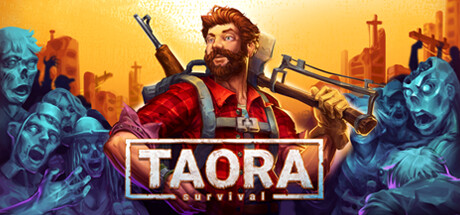
Taora is an open world survival game with unique character building and crafting. Build and upgrade your base, and survive the zombie apocalypse !
Modeled estimate, not a reported figure. How we estimate →
Media

About


Genres
Stats
All-time low is the lowest price we've recorded for this game since we started tracking it.
Languages: English, French, Italian, German, Spanish - Spain, Simplified Chinese, Czech, Japanese, Korean, Polish, Portuguese - Portugal, Russian +4 more
Engagement
Reviews
Themes across 40 recent reviews and how positive each mention is. A keyword signal, not full sentiment analysis.
Reviews
[h1]Abandoned. No update since 2024.[/h1]
Bought the game in hopes more would be added. Boy was I wrong. Save Your Money. It is fun for maybe an hour or several if you have never played it. Then you want to play something else to say the least.
Игру давно забросили
Related
Related
Trends
Modeled estimate over time, reconstructed from Steam's monthly review histogram.
Hours played at review time, across 40 reviews with recorded playtime.
positive critical· bar length = how often the theme comes up
Разработчики, займитесь игрой !
Abandoned game with good potential. Bugged. Low optimization. Aborted quest-line. Short leveling system. Poor battle-system. Stupid AI-bots. Daft grinding achievements, plus some of them don`t count. Some screenshots and gifs here - fake: no good atmosferic light system into buildings and no manual build. Another adandoned game. Don`t buy.
水没全ロスバグあり。 修正されてないのでふとしたタイミングで地面貫通して水中に落ち。 リスポーン以外できなくなります。 地中にあるので回収不可。 コミュニティ見てもわかるがもうこのゲーム終わりみたい。 無料版で十分。お金払ってはだめ。 500円前後ならあり。
poor optimize
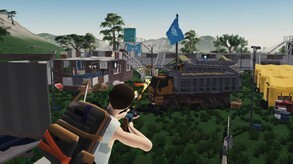
Taora is an ambitious survival sandbox that blends familiar genre pillars—crafting, base building, exploration, and combat—into a character-driven experience set on a zombie-infested island. Developed by Tulpar Games and released in Early Access, the game presents itself as a long-form survival project that prioritizes systemic depth and player agency over tightly scripted storytelling. From the outset, it signals its intent to let players carve their own path, balancing the constant pressure of survival with the slow satisfaction of building something sustainable amid collapse. The island setting forms the backbone of the experience. It is a broad, open environment dotted with abandoned structures, resource-rich zones, and hostile territories that invite risk-taking. Exploration is encouraged not through explicit quest chains but through necessity—supplies run out, equipment degrades, and threats escalate, pushing players to venture farther afield. This creates a natural rhythm where scavenging trips feel purposeful, and returning safely to base with valuable materials becomes a small victory in itself. One of Taora’s more distinctive design choices is its multi-character system. Instead of embodying a single survivor, players can manage a small group, each with their own skills and progression paths. This allows for specialization and strategic planning: one survivor might excel in combat, another in crafting or medical support, and another in repairs or resource gathering. Managing this group adds a layer of strategy uncommon in many solo-focused survival games, especially when deciding who to bring into dangerous areas and who to leave behind maintaining the base. Base building is central to long-term survival and progression. Players start with rudimentary shelters and gradually expand into fortified hubs equipped with crafting stations, storage, medical facilities, and utility structures. Each addition reinforces a sense of permanence and growth, transforming the base from a temporary refuge into a strategic command center. The building system emphasizes function over aesthetics, rewarding thoughtful placement and upgrades that improve efficiency, defense, and sustainability. Crafting and progression systems are tightly interwoven with exploration and base management. Weapons, tools, armor, and consumables are all crafted from scavenged materials, and upgrades unlock new options that make survival more manageable. Vehicles play a particularly important role, acting as both transportation and mobile assets that can be repaired, upgraded, and modified. Upgrading a vehicle shifts exploration from a slow, risky endeavor into a more dynamic loop, allowing players to cover greater distances while still facing meaningful danger. Combat in Taora is functional and accessible, focusing on survival rather than precision gunplay. Encounters with zombies range from manageable skirmishes to overwhelming situations that demand retreat or clever positioning. Weapons have durability, ammunition is finite, and healing resources are limited, encouraging players to think carefully before engaging. While combat lacks the refinement of dedicated shooters, it serves its purpose within the survival framework, reinforcing tension rather than power fantasy. The pacing of the game reflects its Early Access nature. Progression can feel uneven, with moments of strong momentum followed by periods of repetition or resource bottlenecks. These stretches highlight both the potential and the rough edges of the current build. For players who enjoy methodical survival loops and are willing to tolerate some friction, the experience can be absorbing; for others, the lack of polish and variety may test patience over extended sessions. Visually, Taora adopts a utilitarian aesthetic. Environments are readable and functional, but often lack strong environmental storytelling or visual identity. Animations and lighting convey the essentials without dramatic flair, keeping the focus on systems rather than spectacle. Performance and technical stability can vary, which is not uncommon for an evolving Early Access title, but these aspects remain important areas for future improvement. Overall, Taora is a survival game built on solid ideas that aims for breadth and player-driven storytelling rather than tightly curated moments. Its strengths lie in its multi-character management, base building, and layered survival systems, while its weaknesses stem from uneven pacing and a lack of polish that can sometimes undercut immersion. For players who enjoy open-ended survival sandboxes and are comfortable engaging with games in active development, Taora offers a foundation with genuine potential and a clear sense of direction as it continues to evolve. Rating: 5/10
껍대기만 갖춘 스켐 게임임. 업데이트도 없고 사지 마셈
Игра заброшена. Разрабам пузом хлопал по жопе
Momentum
Pace estimated from the game's recent review growth (our daily snapshots) at its own sales-per-review ratio — a momentum signal, not booked sales.
Audience
Estimated from the language of this game's reviews — a proxy for where players are, not official Steam demographics.
Related
| Help! I'm Turning Into A Mermaid! | $42.5K | 69 | 96% | $29.99 |
| Uriel's Chasm 2: את | $42.4K | 374 | 34% | $4.99 |
| The Invisible Hand | $42.5K | 689 | 81% | $2.59 |
| CuberPunk 2089 | $42.5K | 194 | 77% | $12.99 |
| Ballad of Solar | $42.5K | 206 | 86% | $6.99 |
| Of Bird and Cage | $42.5K | 227 | 77% | $9.99 |
Related
| Mount & Blade II: Bannerlord | $309.8M | 293.9K | 88% | $49.99 |
| The Isle | $59.9M | 116.6K | 80% | $19.99 |
| Abiotic Factor | $57.4M | 57.3K | 96% | $34.99 |
| Blade and Sorcery | $51.8M | 61.8K | 97% | $29.99 |
| Miscreated | $20.5M | 23K | 67% | $29.99 |
| MENACE | $17.4M | 11.3K | 91% | $29.99 |