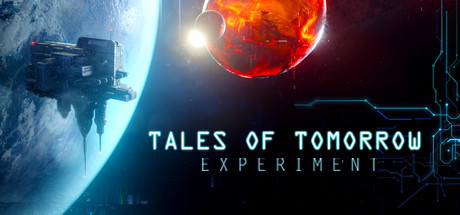
ToT: Experiment is a sci-fi short story game set on a remote ship wandering through space. Without any memories or recollection of his past our hero is tasked by the ship AI - AR.I.A. to perform daily tasks, that will help to maintain the ship.
Modeled estimate, not a reported figure. How we estimate →
Media

About
ToT: Experiment is a sci-fi short story game set on a remote ship wandering through space. Without any memories or recollection of his past our hero is tasked by the ship AI - EVE to perform daily tasks, that will help to maintain the ship. If he does, he is rewarded with break time, additional food or life improvements. If not - he is punished accordingly.
Will you discover the truth behind the ship and forces in control?
Where do you draw the line?
Mature storyline in form of short story game (2-3h gameplay)
High replayability (Map setup and key element placed randomized every time you start over)
Retro sci - fi theme with focus on psychological horror inspired by the movies Space Odyssey, Cube, The Moon or games like Slenderman
AAA graphic quality
Genres
Stats
All-time low is the lowest price we've recorded for this game since we started tracking it.
Languages: English*, Polish, Russian, French, German, Spanish - Spain, Simplified Chinese, Ukrainian*languages with full audio support
Engagement
Hours played at review time, across 25 reviews with recorded playtime.
Reviews
Oh my. This simple concept that has puzzles, and a race against time. It is a short little game and it may take some time before you get the hang of it, but I like this. Its one of those games in which you want to wipe your memories of this game and play it again.
Too frustrating and riddled with bugs that ruin the experience. https://youtu.be/JLqkv-GMZFw
Поползал я 30 минут и был удручён системой сохранений. Побежал на ютуб смотреть концовку и увидел, как девушка 4 часа просто тыкалась в баг. Поэтому я нашел другую концовку, ибо линейно весь геймплей мне понятен, посмотрел её и остался доволен. https://youtu.be/mISEqTpXXy0
Tales of Tomorrow: Experiment masterfully weaves a gripping sci-fi narrative aboard a desolate spaceship, where every task uncovers layers of psychological intrigue and haunting revelations that keep you on the edge of your seat. Its concise 2-3 hour runtime delivers a punchy, atmospheric experience that's both thought-provoking and visually stunning, making it a must-play for fans of introspective horror adventures.
Simply put, for a game made by "industry veterans", it sure looks and plays like a game dev's first complete game. I beat it in 1.1 hours with no idea what I was doing, and the ending just sucks. Also, the autosave is too infrequent; I'd have beaten the game in all of 35 minutes had it not bugged out and killed me as if I'd gone out of bounds. I only know that OOB does that because there's a spot in one of the laser sections that you can get stuck, and the game just kills you when this happens, erasing progress that could have taken 30 minutes to get. "Watch where you step" is the death message. A simple jump button would have solved that OOB as well, by the way. And I got that message just... walking in the maze. I seriously do NOT recommend this. Usually I'd try to get all the secrets, but it's going to be more fun to datamine them out than playing it long enough for RNG to decide to give them to me. At least datamining is a challenge sometimes. Oh right, everything is RNG, did anyone else mention that? The maze appears to be RNG, the time you get on breaks is slightly randomised, it's everywhere.
Portal meets 2001 Space Odyssey. Interesting story and really nice graphics.
Positives: - Amazing atmosphere - You don't have to read anything to still understand what's going on Negatives: - A bit too expensive for the price of the game. If you are looking to buy it, I'd recommend at least a 50% sale Others: - Figuring the game out is up to you. You can either have a miserable time or a very easy time depending on how well you can play these games - I didn't experience anything too buggy in the game, but other reviewers have said it causes big issues in the game Gameplay: https://youtu.be/xI4H8Ny7A_E
Wporzo gierka
Old skool first go good
Tales of Tomorrow: Experiment is a slow-burning psychological adventure that focuses heavily on atmosphere, mystery, and emotional tension. Instead of delivering a traditional horror experience built around combat or constant jump scares, the game takes a more cerebral approach by placing players inside a strange scientific project where memory, perception, and reality gradually begin to collapse into one another. The result is an unsettling narrative-driven experience that relies on exploration, storytelling, and psychological discomfort to maintain engagement. From the opening moments, the game creates a feeling of uncertainty that remains present throughout nearly the entire journey. The story revolves around a mysterious experiment connected to the human mind and consciousness. As players move deeper into the facility and uncover more information, it becomes increasingly clear that the experiment has consequences far beyond what its creators intended. The narrative unfolds piece by piece through environmental details, cryptic conversations, notes, and surreal sequences that blur the boundary between reality and hallucination. Rather than offering immediate explanations, the game encourages players to slowly assemble the truth themselves. This fragmented approach to storytelling creates a constant sense of intrigue because every new discovery raises additional questions instead of providing easy answers. One of the game’s greatest strengths is its atmosphere. Nearly every environment feels intentionally designed to create emotional discomfort. Sterile laboratories, dark hallways, and distorted dreamlike areas all contribute to a growing sense of paranoia. Lighting and sound are used carefully to maintain suspense without relying on excessive visual shock tactics. Quiet moments often feel just as tense as the more dramatic scenes because the game constantly suggests that something dangerous or unnatural may be waiting nearby. This approach makes the horror feel psychological rather than physical, which gives the experience a more lingering and unsettling quality. The gameplay itself remains fairly simple, but that simplicity helps keep attention focused on immersion and narrative progression. Players spend most of their time exploring environments, interacting with objects, solving puzzles, and uncovering clues tied to the experiment. The puzzles are generally integrated naturally into the story instead of feeling disconnected from the world around them. While the mechanics may not be especially complex, they serve the pacing effectively by encouraging observation and careful exploration. The game is clearly more interested in creating emotional tension and narrative mystery than mechanical challenge. What makes Tales of Tomorrow: Experiment particularly interesting is the way it combines science fiction concepts with psychological horror themes. The experiment at the center of the story becomes symbolic of manipulation, obsession, and the instability of memory itself. As events become stranger, the player is forced to question whether the environments and experiences being witnessed are real or artificially created. The narrative often embraces ambiguity, allowing multiple interpretations of certain scenes and events. This layered storytelling style gives the game a deeper emotional impact for players who enjoy analyzing themes and hidden meanings rather than simply following a straightforward plot. The audio design deserves considerable praise for the role it plays in maintaining immersion. Ambient sounds echo throughout the environments, while subtle musical tracks quietly reinforce feelings of tension and isolation. Silence is frequently used just as effectively as music, particularly during moments where the game wants players to feel vulnerable or uncertain. The soundscape constantly contributes to the psychological pressure, helping even slower scenes feel unsettling. Voice performances also help communicate emotional exhaustion and fear, making the characters feel believable despite the surreal circumstances surrounding them. Visually, the game balances realism with surreal imagery in a way that supports its themes effectively. Some environments appear grounded and believable, while others feel intentionally distorted or dreamlike. The transitions between these styles often happen gradually, making it difficult to tell when reality begins to break apart. This visual instability strengthens the psychological tone because players are never fully certain whether what they are seeing can be trusted. Even though the production values remain modest compared to larger horror titles, the artistic direction is strong enough to leave a lasting impression. The game’s slower pacing may not appeal to every player. Those expecting frequent action sequences or traditional survival horror mechanics could find parts of the experience too methodical. Certain sections focus heavily on exploration and observation, which can occasionally make progression feel drawn out. Additionally, the abstract storytelling may frustrate players who prefer direct explanations and clearly defined conclusions. The game intentionally leaves some ideas unresolved, which fits its themes but may feel unsatisfying to those looking for complete narrative clarity. Despite these flaws, Tales of Tomorrow: Experiment succeeds because of its commitment to atmosphere and psychological storytelling. It understands that fear can be created through uncertainty and emotional tension rather than constant danger. The game consistently prioritizes mood, mystery, and thematic depth over spectacle, which gives it a distinct identity among indie horror experiences. Its science fiction premise adds another layer of intrigue, allowing the story to explore philosophical questions about memory, identity, and the ethical consequences of pushing scientific experimentation too far. In the end, Tales of Tomorrow: Experiment offers a haunting and thought-provoking journey for players who appreciate narrative-focused psychological adventures. It may not deliver nonstop thrills or traditional horror action, but it creates a deeply immersive atmosphere filled with paranoia and emotional unease. The game’s combination of slow-burning tension, surreal storytelling, and philosophical themes makes it memorable long after the credits roll. For fans of atmospheric psychological horror and science fiction mysteries, it provides an engaging experience that values mood and interpretation above everything else. Rating: 6/10
Related
Related
Trends
Concurrent players on Steam, sampled daily since tracking started.
Audience
Estimated from the language of this game's reviews — a proxy for where players are, not official Steam demographics.
Related
| EarthNight | $7.8K | 113 | 78% | $4.99 |
| Vectorium | $7.8K | 77 | 78% | $4.99 |
| If only I could go home early | $7.8K | 148 | 94% | $3.99 |
| Delirium | $7.8K | 91 | 87% | $4.99 |
| Speed Dates Summer Edition | $7.8K | 96 | 60% | $3.99 |
| Stop Sign VR Tools | $7.8K | 63 | 86% | $5.99 |