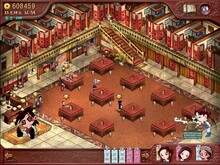
Sword and Fairy Inn is a gentle and unconventional offshoot of the long-running Sword and Fairy franchise that deliberately steps away from epic battles and grand xianxia narratives in favor of a slower, more intimate slice-of-life experience. Developed and published by SOFTSTAR ENTERTAINMENT, the game reframes its fantasy setting through the lens of everyday hospitality, asking players not to save the world, but to run a small inn and cultivate a welcoming space for a colorful cast of characters. This shift in focus immediately sets expectations: Sword and Fairy Inn is less about challenge and spectacle, and more about routine, relationships, and the quiet satisfaction of incremental progress.
The core premise places the player in charge of managing an inn that gradually becomes a gathering place for familiar figures from the Sword and Fairy universe. Rather than centering the story on dramatic plot twists, the narrative unfolds through daily interactions, character conversations, and light personal storylines that develop over time. Much of the appeal lies in seeing established characters in a relaxed environment, free from the burdens of fate and combat, and watching their personalities shine through casual dialogue and shared moments. The tone is warm and understated, emphasizing companionship and domestic comfort over tension or urgency.
Gameplay revolves around managing the inn’s daily operations, which include preparing meals, serving guests, assigning staff to tasks, and upgrading facilities to improve efficiency and reputation. While these systems sound robust on paper, they are intentionally streamlined, favoring accessibility over depth. Many actions are menu-driven or automated, meaning the player often makes high-level decisions rather than engaging in hands-on mechanics. Cooking, for instance, is less about active input and more about selecting recipes, managing resources, and timing outputs to satisfy guests. This approach keeps the experience low-stress, but it can also leave players feeling somewhat detached from the moment-to-moment gameplay.
A notable aspect of Sword and Fairy Inn is how it blends management simulation with character-focused progression. Staff members and guests are not just functional units; they come with individual traits, preferences, and narrative threads that gradually unlock through repeated interaction. Building relationships can lead to small bonuses, story events, and even romantic developments, giving emotional context to otherwise routine management tasks. These character systems are where the game finds much of its charm, as they encourage players to invest in people rather than purely in numbers or optimization.
Visually, the game adopts a colorful pixel-art style that feels nostalgic and playful, fitting well with its cozy ambitions. Character sprites are expressive and distinct, and environments are designed to feel lively without being cluttered. The presentation supports the game’s relaxed pacing, making long sessions feel comfortable rather than overwhelming. Audio design complements this aesthetic with gentle background music and soft sound effects that reinforce the inn’s peaceful atmosphere. However, the experience can be undermined at times by uneven localization, with awkward phrasing or unclear text occasionally disrupting immersion for non-native players.
Progression in Sword and Fairy Inn is deliberately slow and cyclical. Days blend into one another as the inn gradually improves, new characters arrive, and small narrative moments accumulate. For players who enjoy routine-driven games and the meditative rhythm of life simulations, this pacing can be soothing. For others, especially those accustomed to more dynamic management systems or stronger strategic demands, it may feel sluggish or lacking in meaningful decision-making. The game rarely pressures the player, which aligns with its cozy philosophy but also limits its long-term engagement for those seeking complexity.
Ultimately, Sword and Fairy Inn is best understood as a comfort game rather than a challenge-driven simulation. Its strengths lie in atmosphere, character interaction, and the novelty of seeing a well-known fantasy universe reframed through domestic life. Its weaknesses stem from shallow mechanics, limited player agency, and pacing that may not sustain interest for everyone. Fans of the Sword and Fairy series will likely appreciate the opportunity to spend quiet time with beloved characters, while players drawn to cozy management and relationship-focused games may find its gentle loop appealing. Those expecting deep systems, demanding strategy, or the dramatic flair of the mainline franchise, however, may find it a pleasant but ultimately modest diversion.
Rating: 5/10