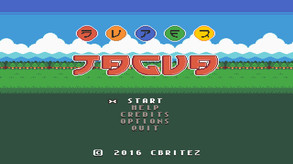
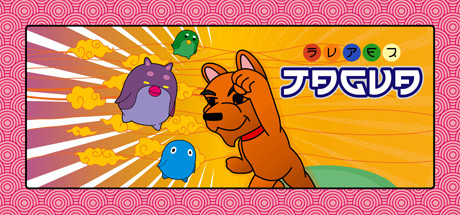
Super Jagua is a classic 2D retro-style single-player platformer inspired by the greatest platformers of the 80s. Run, jump, swim, discover lots of secrets, fight brutal bosses and more in this classic NES inspired adventure.
Modeled estimate, not a reported figure. How we estimate →
Media

About
Stats
All-time low is the lowest price we've recorded for this game since we started tracking it.
Languages: English**languages with full audio support
Engagement
Hours played at review time, across 40 reviews with recorded playtime.
Reviews
[h1] Mario-like game where you play as Scooby-Doo. Game doesn't expand much on original formula, there's no ducking so you just run and jump across stages. Level design is good and visuals are somewhat original but also game might be a bit boring to play. A few power ups to collect like umbrella, glasses (for secret warp zones) and two types of throwing bones. Rather hard to complete so I recommend this one only to diehard Mario fans looking for a new challenge. [/h1]
⠀
Super Jagua is a clear Mario rip-off. But that's alright. It's a fun little game with a NES feeling to it. But I can not recommend it. There are no save points, you run out of lives it is game over. You get 15 lives for 32 levels or which 8 are bossbattles. You get, just like in Mario, an addition live for every 100 coins collected. The problem with the absent of save points is that you need to complete the whole game in one session. You close the game, you have to start over. Controlls are fine but do feel a little off at times. Other than that the game is not bad. I wanted to like the game but being forced to complete the game in one session kinda ruins it.
Super Mario Dog
Super Jagua is an unabashed ripoff of Super Mario Bros (copyright Nintendo, 1983) and features the same game mechanics as the Super Mario Bros series, specifically most elements of Super Mario Bros 1 and some from 3. Even the level design for some of the levels is amazingly familiar... this might as well just be a reskin. Or, more likely, a lawsuit just waiting to happen. Copyright is serious business. That's the first of many reasons gamers should avoid putting down money for this.. the first Cease and Desist or DMCA claim that shows up, and this game will be gone. There's little else to discuss about actual gameplay (if you can get it to work, console peasant childrens toy controller is required because the developer doesn't understand PC gaming). It's just Super Mario Bros. All that's left to discuss is the huge list of defects and flaws, which, in the interests of thoroughness, we'll get into now. The game doesn't have any save game features, despite that being a basic standard for all games of this time. The developer might defend this as an attempt to make the game seem more "difficult" without them having to balance the game or do their job properly with engaging and challenging level design, but it's just as likely they simply couldn't work out how to make a save game feature work. Either way, that's a defect that adds another reason for gamers to avoid this game. From a technical perspective, the game doesn't meet basic minimum requirements that most PC gamers expect as standard. A choice was made to use obsolete, decades old retro pixel "art" as a substitute for contemporary PC graphics. It's unclear if this is due to lack of budget or talent, regardless, the overall visual quality of the game is extremely low as a result. There's no option to change the resolution and no useful graphics tweaks. There's no way to ensure this is running at the native resolution of your display. There's no guarantee this game will look right on any PC as a result of this hamfisted design decision. The game only displays in 4:3 pillarboxed aspect ratio. It's possible they developed this using an old CRT they found in a dumpster, or this game has been specifically designed for people gaming on PC's from 1995... either way, this isn't really acceptable in the modern era of PC gaming. In a sheer insult to PC gamers, the developer has locked out keyboard and mouse controls on this game. The developer demands, without compromise, that you must use a console peasant children's toy gamepad to play this garbage game. This is simply unacceptable, developers must never dictate to gamers how a game is to be consumed. Another problem here is that you can't alt+tab out of the game properly, another shortcoming that should have been picked up with even a basic amount of software testing. This is extremely frustrating in the modern era of gaming and it's a shortcoming that gamers are unlikely to accept. It's likely this defect is due to the way the developer arrogantly locks out many of the the keyboard functions, or some other general incompetence. While this is on PC, it has all the hallmarks and deficiencies of a console game, from the clunkier than needed control scheme to the less than cutting edge graphics. There's 10's of thousands of PC games on Steam, and PC gamers deserve only the best. This might not appeal to many gamers due to the lack of PC-centric design. It's unclear why this game was never accepted on the video game console appliances it seems to have been designed for. Some of the defects in the game can be attributed to the choice of using the GameMaker Studio construction kit/toolset. This is a very poor quality toolset favoured by amateur developers as it's cheap and requires little in the way of development skill, but unfortunately has very limited capabilities. Just as you can't make a silk purse out of a sows ear, you can't make a great video game if you use a terrible engine. GameMaker Studio is most commonly used to make retro pixel shovelware and cash grabs. A strong argument can be made that construction kits like GameMaker Studio should never be used to make games for profit, as the "developer", cbritez has done here. These construction kits are intended to teach people some of the basic principles of game development, and to make small demos to pass around with friends. They're not intended to replace to actual work of real, professional game developers. So it's inappropriate when amateurs try to use these for profit, without any actual, real game development effort taking place. This doesn't result in products that have any real meaningful value for gamers. These technical defects push this game below acceptable standards for any modern PC game. You don't have to take my word about how bad the game is, we can measure the interest in a game by how much people bothered to play it. Super Jagua has achievements, and they show us a very clear picture that the game absolutely failed to capture any interest from gamers. The most commonly and easily attained achievement is for completing a level with less than 18 jumps, trivial to achieve, but less than 5 percent of players bothered to get that far before uninstalling the game. That's a tiny, tiny proportion of gamers who even bothered with this. Ouch. Reviewing SteamDB to check how popular this game was with players reveals a surprise... there's a very healthy spike in player counts for the game. But this isn't consistent with the achievement stats, that show less than 5 percent of players bothered playing the game for any reasonable amount of time. How is it possible for this game to have so many concurrent players who weren't even playing the game? Trading cards. Players will use card idling software to collect the cards and sell them, but this won't trigger any achievements in-game. That tells us people only really bought this game for trading cards, and that's a damning indictment of the woeful quality. A closer look at the numbers shows the game just has a couple of players every week running up the game and idling it for cards, then deleting it. We must ask how it benefits gamers for there to be so many games like this, with no merit as a serious game, that only generate sales from people idling and selling the trading cards. Super Jagua is relatively cheap at $1 USD, but it's not worth it. Given the defects and quality issues with the game, coupled with the unrealistic price, this is impossible to recommend.
jagua
ㅤ
klasik marıo oyununun biraz daha yavaş hali ama marıo oynamış olan bizle daha azıyla yetinir miyiz=? asla.
ITS ME MARTIO I MEAN DOGE The game is fine, played it a little
Super Jagua is a retro-inspired platformer that commits wholeheartedly to the design sensibilities of early console classics, delivering an experience that feels intentionally stripped back to the fundamentals of the genre. Developed and published by cbritez, it draws clear inspiration from 8-bit-era titles, not just in its visual style but in its structure, pacing, and approach to difficulty. Rather than modernizing these ideas, the game embraces them almost entirely, resulting in something that feels both authentic and, at times, uncompromising. The gameplay follows a traditional platforming loop built around precise movement, timing, and memorization. Players guide the protagonist through a series of levels filled with hazards, enemies, and environmental obstacles, all designed to test reflexes and patience. The objective is straightforward—progress from one stage to the next while avoiding failure—but the execution demands careful attention. Jumps must be calculated, enemy patterns learned, and traps anticipated, often through repeated attempts. This reliance on trial and error gives the game a steep difficulty curve, especially in later stages where mistakes are punished quickly. What sets Super Jagua apart is its commitment to that difficulty without relying on modern conveniences. Checkpoints are limited, and progress can feel fragile, particularly during longer sessions. This design choice reinforces the old-school identity of the game, where persistence and repetition are key to success. For players who enjoy mastering challenging platformers, this creates a rewarding loop where improvement is tangible and victories feel earned. However, for others, the lack of forgiveness can make the experience feel more punishing than engaging, especially when progress is lost due to a single misstep. Level design is one of the game’s stronger elements, offering a steady progression of challenges that build on previously introduced mechanics. Early stages serve as a foundation, gradually introducing new obstacles and patterns that become more complex over time. Hidden elements, such as secret paths or shortcuts, add an extra layer of depth, encouraging exploration beyond the most obvious route. These features provide some replay value, as players can revisit earlier levels with improved skills to uncover content they may have missed. Visually, the game leans heavily into its retro aesthetic, using a limited color palette and pixel-art style that evoke the look of early platformers. The environments are simple but readable, ensuring that players can quickly identify hazards and navigate effectively. This clarity is essential given the precision required by the gameplay. The accompanying chiptune soundtrack reinforces the nostalgic tone, with energetic compositions that match the pace of the action and enhance the overall atmosphere. Despite its strengths, the game does show some rough edges. The controls, while generally responsive, can occasionally feel rigid, which becomes more noticeable in sections that demand exact timing. These moments can lead to frustration, particularly when combined with the game’s unforgiving structure. Additionally, the overall design remains very close to its inspirations, rarely introducing mechanics or ideas that feel distinctly new. As a result, the experience can come across as more of a homage than an evolution of the genre. Replayability is present but somewhat limited by the game’s structure. While secrets and multiple endings provide reasons to return, the core gameplay remains consistent throughout, and the challenge itself is the primary motivator for continued play. For players who enjoy refining their performance and achieving cleaner runs, this can be appealing. For others, the lack of variety may reduce long-term engagement. In the end, Super Jagua is a focused and faithful recreation of classic platforming design, offering a challenging experience that prioritizes skill and perseverance over accessibility. It doesn’t attempt to reinvent the genre, but instead delivers a straightforward, demanding adventure that captures the spirit of its inspirations. For fans of retro platformers, it can be a satisfying and nostalgic experience, while those seeking modern conveniences or innovation may find it less accommodating. Rating: 7/10
Related
Related
Trends
Concurrent players on Steam, sampled daily since tracking started.
Audience
Estimated from the language of this game's reviews — a proxy for where players are, not official Steam demographics.
Related
| Ember Kaboom | $2.7K | 119 | 82% | $0.99 |
| AtmaSphere 2 | $2.7K | 174 | 78% | $0.79 |
| Bitcoin Farm | $2.7K | 128 | 45% | $0.69 |
| Night Janitor | $2.7K | 64 | 86% | $2.99 |
| Candy Smash VR | $2.7K | 121 | 74% | $0.69 |
| Puzzle Cube | $2.7K | 242 | 77% | $0.69 |
Related
| Battlefield™ 2042 | $256.9M | 325.3K | 47% | $59.99 |
| Marvel’s Spider-Man Remastered | $130.9M | 135.7K | 96% | $59.99 |
| Planet Coaster | $109.4M | 72K | 91% | $44.99 |
| Human Fall Flat | $109.3M | 225.6K | 95% | $19.99 |
| Need for Speed™ Unbound | $106.2M | 58.8K | 60% | $69.99 |
| DAVE THE DIVER | $90.8M | 139.6K | 97% | $19.99 |