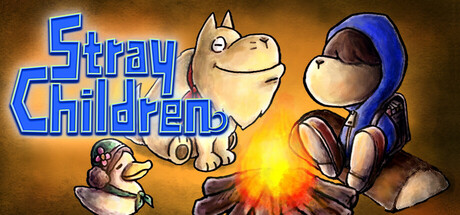
“The Olders, they come to eat the Children…” All of the adults have become monsters, the rumors say. Nowhere is safe outside these walls. Welcome to Stray Children — a bittersweet, fairy tale RPG.
Modeled estimate, not a reported figure. How we estimate →
Prices
The United States storefront in every case, so this compares stores and not countries.
Discounts
Every price cut of more than 20% we have observed, in each market that quoted one, with this game's chart position on either side of it. These are episodes, not a model: a sale is one event, and one event cannot tell you what the next one will do.
Reviews, worldwide (the counter carries no country): 0.14/day in the week to Jul 31 → 0.29/day in the week after.
For scale, across Steam · Top Sellers · Brazil over the last 30 days: the 26 chart moves that followed a price cut of more than 20% went a median of 7 places towards #1, and the 2,400 moves with no price cut behind them went 2 away. One store, one chart, one country — it is the only place we have enough observations to say even that.
Prices outside the United States have been collected since 6 August 2026 and chart positions since 19 July 2026, so a cut older than that has no market to compare and a market that joined later has no history yet. Nothing here is converted between currencies.
About
From the creators of beloved cult-classic videogames including Moon: Remix RPG Adventure, Chulip, and Rule of Rose, comes Stray Children: a bittersweet fairy tale adventure that will change the way you think about “children” and “adults”.

What would you do if all the adults you know suddenly started attacking you?
This is the story of children who try to survive and thrive in a world just like this, every day of their lives.
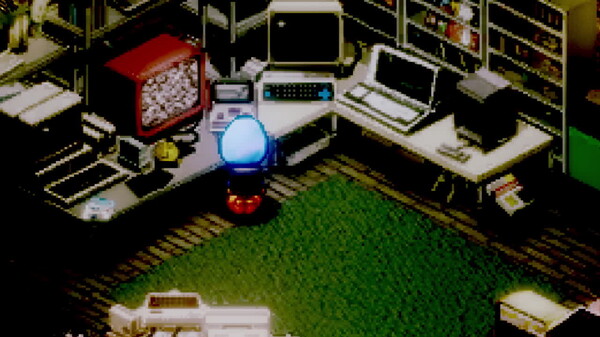
Somewhere, in our world, there’s a secret room, in a secret place, filled top to bottom with ancient technology.
When one young boy flips the switch on a curious old console, they’re suddenly whisked away, through the screen, into a very strange somewhere else: a long-since forgotten role playing game.
Blinking awake in this peculiar new place, they find themselves in a land of children.
Outside this stronghold’s walls lurk The Olders: monstrous adults, carrying the heavy load of their own inadequacies, self-doubt, and all of the grievances that grown-ups gather.
Rumor has it that these creatures are starving for something, and that — out there — no one and nowhere is safe.
Can you survive in this world where half-crazed adults lurk around every corner?
It’s here — in this funny, mysterious, and wildly dangerous domain — that your story begins.

As you explore the world of Stray Children, you’ll do turn-based battle with these oddball Olders, where you can choose to fearlessly fight or use your words as weapons, landing a crushing blow with just a well-worded whisper.
Deftly dodge the relentless barrage of their bottled-up emotions, and discover the source of their strange stories. By touching their heart with your words, you might just be able to save their souls.
What other mysteries await you in this weird new world? Find out in Stray Children — an unfamiliar place, with all-too-familiar troubles.

We hope you’ll have fun discovering all the secrets of Stray Children, but we have one final request for anyone and everyone who finishes the game: please keep the ending a secret!
Sums Steam only; Nintendo publishes no volume signal, so the true total is higher by an unknown amount.
| Store | Price | Audience | Score | Chart | Est. revenue |
|---|---|---|---|---|---|
SteamYou are here | $29.99 | 198reviews | 79% | — | $157.5K |
| $29.99 | — | — | — | not modelled |
Matched by title — a reused name can pair the wrong games. * is a critic aggregate. Prices and positions are each store's United States storefront; Epic charts worldwide. Audience and Score too, except Steam's, which is worldwide.
Engagement
Reviews
Themes across 50 recent reviews and how positive each mention is. A keyword signal, not full sentiment analysis.
Reviews
[[ I feel like Stray Children is largely known around because it was "inspired by Undertale" -- and while that influence can be felt in the game, I think people get a little misguided when they walk into this game and compare it directly to Undertale. It's good to play and relate to it on its own terms. ]] This game is really enhanced by playing Yoshiro Kimura's earlier game, Moon RPG (1997), before this one. If you played that and loved it, come enjoy this one too. Both are games that have their challenges and might require guides to complete, but have a whole lot of heart and sincerity. Yoshiro Kimura and his team have a specific sense of humor and artistic style that's very instantly charming. It has its quirks, its battle difficultly spikes, its labyrinths... but it's admittedly a wildly unique experience to play a 30 year old conversation about what RPGs are, what they could be, and what they were. I'm really glad something like this has been made.
A serenade to a medium, to a genre, wherein creeping darkness on the periphery of a fairytale world is offset by both scrappy earnestness and items like Mr. Poopy. An aspect of Hayao Miyazaki’s films that I adore is the clear fascination with Europe. The architecture of its towns and traditions (read up on his would-be [i]Pippi Longstocking[/i] project being developed with Isao Takahata; very informative of so much of what he would do in later films) are such a basis of so much of Miyazaki’s work, yet seen through an outsider's perspective in the way the spaghetti western rewrote that most American of genres, or the Vietnamese took that French colonial bread and said here's bánh mì. It helps in Miyazaki's case that he's a genius and has a cadre of geniuses like Kazuo Oga by his side, but the point remains. The Japanese reinterpretation of foreign culture is endlessly fascinating to me, due in part to the obsessive and minute qualities of the culture that strip down things like Neapolitan pizza to their essence and build it up anew. The way the lineage of things like the Brothers Grimm and [i]Lord of the Flies[/i] wind up in a revisionist JRPG in the year 2024 alongside [i]Metal Gear Solid[/i] references and salaryman humor is reason enough to play [i]Stray Children.[/i] It is also exceptionally beautiful, with a cavalcade of grotesque and interesting character designs, enthusiastically scored with a variety of instruments and melodies, and deliriously obtuse to play as a video game. The battles, which mimic traditional turn-based RPG bouts more than [i]moon[/i]or even [i]Undertale,[/i] which [i]Stray Children[/i] is a reaction to much in the way Toby Fox’s game was a reaction to Love-de-Lic catalogue, will intrigue prospective players with the "Talk" option. Naturally, being presented with a nonviolent option in a medium typically dedicated to wanton slaughter is a curious thing, and [i]Children's[/i] word-puzzle pacifism is often a bear of trial-and-error, despite hints and secrets. But it's a [i]honey[/i] bear. It's the [i]Baby[/i] Bear, maybe. Or rather it is all three of those iconic bears, Mama, Papa, and Baby, and you, the player, and your golden locks of hair bounce between the temperaments of "too hot" or "too small" while looking to find your "just right" bowl of porridge, or "just right" level of frustration with a game that looks to prod and poke you into discovering its nuances. The breadcrumbs of peace are laid about, but so often they require microscopic and meticulous collection the likes of which are easy to pass by given [i]Children's[/i] linear structure, with some battles against the game's warped Olders requiring items goaded out of previous fights via arcane murmurings the likes of which you might not even think to think may exist. Battles then can become true stabs in the dark at finding the correct pattern of words that might unlock the broken hearts of the sad and angry Olders, quite impenetrably. Here’s the thing—this is lovely. There was great sense of triumph in piecing together some of [i]Stray Children's[/i] encounters, the a-ha's clicking into place as I dodged the razor roses of a scorned lover or deciphered the drunken ramblings of a scarecrow were almost always greatly satisfying, the Sisyphean task of struggling with the word battles often made enjoyable by the bullet hell, [i]WarioWare[/i]like minigames that uniquely make up the Olders' attacks. [i]Stray Children[/i] feels like a culmination of Yoshiro Kimura and co's interests with their Onion Games output, with clear homage to the excellent [i]BLACK BIRD[/i] both aesthetically and mechanically. Narratively there's much [i]Rule of Rose[/i] to be discovered in the warped sadism of adults misbehaving, and the ways in which children cope with that abuse, and even the lamentations of the tired game dev from [i]Dandy Dungeon[/i] can be found here. The difficulty of piecing together [i]Stray Children's[/i] nonviolent path is, of course, mitigated by a willingness to swing the hammer and shed some blood. I can't speak to the differences in ending should you engage in carnage, and I think most approaching a game like this are at least interested in seeing what the fuss over all this nonlethality is about, so there is the classic dilemma of being told that sure, dear, there is no right answer, just say what you feel, even though you know, in your heart of hearts, that the kindergarten teacher can't help but judge you. She's only human. Much is to say, despite the incoherence of this review, [i]Stray Children[/i] is very much a masterpiece. Rare is it that games feel like conversations with their developers, and whether it’s due to the great English script or not, the writing here feels poised in intelligent ways that interrogate nostalgia for the medium while trying new things. In a world that embraces the likes of [i]Deltarune[/i] and other "thoughtful" RPG deconstructions with open arms it's criminal that a game like this isn't plastered all over the Western gaming consciousness the way you can't throw a stone from a roof without landing on someone who pretends to love [i]EarthBound[/i] (this is a joke, I love [i]EarthBound[/i] and do so genuinely, as I believe most others do too). If not for the gorgeous visuals alone, give [i]Children[/i] a chance. And while it's very much a continuation of [i]moon[/i] don't let a lack of prior experience or its obtuseness deter you because hey, guess what, I looked up a guide for some stuff too. Sometimes a work of art doesn't need to be "just right." In fact, there is no "right" art. [i]Stray Children[/i] may at times feel "too obtuse," but it is also exceedingly and consistently sincere. It a ton of fun. It very funny, and its music is excellent. It feels as if you're playing with the entire team of developers watching over your shoulder, not giving instruction but coaxing you along with anecdotes and lines of bonafide wisdom and whimsy. Don't be a hero, experience the love.
Media

Related
Related
Price dynamics, follower growth, revenue and sales trajectories with interactive tooltips
This and every other Pro feature is free until October 20, 2026. A free account is all it takes.
Genres
Stats
All-time low is the lowest price we've recorded for this game since we started tracking it.
Languages: English, Japanese
Hours played at review time, across 50 reviews with recorded playtime.
positive critical· bar length = how often the theme comes up
Fantastic game i had high expectations due to moon being one of my favourite games of all time and im happy to say it stuck the landing for me. Definitely found it too obtuse in its puzzles initially but got easier to figure out as the game went on. Dont be afraid to check a guide though as there is a lot of missable key items if your wanting to go pacifist. Worth sticking with it for the story. Also this is more like undertale in terms of gameplay than moon so go in with that expectation. Story is one of the best ive seen in a game in a while and is very dark in places while still being very funny at times. Also no spoilers but definitely play moon first if you havent already. Will be thinking about this game for a while and i am currently getting emotional about the ending while typing this.
Played through it twice. The gameplay can be frustrating with the combination of obtuse puzzles + bullet hell, but it does serve a purpose in showing what it's like to be a kid and trying to talk and connect with adults. The story goes places but definitely resonates with me, Moon RPG connections aside.
A spiritual successor to Moon that I was actually able to play due to it's stronger focus on being an actual video game. Check out "Ripened Tingle's Balloon Trip of Love" on DS.
game in progress*
An all-timer experience. Don't come in expecting Undertale, but do bring an open mind. Think like a stray child taking small footsteps through a dizzyingly vast, cruel, beautiful world you're forced to engage with before you have the tools to fully understand. You don't need to play MOON first to enjoy this one in the slightest, and there's no secret story code to crack if you do, but looking up the basic premise of that game might be helpful for understanding where this one is coming from.
En 1997 el videojuego Moon vio la luz por primera vez: un autoproclamado “anti-RPG” que parodiaba las convenciones del género y convirtió la violencia que pavimentaba los caminos de los héroes en adoquines de amor. Su impacto fue discreto y su audiencia modesta, de hecho, hasta 2019 ni siquiera salió de Japón. Sin embargo, su minúsculo nicho no evitó que su influencia se filtrase en la cultura popular mundial, porque, enarbolando a Moon como una de sus mayores inspiraciones, Toby Fox lanzó Undertale en 2015, título indie por excelencia cuya influencia abrió las puertas a muchísimos jugadores a obras menos convencionales y más atrevidas. Fue Undertale el videojuego que consiguió convencer a Yoshiro Kimura de crear un nuevo RPG después de varios lanzamientos decepcionantes que le hicieron perder la pasión por el desarrollo. Gracias a Moon pudo existir Undertale, y gracias a Undertale ahora tenemos Stray Children, que viene a continuar ese ciclo infinito de inspiración que ha estimulado a varios diseñadores a compartir con el mundo su visión tan única del medio. Stray Children es una carta de amor a los videojuegos y la culminación de la trayectoria de un estudio que, aunque en los últimos 30 años haya tenido diversos nombres e integrantes, posee una esencia tan carismática como inquebrantable. Es una mezcla de pasado y de presente, un videojuego sobre videojuegos que actúa como bálsamo para el alma. Es además una secuela espiritual de Moon, que demuestra que es más que capaz de mantener viva el alma de su predecesor en una especie de continuación temática, plagada de paralelismos y autorreferencias, siempre construida sobre mensajes que predican bondad. Un niño pequeño está solo en casa. En el escritorio de su habitación se acumulan dibujos retratando a un padre cuya presencia se disipó un fatídico día. Su madre no viene a cenar porque está ocupada trabajando, y la casa se mantiene en silencio y penumbra. Entonces alguien llama a la puerta. Es un hombre que quiere que el niño vaya con él y no acepta un no por respuesta. Tras mencionar que sabe dónde puede encontrar a su padre desaparecido, capta el interés del ingenuo pequeñín. Niño y desconocido atraviesan las desiertas calles nocturnas de la ciudad hasta adentrarse en los túneles más recónditos del metro. Allí, ambos son testigos de un mundo virtual atrapado en un ciclo infinito que le hace desmoronarse una y otra vez, un lugar sin propósito ni salvación, y, después de caer al abismo, el chico se ve amenazado por los Adultos, que vienen a comerse a los niños… No os dejéis engañar por su fachada bonita y colorida: Stray Children no es un juego para niños. Este título se mantiene siniestro en principio a fin, mostrando el lado más cruel y deprimente de la vida, tanto desde la perspectiva de los más jóvenes como desde la de los adultos, mediante tonalidades pastel y personajes de lo más peculiares. Los temas tratados no están dirigidos a un público infantil sino a uno adulto, lo que resulta irónico dada su trama que representa a los Mayores como monstruos que asesinan a los niños sin piedad alguna. No voy a mentir: mis impresiones iniciales de Stray Children fueron mixtas. Se trataba de un videojuego al que estuve mucho tiempo esperando y mis expectativas estaban alcanzando unas cuotas exageradas. No me convenció en absoluto la adaptación del combate de Undertale, con una ruta pacifista oculta tras pistas demasiado obtusas y ambiguas, sin apenas reacciones de los enemigos que puedan guiar al jugador. Como resultado, la gran mayoría de combates se sustentan en la prueba y el error, y cada mal paso obliga a volver a empezar desde el principio, en una sucesión que invita al tedio. Aparte, sigo estando convencida de que algunas pistas carentes de sentido se deben a problemas con la traducción, puesto que es posible que no se haya logrado transmitir bien la idea original. En general, me pareció una imitación torpe del sistema de piedad de Undertale hecha por alguien que no entiendía muy bien qué es lo que hacía que el original funcionara tan bien. Pero mis quejas no terminaban únicamente en el combate. La progresión de Stray Children es muy lineal. Tanto, que en su línea recta de avance resulta imposible volver atrás. Los puntos de no retorno son a menudo confusos, lo que causó que, sin quererlo, me fuera dejando cosas por el camino a sabiendas. No me cuesta reconocer que a veces en un videojuego ocurren cosas negativas como consecuencia de errores que yo como jugadora voy cometiendo, pero, en este caso, todo se sentía demasiado arbitrario. Ni siquiera tengo un problema con los castigos en el medio, y aun así aquí seguía sin entender por qué se me estaba castigando exactamente. Entonces, decidí empezar una partida nueva de cero, ya que los fallos que había ido acumulando me impedían disfrutar del título. Quería tratar de entender qué me quería decir el videojuego. Era incapaz de comprender el idioma en el que me estaba hablando y eso me frustraba mucho. Con todo el conocimiento que había ido adquiriendo a lo largo de la primera vuelta, le di una oportunidad renovada. Y ahí fue cuando, por fin, me hizo clic. Creo que nunca he tardado tanto en conectar con un videojuego. No quiero insinuar que no me estaba gustando, porque sí que había cosas que me estaban encantando, como la historia, la ambientación, atravesar sus variadas zonas, el bullet hell, los apartados visual y sonoro… Pero sí que se había generado un aura de negatividad a mi alrededor, y se había apoderado la desgana de mí. Fue en la segunda partida que entendí que, para empezar, Stray Children está diseñado para ser jugado un mínimo de dos veces, con libreta y bolígrafo en mano. Tenía que dejar de compararlo con Undertale y verlo más como lo que es, Stray Children. Gran parte del problema que tenía radicaba en mi mentalidad y la obsesión con una supuesta ruta pacifista que era mejor desechar, al menos, durante la primera partida. Con esto en mente, la segunda ronda no tuvo nada que ver con la primera. Fue mejor en todos los sentidos, poco a poco fui entendiendo qué era lo que buscaba transmitir y cómo y me pude centrar más en ese aspecto en lugar de quedarme en el ansia por encontrarlo todo, porque ya sabía dónde estaban las cosas. Durante la nueva experiencia también fui encontrando las respuestas a todas mis inquietudes. Me había pasado horas preguntándome por qué las cosas eran así y qué sentido tenían narrativamente hablando. Poco a poco, según iba desentrañando ese pequeño acertijo que yo mismo me había planteado, me iba sintiendo cada vez más estúpida, porque Stray Children me había estado retratando a la perfección todo el tiempo. Al fin y al cabo, yo no soy más que otra adulta del montón, con mis problemas de persona mayor y muy poco tiempo y paciencia para lidiar con aquello que requiere delicadeza, como los niños. Por otro lado, un hecho bien conocido es el de que los críos aprenden cómo funciona el mundo equivocándose, de la misma manera que yo fui tropezando a cada rato en la primera partida, debido a cosas que no tenían siquiera por qué ser culpa mía. Todo el tiempo que invertí jugando a Stray Children lo pasé siendo una adulta forzada a meterme en la piel de un niño pequeño con todo lo que conlleva, pero sin ser consciente de ello. Stray Children es el viaje de un niño pequeño tratando de comprender a los adultos. Es además una aventura para aprender cómo es la vida y lo que le depara, lo malo, pero también lo bueno. Es un comentario sobre los videojuegos y su desarrollo, una obra que se torna muy personal desde esa perspectiva. Es un título que nos obliga a regresar a la más tierna infancia y a afrontar los horrores del mundo desde la vulnerabilidad, un mundo que no se acomoda a la inocencia. Es una experiencia obtusa donde las haya, con algún que otro problema, aunque sin tantos como la gente pretende. Necesito que Kimura y sus estudios continúen haciendo videojuegos tan especiales como este.
Amazing
a narrative-heavy game with beautiful visuals and strong writing. as others have noted, this is a very linear RPG, which is often stated as an issue, but that's only an issue if you dislike linearity (does it make sense to criticize a steak for not being chicken?). the gameplay can be frustrating, although i do think this is a bit overstated as a complaint. personally, i was lost for a bit in the first community you fall into after the Dragon Quest parody stuff because [spoiler]i struggled a bit with the paths hidden by the perspective, but i eventually figured it out without consulting a guide[/spoiler] other than that, there were no spots where i felt lost on how to progress to the next areas. of course, there's also the battles themselves. you can win by fighting or by talking. fighting is straight-forward, but talking can be difficult. i'd say 3/4ths of the time, you can find enough hints to be able to find the correct sequence of phrases to say to save the Older. but the other 1/4th can be obscurant, requiring guessing and rote memorization, specific items you may have missed, or a combination of both. it still may be worth trying to save these more tedious Olders, but i would recommend players not worry too much if they can't beat an Older by talking. unlike Undertale, this won't affect the ending, so there's not as much to be gained by playing as a completionist. i should also note the most Undertale-like aspect of the battles, which is the bullet hell segments. although i do wish some of the Olders had more variety in their attacks, there's a lot of variety of patterns overall in the game, and i enjoyed figuring out how to dodge them. how difficult you will find it will depend on your familiarity with bullet hell or any type of dodging game (a previous reviewer states that the RNG is unfair, but personally i only found like 2 patterns that i couldn't figure out, and only one of them did enough damage to cost me an annoying amount of my healing items). i will note that the one time i got annoyed with this game's obscurant puzzles is in the ending. without spoilers, i'll just say that it's very easy to miss a detail that has a massive effect. but to be more specific, [spoiler]after you beat the final boss, you are presented with the final door that allegedly beats the game and a message from your father, who suggests you "find your own path". i walked through the door without thinking about the message and got the false ending, which is unsatisfying enough that i checked online and discovered that "find your own path" was quite literal. in order to beat the game, i was suppose to walk along the wall instead of through the door to find a hidden path that gives a proper ending. and if you don't do this, the game basically just loops! fortunately, i hadn't saved in the new run, so when i restarted the game i was at the final boss again, so i could simply beat it again (it's surprisingly not too hard if you're familiar with bullet hells) and see the much better ending myself.[/spoiler] so that ultimately didn't ruin the experience for me, but i was still a bit annoyed about having to go through that regardless lol. anyway, despite that annoying in the finale, i still loved this game overall. even its more tedious choices contribute to its beautiful story. the top review on Steam at this moment believes that everyone will get something different out of Stray Children, and i think there's truth to that. personally, i see this game as an observation on what happens as we go from Children to Older, that we all risk succumbing to anxiety over our greatest mistakes and over-correcting into toxicity, to the point that could end in our deaths. and even in death, Children may follow our broken path, believing in the authority we have as those Older, at risk of repeating our mistakes, if not doing something even worse to themselves. i believe this game is then asking us Older to accept our mistakes as a part of our lives rather than hurt ourselves trying to avoid them, and asking Children to be conscientious of the path paved by those Older in front of them. sometimes you gotta be willing to make your own path. [spoiler]and in the case of the protagonist, sometimes you gotta be willing to accept an Older's death to move forward at all.[/spoiler] it's a lot to think about. the most a game's story has made in think in awhile, in fact. whatever the game's flaws are, i think it deserves major props for that.
Selling now
See how fast this game is selling right now — estimated copies and revenue per day from recent review growth.
Players by region
Where this game's players are, estimated from review languages.
Players also reviewed
The games this title's players most often review too — audience affinity.
Related
| Game | Estimated lifetime revenue | Reviews | Review score | Price |
|---|---|---|---|---|
| $407.5K | 601 | 75% | $29.99 | |
| $1.6K | 3 | 100% | $13.99 | |
| — | 0 | — | — | |
| — | 0 | — | — | |
| — | 0 | — | — | |
| — | 0 | — | — |
Related
| Game | Estimated lifetime revenue | Reviews | Review score | Price |
|---|---|---|---|---|
| $157.6K | 296 | 73% | $14.99 | |
| $157.5K | 304 | 80% | $19.99 | |
| $157.4K | 948 | 63% | $5.99 | |
| $157.3K | 884 | 87% | $9.99 | |
| $157.3K | 701 | 89% | $9.99 | |
| $157.8K | 2K | 83% | $4.99 |