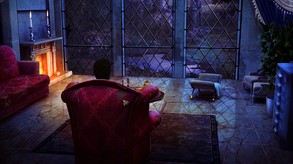
Victor Frankenstein, an old friend and a brilliant scientist has managed to resurrect the dead! However the border between life and death is fragile and Victor has learned the hard way that this balance should not be tempered with...
Modeled estimate, not a reported figure. How we estimate →
Media
About
Genres
Stats
All-time low is the lowest price we've recorded for this game since we started tracking it.
Languages: English*, German, Dutch, Russian, Czech, Turkish, French, Polish, Italian, Spanish - Spain, Portuguese - Portugal*languages with full audio support
Engagement
Hours played at review time, across 40 reviews with recorded playtime.
Reviews
Themes across 40 recent reviews and how positive each mention is. A keyword signal, not full sentiment analysis.
positive critical· bar length = how often the theme comes up
Reviews
[h1]И во вселенной проклятых людей, Живущих вечной гонкой за деньгами, Кто помнит Вас, профессор Франкенштейн? Все помнят монстра, созданного Вами…[/h1] Вы – старинный друг Виктора Франкенштейна, знаменитого учёного. Он вознамерился осчастливить человечество, найдя способ жить вечно. Для проведения своих экспериментов, Виктор, со своей женой Элизабет, переехали в особняк к барону Игорю. Опыты проходили успешно – учёному удалось оживить крысу и даже тигра. Правда, оживлённые твари получились страшными и злобными. Когда Виктор добрался до опытов над людьми, он понял, что лезть на границу между жизнью и смертью, не самая лучшая идея. Он решил соскочить, но Игорь оказался резко против. Франкенштейн понял, что пора вызывать Вас, о чём и сообщает в письме, с просьбой прибыть немедленно. Вы приезжаете в условленное место и оказываетесь свидетелем страшного события. Молодую Элизабет похищает страшный монстр, сшитый из кусков тел и весь искрящийся от электричества. Вам предстоит добраться до особняка Игоря и выяснить, к каким результатам привели эксперименты Вашего друга. Я уже не один раз упоминал, что мне очень не нравиться, когда в подобных играх с поиском предметов, начисто отсутствует логика хранения вещей и применения замков. Так вот, эта игра практически полностью состоит из подобной фигни. Перед Вами сарай, перед сараем выросла пшеница. Вы не можете войти в сарай, пока её не скосите. Но это же не кактусы, в чём проблема пройти сквозь траву? Дальше есть заколоченный досками дверной проём. У меня есть ножовка, гаечный ключ, кирка и тяжелая латная перчатка, но ничего из этого не может сломать старые доски. А на кухне есть кладовка, закрытая на хитрый тройной замок, части которого валяются по всему особняку. Бедная прислуга, которой столько надо мучиться, чтобы набрать продуктов к обеду. Бревно, которое нельзя перелезть, вещи, которые лежат в неподходящих для этим вещей местах, и другие признаки лени дизайнеров видны везде. А вот сцены поиска предметов и задачки сделаны достаточно интересно. https://steamcommunity.com/sharedfiles/filedetails/?id=3353428138 Спасает игру картинка и сюжетные ролики. Нарисовано всё тщательно и детально, а мрачная палитра добавляет атмосферы таинственности. Ролики тоже на высоком уровне, сделаны качественно и динамично. Музыка хорошая. Это чисто моё субъективное мнение об этой игре. Возможно, Вас не задевают претензии, высказанные мною, тогда Вы получите крепкий середнячок, в который можно поиграть на досуге.
The best thing about this game was the starting logo with the two dogs.
Frankenstein: Master of Death turned out to be a very mediocre game. It is made according to the canons of HOG, but absolutely talentless and carelessly.
Frankenstein: Master of Death takes Mary Shelley’s mythos and refashions it into a brisk, puzzle-forward hidden-object adventure with a light steampunk accent. You step into the shoes of a confidant responding to Dr. Frankenstein’s desperate letter, only to find his estate overrun with automata, dimensional anomalies, and the lingering consequences of experiments that crossed several too many lines. The game uses this setup as a hub-and-spoke mystery: each wing of the manor and the surrounding grounds is a self-contained knot of contraptions, broken mechanisms, and occult-scientific doodads that need coaxing back to life. The plot leans pulpy rather than philosophical, but it keeps momentum with frequent reveals—missing pages from the doctor’s journal, odd devices with half-legible instructions, and a recurring antagonist whose actions push you into new locations at a steady clip. Jetdogs and Fineway’s art direction is the standout. Backgrounds are densely layered with brass piping, glass tubes, stitched sinew, and storm-lit stonework that sell the “mad lab” fantasy without turning every room into the same workshop. Hidden-object scenes benefit from these compositions; objects are woven into the environment rather than dumped as clutter, and the better ones ask you to manipulate lids, valves, or hinges to expose the item you need. Character art and cut-ins are less consistent—some faces look stiff, and lip-sync is approximate—but the ambience holds thanks to moody lighting and a soundtrack that hums with low strings and crackling thunder. The music loops are short, yet they complement the exploration well enough that they never become grating during longer puzzle bouts. Structurally, this is a classic HOPA built out of three pillars: inventory puzzles, hidden-object searches, and standalone minigames. Inventory chains are readable—find a cog, restore a gearbox, power a lift, reach a balcony—while occasionally spiking into multi-step craftwork such as mixing reagents or assembling improvised tools. The minigames are a varied sampler: gear-meshing and pipe-routing, symbol alignment, sliding tiles, sequence memory, and wire-tracing logic. None require specialized knowledge, and most communicate rules cleanly on the first attempt. Difficulty is adjustable across modes that tweak hint recharge, sparkles, and skip timers, with a hard mode that disables most scene highlights for players who want to parse every hotspot by eye. A generous fast-travel map reduces backtracking and marks points of interest, which is especially welcome late in the game when you’re juggling objectives across several wings of the estate. Hidden-object scenes hit a comfortable rhythm. There’s a mix of classic word lists and silhouette hunts, peppered with small, interactive steps—assembling a broken tool before you can retrieve it, or opening compartments to reveal tucked-away components. Item size and contrast are generally fair, with only a few offenders hiding in shadowed corners or behind overly ornate decor. Misclick penalties are light to nonexistent, which keeps the pace friendly but may disappoint players who prefer tighter scoring pressure. The designers sprinkle these scenes between puzzle clusters rather than stacking them, so they feel like punctuation rather than padding, and the object reuse across scenes is kept minimal for a game of this length. Pacing is one of the game’s quiet successes. Areas unlock in compact arcs—arrive, orient with the map and journal, solve two or three layered mechanisms, watch a quick plot beat, then push forward. You rarely carry a random inventory item for more than a couple of screens before finding its purpose, which maintains clarity and reduces inventory noise. When the story pivots into its more fantastical elements—dimensional rifts and hybrid constructs—the gameplay follows suit with altered-reality vignettes and a few clever visual twists that remix familiar mechanics without bloating the ruleset. The final act gathers prior motifs—electric conduits, code dials, energy regulators—into a readable crescendo that feels earned rather than abrupt. Production values are solid for the genre tier, with a few caveats. Voice acting ranges from serviceable to stilted, and some lines carry that unmistakable “translated from elsewhere” cadence. A handful of hotspots are finicky, particularly when objects share the same depth plane, leading to a few pixel-hunt moments that the series map normally prevents. There are instances of recycled props and a couple of minigames that lean on familiar templates without a fresh wrinkle. None of these issues derail the experience, but they do keep the game from rising into the top echelon of HOPA storytelling and polish. In terms of content, expect four to six hours for a first run depending on your reliance on the hint system and your tolerance for optional achievements. The Collector’s Edition extras (if you have that version) add the usual suite—bonus chapter, wallpapers, strategy guide, and achievements—with the bonus chapter functioning as an epilogue that ties off a character thread and offers a compact cluster of new scenes and puzzles. It’s not essential to understanding the main narrative, but it is a pleasant add-on for players who enjoy an additional hour of contraption-fixing and art to look at. Where Frankenstein: Master of Death ultimately succeeds is in giving genre fans a dependable loop: explore beautifully gloomy spaces, read a few journal morsels, solve tactile machine puzzles, and dip into hidden-object scenes that respect the art. It is approachable for newcomers—thanks to clear objectives, a forgiving hint system, and a strong fast-travel map—while still providing enough variety to keep veterans engaged. If you come for a deep meditation on creation and responsibility, the script will feel like an adventure-serial riff rather than a philosophical treatise. But if you’re in the mood for an atmospheric, competently designed HOPA with satisfying machinery and a throughline that keeps your feet moving, this is an easy one to recommend Rating: 8/10
Broken on 21:9 screens; the top and bottom parts of the game are missing so it is impossible to finish hidden objects scenes. I’ve been able to progress so far (using the skip button) but I’m not sure if it will always be the case. Also the UI is less convenient than in Artifex Mundi games; the mouse pointer doesn’t change on top of interactive objects... Edit: finally asked for a refund. It’s not only the issue with the 21:9 screen; the gameplay just isn’t very good.
A hidden object game from 2015 can be finished in an hour. The HD version makes the visuals look better, but the gameplay still shows its age. I’d only recommend it for players looking for a very relaxed game. The story is simple and straightforward. There are no twists, it starts quickly, moves quickly and ends quickly. No emotional depth, just the good, the bad and the crazy people. Most items you need for one puzzle are in the next room, most doors are unlocked with a matching key shape. By the end, you are basically collecting a set of tools from a handyman’s toolbox. There are no complex puzzles, no surprises, some items make no sense why they are there. I guess the logic is not about realism, but practical. You can skip the puzzle instantly, and the hints are fast and clear. I skipped most puzzles, but one mini game stood out where you guide an iron ring from the bottom to the top without touching anything. I remember playing it in an arcade more than 20 years ago, it was a nice throwback. [u] [url=https://store.steampowered.com/curator/43342176-Why-Not-Games/#browse] My curator page[/url][/u]
Absolutely great HOG. No notes. (Except that you need to unlock the UI during the hidden object scenes because a couple times there's an item underneath the hint button). Well worth it and that's something I rarely say about these silly HOGs. One of the interesting things is that all the clues and puzzles are entirely grounded in logic. Need to get through fabric, you use a knife. You DON'T craft a sleeping potion for the angry bear to get it to snore a lullaby for a fabric goblin.
A fun little hidden object game. the only thing annoying is that sometimes, the items you have to click on are behind the hint button which makes them hard to click on, aside from that, an overall fun game for the price.
This is my favorite Pajama Sam game!
Про дракулу зашло больше, эта часть ну такое. В поиске предметов в куче раздражает интерфейс, перегораживает часть экрана, это мешает, когда какая-то фигнюшка находится с краю; еще иногда не прокликивается предмет. Сюжетка короткая, но конец зажевали, как будто тебя побыстрее выгнать пытаются, можно было бы перераспределить время. Головоломки разнообразные, но легкие. Понравилось, что в этой части у героя в инвентаре предметы живут подольше, многие не одноразовые. Она не прям плохая, но и не отличная
Related
Related
Trends
Concurrent players on Steam, sampled daily since tracking started.
Momentum
Pace estimated from the game's recent review growth (our daily snapshots) at its own sales-per-review ratio — a momentum signal, not booked sales.
Audience
Estimated from the language of this game's reviews — a proxy for where players are, not official Steam demographics.
Related
| ABRISS - build to destroy | $244.6K | 558 | 82% | $14.99 |
| Black Ice | $244.6K | 515 | 95% | $19.99 |
| Turlock Holmes | $244.6K | 970 | 80% | $9.99 |
| Fictorum | $244.5K | 1.2K | 78% | $9.99 |
| A Robot Named Fight! | $244.7K | 892 | 88% | $12.99 |
| Lost Wiki: Kozlovka | $244.5K | 1.4K | 97% | $4.99 |