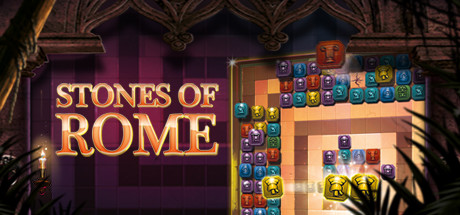
James is trapped in the catacombs below Rome! Puzzle through 60 match-3 levels – underground and above – and reunite him with his tour group!
Modeled estimate, not a reported figure. How we estimate →
Media

About

Genres
Stats
All-time low is the lowest price we've recorded for this game since we started tracking it.
Languages: English, French, German, Italian, Spanish - Spain, Dutch, Portuguese - Portugal, Swedish, Portuguese - Brazil
Reviews
一款玩法挺独特的三消游戏 从场景四周的待选区中选择一个砖块,移入中间的区域,使得三个任意颜色的砖块相连(无需在一直线)即可消除 目标是将中间的所有砖块消除即可通关 解谜成分较多,尤其后期关卡需要合理安排才能逐渐消除
Although quite cheaply produced, this is an engaging and therapeutic puzzle game that works pretty well and just needs to be given a bit of a chance. It is not a match 3 in the traditional sense, where you swap adjacent tiles, but where you drag tiles from the sides to fill the inner grid. The colours, that get ushered in gradually, are bright and very well-chosen. The game-play is a step-up from the automatic and (sometimes) brainless moves required in a normal Match 3 and actually requires a bit of thought. It's quite a nice companion piece to the also neglected T-Kara Puzzles which offers another innovative twist to this (sub) genre.
Even if it's an original match-3, possibilities are too limited, so i get bored after 1 hour.
Está basado en el genial Brick Shooter que, mientras consigas seguir avanzando, no tiene fin. Me gusta mucho éste tipo de juego, pero me ha resultado muy corto. Lo he terminado en 6 horas aunque, por el precio, está muy bien. Lo recomiendo a pesar de su corta duración.
Un jeu de match3 original. Un joli plateau de jeu. Gameplay relaxant, comme la musique qui l'accompagne. Je ne m'en lasse pas. Bonne rejouabilité si on souhaite battre des scores de vitesse pour terminer chaque tableau.
Nett für zwischen durch
I can only give this one a thumbs up as a puzzle game, but not as a match three. Yes, the puzzles are solved by matching three, but it simply isn't the same core game mechanic. It is a puzzle mechanic. The core game play involved having some cubes of assorted colors in the middle of a grid, with cubes all the way around the outside. You can click on any cube, and send it out in to the grid, so long as it will be stopped by another cube before it reaches the far side. Sadly, for me, making larger groups does not provide anything special, another way in which this isn't much like a standard match three game. I am only about a dozen levels in, and the number of colors keep going up, which adds to the complexity of the tiles. I am still uncertain about the details as to what you need to do to complete a level, it happens, but why? It's a mystery. Tiles shot in to the middle retain a small white arrow showing the direction they were (and are) heading, as they seem to retain momentum and fly off the grid if a path should clear in front of them. So the cubes around the outside are assorted colors, and as you fire a cube, it is pushed to the front, and a new randomly(?) colored cube fills in behind. I question the randomness, because it feels like a puzzle game where careful play will always result in victory, and that there isn't a pre-set pre-determined course of action you must take to win, but I am also not sure of that as well. The look is nice, the controls fine, and the music pleasant. It isn't the casual experience I look for from a match three however, as it does require thought, and intense scrutiny of the options and possibilities. It claims sixty levels, but the first few are used as the basic tutorial, so really closer to fifty-five. No biggy. So an easy thumbs up. ADDENDUM: Got about three and a half hours of fun out of this one. I didn't finish it, but it simply got too hard and monotonous to keep struggling with. Still, got my moneys worth.
Stones of Rome is a casual puzzle adventure developed by Nijumi Games and published by familyplay that combines classic match-3 gameplay with a lighthearted story set among some of the most famous historical locations in Rome. Rather than presenting players with an endless collection of disconnected puzzle boards, the game frames its challenges within a simple narrative about exploration, recovery, and finding a way home. The result is an approachable and relaxing experience that appeals to fans of traditional puzzle games while adding enough story and progression to maintain interest across its entire campaign. The adventure begins when a young tourist named James becomes separated from his group during a visit to Rome. What should have been a routine sightseeing trip quickly turns into a small disaster after a mischievous monkey steals and destroys his map, leaving him stranded within the city's ancient catacombs. With no clear path back to safety, James must gather the scattered pieces of the map by solving puzzles hidden throughout underground tunnels and historical ruins. The story remains simple throughout the game, but it serves as an effective motivation for progression and gives players a reason to continue moving from one stage to the next. One of the game's strengths is its use of the Roman setting. The environments draw inspiration from ancient ruins, underground catacombs, and iconic historical locations, creating a backdrop that feels more distinctive than the generic fantasy themes commonly found in many puzzle games. While the setting is primarily decorative, it helps establish a sense of adventure and discovery that enhances the overall experience. Moving through different areas of Rome provides a feeling of progression that keeps the campaign engaging as players uncover new sections of the city and continue their search for the missing map fragments. The core gameplay revolves around match-3 puzzle mechanics, but Stones of Rome places a stronger emphasis on problem-solving than many similar titles. Instead of relying entirely on random combinations and endless cascades, levels are designed as individual challenges that encourage careful planning and observation. Each puzzle presents players with a board that must be solved efficiently, rewarding thoughtful decision-making over rapid clicking. This approach gives the game a more deliberate pace and makes success feel earned rather than purely dependent on luck. The campaign contains sixty levels divided between underground and surface environments, providing a substantial amount of content for a casual puzzle title. Early stages introduce the basic mechanics and gradually teach players how to approach more complicated challenges. As the adventure progresses, puzzle layouts become increasingly complex and require greater attention to detail. This gradual escalation creates a satisfying difficulty curve that keeps the experience engaging without becoming unnecessarily frustrating. What makes the progression particularly enjoyable is the steady introduction of new challenges. The game consistently asks players to reconsider their strategies and adapt to changing board configurations. While the mechanics remain familiar throughout, the variety of level layouts prevents the experience from becoming completely repetitive. Each stage feels like a small problem waiting to be solved, encouraging players to think ahead and carefully evaluate their options before making a move. Visually, Stones of Rome embraces a colorful and welcoming art style that suits its casual nature. The environments are bright and easy to read, while the puzzle boards remain clear and uncluttered. Ancient Roman architecture, underground passages, and archaeological elements help reinforce the setting and provide visual variety throughout the campaign. Although the graphics are relatively simple, they effectively support the gameplay and contribute to the game's relaxing atmosphere. The audio presentation follows a similar philosophy. Gentle background music accompanies the puzzles without becoming distracting, creating a comfortable environment for extended play sessions. The soundtrack complements the historical setting and helps maintain a calm tone that encourages thoughtful puzzle-solving rather than rushed decision-making. Combined with the visuals, the audio design contributes significantly to the game's accessibility and charm. Another positive aspect is the game's approachable design. The controls are intuitive, objectives are clearly communicated, and the overall structure remains easy to understand. This accessibility makes the game suitable for players of varying skill levels, including those who may not normally play puzzle games. At the same time, later levels offer enough challenge to satisfy players who enjoy carefully solving increasingly difficult puzzles. The game is not without its limitations. Players searching for innovative mechanics or major departures from established match-3 conventions may find the gameplay somewhat familiar. While the Roman setting and adventure framework help distinguish the experience, the core mechanics remain rooted in traditional puzzle design. Additionally, because the gameplay revolves around a single central concept, some repetition is inevitable during longer play sessions. However, the well-paced campaign and evolving level designs help minimize these concerns. What ultimately makes Stones of Rome enjoyable is its balance between simplicity and structure. It does not attempt to overwhelm players with complicated systems or excessive mechanics. Instead, it focuses on delivering a steady stream of thoughtfully designed puzzles within a charming adventure setting. The combination of historical themes, accessible gameplay, and satisfying progression creates an experience that remains consistently enjoyable from beginning to end. Stones of Rome succeeds as a relaxing puzzle adventure that understands its audience. It offers a substantial collection of well-designed challenges, an appealing historical backdrop, and enough narrative context to make the journey feel meaningful. While it may not revolutionize the match-3 genre, it provides a polished and entertaining experience that puzzle fans can appreciate. For players looking for a casual game that combines thoughtful challenges with a touch of Roman-inspired exploration, Stones of Rome delivers a rewarding and enjoyable adventure. Rating: 6/10
Related
Related
Trends
Modeled estimate over time, reconstructed from Steam's monthly review histogram.
Momentum
Pace estimated from the game's recent review growth (our daily snapshots) at its own sales-per-review ratio — a momentum signal, not booked sales.
Related
| Mission IDLE | $602.8 | 57 | 68% | $0.89 |
| Dark Frame | $602.6 | 73 | 52% | $0.49 |
| Backrooms: The Phobolore | $600.4 | 52 | 54% | $0.79 |
| Conspiracy! | $599.7 | 51 | 63% | $0.99 |
| My Typing Skill | $614 | 64 | 75% | $0.69 |
| 101 Cats in Amsterdam | $616.2 | 80 | 94% | $0.49 |