Modeled estimate, not a reported figure. How we estimate →
About
Genres
Stats
All-time low is the lowest price we've recorded for this game since we started tracking it.
Languages: English, French, German, Spanish - Spain
Engagement
Hours played at review time, across 117 reviews with recorded playtime.
Reviews
Themes across 117 recent reviews and how positive each mention is. A keyword signal, not full sentiment analysis.
positive critical· bar length = how often the theme comes up
Reviews
This is one of the best point and click games - I come back to it once every few years because its a great game.
This game has a vibe that I really like, and yes.. its old but overall the gameplay experience/plot is better than what most new games will offer you, only thing that sometimes got a little annoying but not impossible to deal with, is the puzzles, I do like puzzles but here they're sometimes (most of the time) a bit "find it by yourself" and well it can take a while if you're dumb like me lol, but again, the game is awesome, I wish it was longer (especially the grandpa part of the game) with more crime investigations.
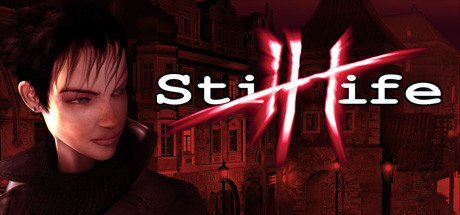
Still Life, developed and published by Microids, is a dark and mature point-and-click adventure that stands as one of the genre’s most atmospheric murder mysteries of the early 2000s. Released in 2005, it intertwines two parallel storylines separated by nearly a century, uniting them through the haunting repetition of violence and human depravity. The player alternates between Victoria McPherson, a weary FBI agent investigating a string of brutal murders in contemporary Chicago, and her grandfather, Gustav McPherson, a private detective working a similar case in 1920s Prague. This intergenerational structure forms the backbone of the narrative, turning Still Life into a meditation on obsession, legacy, and the cyclical nature of evil. The storytelling approach is ambitious for its time, giving players two contrasting yet thematically linked perspectives that enhance the mystery and emotional gravity of the experience. From its very beginning, Still Life envelops players in an atmosphere of dread and melancholy. The visual presentation—crafted through richly detailed pre-rendered backgrounds—evokes a grim world of decay and moral corruption. Modern-day Chicago is portrayed as cold and industrial, its metallic greys and flickering neon lights mirroring Victoria’s emotional detachment, while 1920s Prague feels drenched in a sense of tragic beauty, its cobblestone streets and crumbling architecture echoing a city that hides its sins beneath elegant surfaces. The game’s cinematography enhances the feeling of watching a noir film unfold, complete with carefully framed shots and moody lighting. Even though the graphics have aged, the artistic direction remains powerful, successfully immersing the player in a world where death feels omnipresent. The haunting soundtrack underscores this sense of tension, balancing somber piano melodies with sharp, ambient undertones that heighten the unease of every investigation. Gameplay in Still Life follows the traditional mechanics of classic point-and-click adventures, focusing on exploration, dialogue, and puzzle-solving. Players gather evidence, interact with objects, and piece together clues to push the investigation forward. The rhythm of play alternates between narrative progression and cerebral problem-solving, with some puzzles designed to mirror the investigative process itself—assembling pieces of evidence or decrypting messages found at crime scenes. However, other puzzles diverge from the narrative’s tone, occasionally disrupting the pacing. The infamous lock-picking and cookie-baking puzzles, for instance, are memorable not for their cleverness but for how they interrupt the flow of tension. Despite these occasional missteps, the game’s core mechanics remain engaging, supported by its strong narrative direction and the satisfaction of solving each case file one piece at a time. The dual timelines are what make Still Life stand out. Gustav’s story unfolds like a gothic detective novel—filled with smoky taverns, dangerous seductresses, and a lingering sense of moral decay—while Victoria’s storyline channels the precision of a procedural crime thriller. The switch between the two is seamless, and each era informs the other both narratively and emotionally. Gustav’s descent into obsession mirrors Victoria’s growing frustration with her own case, giving the story a sense of symmetry that transcends generations. Both characters are flawed and deeply human: Victoria’s dry wit and professional composure mask exhaustion and doubt, while Gustav’s determination is tinged with melancholy and guilt. Their parallel investigations suggest a haunting inheritance of trauma, as if the sins of one generation bleed into the next. Still Life’s storytelling succeeds most in its attention to tone and mood rather than intricate plotting. The mystery remains gripping throughout, though its resolution is famously ambiguous. The game ends on a cliffhanger, deliberately leaving the identity of the killer unresolved—a choice that divided players at the time. Some appreciated the open-endedness, interpreting it as a thematic statement about the futility of chasing absolute truth, while others found it frustrating after hours of build-up. The sequel, Still Life 2, attempted to continue and clarify the story, but the original stands on its own as a more intimate and atmospheric experience. Despite the incomplete conclusion, the writing is mature and understated, avoiding sensationalism while delving into the psychology of violence and obsession. Technically, Still Life bears the hallmarks of its era. The pre-rendered backgrounds are beautifully detailed, but the character models and animations can feel stiff by modern standards. The voice acting is competent, though uneven at times, with certain emotional beats landing flatter than intended. Yet these flaws are minor in the grand scheme—the visual and auditory craftsmanship more than compensate, and the pacing, while deliberate, allows the narrative’s tension to build organically. The game’s short length, typically spanning eight to ten hours, works in its favor by maintaining focus and preventing the investigation from dragging. What makes Still Life endure years after its release is its sense of atmosphere and narrative ambition. It is not a puzzle-heavy game meant to test logic as much as it is an emotional journey through the darker corners of human nature. Its visual storytelling, coupled with its dual timeline structure, creates an experience that lingers in memory long after the credits roll. For fans of crime thrillers, noir fiction, and methodical storytelling, it captures a feeling of tension and introspection that few adventure games have matched since. It may stumble with pacing and an unresolved ending, but it remains a haunting reminder of how interactive storytelling can merge art, mystery, and emotion into a single, unforgettable work. Rating: 8/10
🕹️ Gameplay Still Life 2 has some nice improvements compared to the first one — thanks for that, guys! The mechanics feel smoother, and it’s just more enjoyable to play overall. But to add, the first one was also a delight! 🎨 Graphics & Design The graphics got better too, and I think there are fewer explicit scenes than in the first game, which makes it more approachable I guess. Overall, it’s a pretty solid look for a newer game. 🔊 Sound & Music It really shows when developers put effort into the sound, voices, and overall atmosphere — and they definitely did here. Everything just fits perfectly and adds to the experience. 👯 Fun Factor If you like solving puzzles and detective games, this one is totally for you. It’s engaging, keeps your brain active, and makes you feel like a real investigator. 💭 Overall Impression Still Life 2 is a great follow-up to the first game — improved gameplay, good visuals, and a fun, puzzle-filled experience that’s perfect if you enjoy detective stories.
Some of the puzzling is fairly tedious and cryptic. Couldn't get through without some online walkthrough assistance at times. But the game is old and struggled with freezing up at several points during the gameplay. I had to look up a litany of fixed to limp it along.
Good game. Not many bugs. Open ending. Only issue is the game tends to freeze during cutscenes, I had to use Rivatuner Statistics Server and set the frame rate limit to 60fps. Once that was done the cutscenes play fine on Windows 11
At first i wasnt expecting anything great after knowing its a sequel to "Post mortem" but this game is so much better. Im not a bug fan of the Gus scenes but the overall game is really nice. Here and there a few little annoying puzzles riddles but all in one really cool and funny. Im really looking forward to play the next part. I can really highly recommend it
its good, terrible dialogue, but the game has its charm, and is a good slow paced, story driven game
This one is really mixed bag for me. It starts honestly really well and is enticing for quite long. But then some of the puzzles begin to fall flat and some don't make any kind of sense at all and are just "puzzles in sake of puzzles" so-to-say. There's one particular cooking puzzle that doesn't have absolutely anything to do with the game, but it's there and it's one of the worst puzzles I've ever encountered. Few of the puzzles in general are really infuriating and non-sensical. Also the plot or more precisely writing near the end game really bogs down and game begins to rely bit too much on back tracking to presumably extend gameplay. But it can't be said to be bad game. After all I first completed it with Xbox and later on with PC. More precisely going into game. When it does writing/plot well, it's absolutely 9/10 stuff. It's just unfortunate that experience is... Inconsistent. Also some of the puzzles are really good tbh, but here like before mentioned are also really bad ones and some a-hole has thought it's good to implement pixel hunting things in few gameplay occasions. NOTE: In this regard game is vastly better on Original Xbox, where item grab icon just appears when you get close enough of items. On PC cursor just turn when happen to hover over item as usual, but few of the items in game are really small and can blend into background. Fortunately game doesn't revolve around items much at all. Graphic art style is great for the era game has released and still holds on well enough imho, it is old game after all. One thing I had completely forgotten that there's a lot of cgi game engine rendered cut scene videos that are really well made and match the gameplay art style perfectly. Like cutscene vids when they happen, they're really consistent and overall really well made. Sound/music is I suppose bit better than adventure games usually deliver. Overall the general atmosphere is like 9,5/10 Gameplay all things considered 7/10 Dialogue: 3 to 8/10 it truly goes from abysmal to good. If you want fairly good crime/violence adventure game that isn't too long, I'd say its worth the try. Especially from sales where it can be gotten almost free. BTW. I completed game on Linux (Debian 13 KDE) with Steam and Proton 6... Something compatibility layer selected. Game start took quite long, but only other issue which I saw was that savegames should have screencaptures, but they're not visible. Other than that it was flawless experience.
Dated game!
Related
Related
Trends
Modeled estimate over time, reconstructed from Steam's monthly review histogram.
Audience
Audience
Estimated from the language of this game's reviews — a proxy for where players are, not official Steam demographics.
Games most often reviewed by the same players — an audience-affinity signal from our review sample, not full ownership data.
Related
| Roblox | $2.5B | 50.1M | 84% | Free |
| Pokémon GO | $839.2M | 15.4M | 73% | Free |
| Black Myth: Wukong | $794.9M | 1.2M | 97% | $59.99 |
| PK XD: Fun, friends & games | $538.5M | 6.4M | 94% | Free |
Related
| Arcade Classics Anniversary Collection | $62.2K | 402 | 64% | $7.99 |
| Meifumado | $62.2K | 180 | 48% | $14.99 |
| Bloodless | $62.2K | 180 | 84% | $14.99 |
| Moss: The Forgotten Relic | $62.2K | 132 | 94% | $17.99 |
| DreamWorks Dragons: Legends of The Nine Realms | $62.2K | 58 | 76% | $49.99 |
| Ship Simulator Realistic | $62.2K | 80 | 59% | $24.99 |