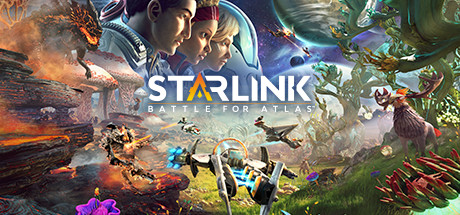
Lead a group of interstellar pilots dedicated to free the Atlas Star System from Grax and the Forgotten Legion. Start your adventure with the full original Starlink: Battle for Atlas™ Initiative team. Included : * Starlink Game * 4 Starships : Zenith, Neptune, Pulse, Lance * 6 Pilots : Mason, Judge, Chase, Hunter, Levi, Razor * 12...
Modeled estimate, not a reported figure. How we estimate →
Media
About
Stats
All-time low is the lowest price we've recorded for this game since we started tracking it.
Languages: English*, French*, Italian*, German*, Spanish - Spain*, Danish, Dutch*, Finnish, Japanese*, Korean, Norwegian, Polish* +4 more
Engagement
Hours played at review time, across 40 reviews with recorded playtime.
Reviews
Themes across 40 recent reviews and how positive each mention is. A keyword signal, not full sentiment analysis.
positive critical· bar length = how often the theme comes up
Reviews
does not run
This game is essentially unplayable on modern operating systems, as it requires users to disable a critical BIOS security feature just to run. It's unacceptable that this has been the only "official fix" for a well-known bug that's existed for over five years. Since the game is no longer receiving updates, this issue will likely never be resolved, leaving the game permanently broken. Charging over $50 for such a product is simply outrageous.
Yes, you have to turn off the virtual machine thing, and yes you have to install Ubisoft Connect or whatever (this sh-- is absolutely 100% annoying). However, I loved this game back at release and I love it now. I absolutely hate the company Ubisoft and all that they are. It was on Summer Sale with literally everything digital for less that 15.00. Le Sigh.
Listen, I came for the starships, but I stayed because I accidentally became the lead environmental consultant for an entire star system. One minute I’m soaring through the clouds of a vibrant alien world, feeling like a top-tier ace pilot, and the next I’m hovering over a patch of space-weeds trying to figure out if I have enough cold-damage to shut down an angry mechanical extractor. The transition from 'dogfighting in the vacuum of space' to 'critically analyzing the local flora' is seamless and weirdly therapeutic. Most space games treat planets like flat loading screens, but here, I actually found myself getting attached to the outposts. I spent three hours yesterday just flying around Kirite, not because I had a mission, but because the lighting hit the sand dunes just right and I wanted to see if I could find a rare animal to scan. Then, naturally, a giant Prime robot the size of a skyscraper showed up and tried to turn my wings into scrap metal. The combat feels like a Saturday morning cartoon with a high-tech budget. You can swap your left wing for a flamethrower and your right wing for a gravity well mid-flight, which is the kind of modular insanity I didn’t know I needed in my life. I’ve reached a point where my ship looks like a junk-yard masterpiece, but it fires frozen missiles that shatter robots into a thousand satisfying pieces, so who am I to complain? It’s a rare gem where exploration actually feels like it matters. I went in thinking I was just playing a pilot sim; I came out realizing I’m basically a one-man army with a very expensive hobby of collecting digital ship parts. 9/10. I’ve spent more time customizing my wing-loadout than I have actually talking to my crew, but when you have a vortex cannon, who needs conversation?
If you liked starfox and wished it was actually open world, give this a try.
Better than Starfield.
amazing game hard and fun!!!!!!!!
Love the Game it like no man sky but better love the open world exploration
Starlink: Battle for Atlas, developed by Ubisoft Toronto and published by Ubisoft, is an open-world space adventure that blends arcade-style dogfighting with planetary exploration and light RPG progression. At its best, it delivers a sense of freedom that few games in the genre manage to capture, allowing players to seamlessly transition from orbit to ground combat without interruption. Set in the Atlas star system, the game follows a group of pilots working to repel the invading Forgotten Legion, but while the premise is serviceable, the real focus lies in the experience of traversing and interacting with its interconnected worlds. One of the game’s most impressive features is how fluidly it handles scale. Flying through space, diving into a planet’s atmosphere, and immediately engaging in combat or exploration creates a continuous flow that feels both immersive and technically impressive. Each planet offers its own visual identity and environmental hazards, from lush alien ecosystems to more hostile, resource-scarce terrains. This variety helps maintain a sense of discovery early on, giving players a strong incentive to explore each corner of the system and gradually push back enemy influence. Combat is accessible and satisfying in short bursts, built around fast movement, responsive controls, and a flexible weapon system. Players can equip different weapon types tied to elemental effects, encouraging experimentation with combinations that can exploit enemy weaknesses or trigger environmental reactions. While this adds a layer of strategy, the overall combat loop remains relatively simple. Encounters are often straightforward, relying more on consistent execution than deep tactical planning, which can make extended play sessions feel repetitive once the novelty of the system wears off. Customization plays a central role in shaping the experience. Ships, pilots, wings, and weapons can all be swapped and upgraded, allowing players to tailor their approach to combat and exploration. This system gives a satisfying sense of progression, especially as new gear is unlocked and combined in different ways. However, the sheer number of options can feel overwhelming at first, and the game doesn’t always do the best job of clearly communicating how different components affect performance. Over time, though, this flexibility becomes one of the game’s more engaging elements, encouraging players to experiment and refine their builds. Structurally, the game follows a familiar open-world formula. Players move between planets completing objectives such as clearing enemy bases, defending outposts, and collecting resources to strengthen alliances. While there is a steady sense of progression in reclaiming territory and improving relationships with local factions, the mission design tends to repeat itself. Objectives rarely evolve in meaningful ways, and the loop of liberating areas can start to feel predictable after several hours. The initial excitement of exploration gradually gives way to a more routine pattern of tasks. The narrative serves primarily as a backdrop for the gameplay. The cast of pilots is likable enough, and their interactions provide some personality, but the story itself remains fairly straightforward. It introduces a conflict with clear stakes but doesn’t delve deeply into character development or world-building. As a result, the narrative rarely becomes a driving force behind the experience, instead functioning as a framework that supports the game’s exploration and combat systems. Visually, Starlink maintains a strong and consistent presentation. The art direction leans toward vibrant, colorful environments that emphasize the diversity of the Atlas system. Planetary surfaces are detailed enough to feel alive, and the transitions between space and ground gameplay enhance the overall sense of cohesion. The audio design complements this with solid voice acting and a fitting soundtrack, though it doesn’t stand out as a defining feature. Together, these elements create a polished presentation that supports the game’s core strengths. Despite its accessibility and charm, the game’s relatively low difficulty and repetitive structure can limit its long-term appeal. It is clearly designed to be approachable, allowing players to jump in and enjoy the experience without facing steep challenges. While this makes it welcoming for a wide audience, it also reduces the sense of tension and accomplishment that might otherwise come from overcoming more demanding encounters. In the end, Starlink: Battle for Atlas is a game that excels in delivering a smooth, visually engaging space adventure with a strong sense of scale and customization. Its seamless transitions and flexible systems make it enjoyable to explore and experiment within, but its repetitive mission design and modest narrative prevent it from reaching greater heights. It’s an experience that shines brightest in its early hours and remains enjoyable in shorter sessions, even if it struggles to maintain the same level of excitement over time. Rating: 7/10
7分,几年前育碧送的标准版直接捡起来开玩 优点:飞船设计和手感优秀,还有太空和星球的无缝穿梭很惊艳,初玩一点点清问号夺回星球很上瘾 缺点:可育碧就是把几个玩法无限复制粘贴到遍地,然后星球又复制粘贴几个,使得重复劳作时间变得巨长,中期敌人大军又会占领回来,估摸全清全收集都要50h+ 推荐玩法:直冲主线,支线顺手做一下,游戏蛮短但体验还可以
Related
Related
Trends
Concurrent players on Steam, sampled daily since tracking started.
Momentum
Pace estimated from the game's recent review growth (our daily snapshots) at its own sales-per-review ratio — a momentum signal, not booked sales.
Audience
Estimated from the language of this game's reviews — a proxy for where players are, not official Steam demographics.
Related
| CYBERMATRIX | $44.7K | 136 | 90% | $12.00 |
| Q-YO Blaster | $44.7K | 199 | 91% | $9.99 |
| Pressure Overdrive | $44.6K | 153 | 67% | $12.99 |
| Heretic Operative | $44.7K | 93 | 81% | $19.99 |
| Space Channel 5 VR Kinda Funky News Flash! | $44.6K | 75 | 95% | $24.99 |
| Range is HOT! | $44.6K | 53 | 68% | $29.99 |