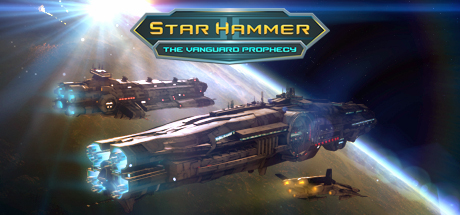
Take command of Naval Strike Group 7 and lead your fleet to victory in full 3D tactical space combat. Star Hammer: The Vanguard Prophecy is a sci-fi strategy saga that will test your skills as both capital assault ship Captain and naval fleet Commander.
Modeled estimate, not a reported figure. How we estimate →
Media

About


Genres
Stats
All-time low is the lowest price we've recorded for this game since we started tracking it.
Languages: English
Engagement
Hours played at review time, across 41 reviews with recorded playtime.
Reviews
Themes across 41 recent reviews and how positive each mention is. A keyword signal, not full sentiment analysis.
positive critical· bar length = how often the theme comes up
Reviews
I remember I played this game back in the day and I really enjoy it. I bought it when I saw it in steam to support the devs. Yes, its limited in various points, already mentioned in other comments. The thing I didn't like the most was the lack of customization between ships and the limited things you can set up with your battle-group pre deployment...almost nothing actually. But never the less, I had tons of fun, this game is unique in its kind along side with Battlestar Galactica. Its a shame there should be more; more complex, deep and clearly with more budget.
Overall the Star Hammer: The Vanguard Prophecy is disappointing. After completing the game on the "defensive scale" I found: - Achievements won't always activate when completed while others only activate when you have beaten the campaign. - The ending is anticlimactic (at least on the defensive scale), while the rest of the story is largely forgettable. - The controls for ship energy output and weapons priority targeting can be tedious at times (more so if you have a larger fleet). - While the soundtracks are engaging at the start, there is approximately only 9 soundtracks including the main menu (totalling at 30 minutes). After 4 hours of playing it can become somewhat repetitive. However there are some things that Star Hammer offers which are positive. - Character interactions during mission selection add much needed depth to the story. - Camera controls are precise and can be altered with a large degree of freedom (i.e free cam, top down, tracking on ships and the ability to review the last turn made). - Sound effects in large firefights are fairly immersive.
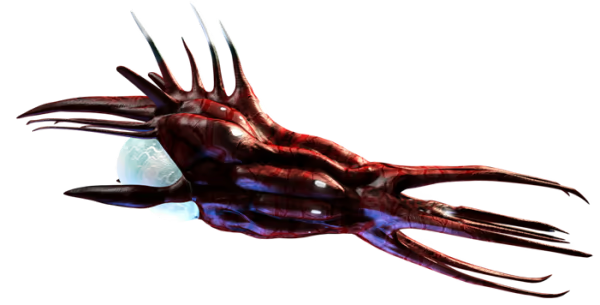
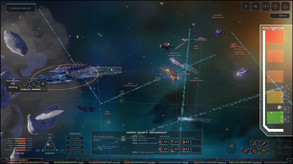
For a tactical game, I'm not seeing alot of tactics... I don't want to be down on this. It's a fresh enough setting that sees us fighting back against chitinous horrors, not on the ground a la Starship Troopers, but instead in space against hordes of starfaring bioships. That is very, very cool to me...but it doesn't make up for the, I'll say lack of information. The user interface is clunky as sin and I literally couldn't tell everything that was happening with the ships, whether mine or the enemy. That's a bit unfortunate, since that is a big part of a tactical game. What are my fire arcs? What is my weapon range? Why is that alarm sound going off? I genuinely don't know...and that's a problem when I have over 3 hours of "experience" with this space tactics game. The only real claim to uniqueness is the "WEGO" turn system. In it, you and the opponent both decide where your ships move and what actions they take and then those turns resolve in a psuedo real time action. However, you're pretty limited in what you can do and, even with what little you actually can order, you can't predict your or the enemy A.I. It's hard to really describe, but please believe me that it can be very painful to see your fighter drones destroying themselves because they can't figure out how to avoid each other when their carriers are close by...maybe a little playtesting should've been in order? It's not terrible, but this game is pretty rough and doesn't give you much in terms of replayability. Once you've seen one fight you've basically seen them all, regardless of ship counts or map. I wanted to like it, I tried my best, but I just can't get into this game. You can skip this one...
Llevo 2 horas jugadas. La impresión es muy positiva. Falta traducción al español (que ya que todo en el juego es texto y dialogo, no creo que sea la mayor de las tareas). La campaña permite diferentes "misiones y condiciones" segun detecte un estilo de juego agresivo o defensivo cuya mecánica de identificacion es algo opaca. Si bien en la primera mision me calificó de agresivo y en la segunda de defensivo, la única diferencia que veo es que en la segunda procuré desviar mas energia a los escudos en todo momento pues estas superado en número. No se si tendrá que ver o no. Por lo demás... Atención a todas las naves! Calamares a la vista! Fuego a discreción!
A very enjoyable turn based space fleet command game, easy to play and understand the different classes of ship and how best to use them. You will need to plan each move carefully to maximise your ships position and firepower to defeat the enemy. Stand off and fire with the larger ships and get close to fire with smaller ones, also important to manage your energy between weapons, shields and engines and target missiles effectively as you have a limited supply of these.
can't honestly recommend this, especially this late after release because it just didn't age well. not sure I would have recommended it back in 2015-2016 either - the concept is good, the delivery not so much.
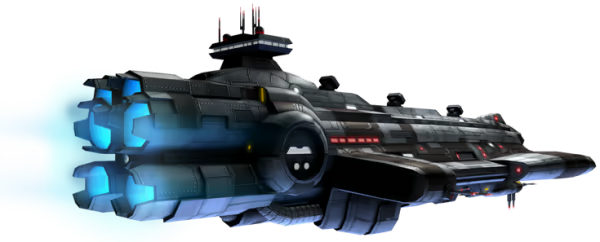
Star Hammer: The Vanguard Prophecy is a tactical space combat strategy game developed by Black Lab Games and published by Slitherine Ltd. that offers a thoughtful and highly strategic take on fleet warfare in a futuristic science-fiction setting. Rather than emphasizing fast-paced action or large-scale empire building, the game focuses on carefully planned engagements where every movement, attack order, and tactical decision can determine the outcome of a battle. Combining turn-based planning with simultaneous real-time execution, Star Hammer delivers a unique command experience that rewards patience, foresight, and intelligent fleet management. Set in a future where humanity has spread beyond Earth in search of survival, the game presents a military science-fiction universe filled with political tension, interstellar conflict, and an ongoing war against a powerful alien threat. The campaign centers on humanity's efforts to defend its colonies and maintain stability during a dangerous period known as the Second Contact War. While the story embraces familiar genre themes such as survival, military duty, and alien conflict, it provides a solid framework that gives purpose to the numerous fleet engagements players will face throughout the campaign. The game's defining feature is its innovative combat system. Instead of taking turns one after another, both sides issue commands simultaneously before watching them unfold in real time. This creates a constant sense of uncertainty because players cannot simply react to enemy actions after seeing them happen. Success depends on anticipating an opponent's intentions, positioning ships effectively, and committing to strategies before knowing exactly how the enemy will respond. The result is a combat system that feels closer to commanding an actual military operation than a conventional strategy game. Positioning plays a critical role in every engagement. Battles occur within fully three-dimensional environments where fleets maneuver across multiple layers of space. Ships can attack from different angles, use terrain for protection, and exploit gaps in enemy formations. Asteroid fields, debris clouds, and other environmental features become important tactical considerations rather than simple visual decoration. Mastering movement and spatial awareness often proves just as important as selecting the right weapons. Fleet composition adds another layer of strategic depth. Players command a variety of vessels, including corvettes, frigates, cruisers, carriers, and specialized support ships. Each class serves a distinct purpose on the battlefield. Smaller vessels offer speed and flexibility, while larger ships provide firepower and durability. Support units contribute electronic warfare capabilities, fighter deployment, and logistical assistance. Building a balanced fleet requires understanding how these different roles interact and support one another during combat. One of the game's strengths is the sense of ownership it creates over individual ships and crews. Throughout the campaign, players recruit officers and specialists who provide valuable bonuses and unique abilities. These personnel can significantly influence combat performance, making their survival an important consideration. Over time, fleets begin to develop their own identity, and players often become attached to veteran crews that have survived multiple difficult engagements. The campaign offers substantial content, featuring dozens of missions spread across a branching storyline. Player decisions influence progression, and combat performance can affect future opportunities and rewards. This structure adds replay value by encouraging experimentation with different tactical approaches. Some missions emphasize direct confrontation, while others require defensive operations, escort duties, reconnaissance tasks, or survival against overwhelming odds. The variety helps maintain engagement throughout the lengthy campaign. An especially interesting feature is the game's strategic progression system, which rewards different styles of command. Players who favor aggressive tactics may unlock different benefits than those who prioritize defense and caution. These choices influence resource management and campaign development, making overall strategy just as important as individual battles. The visual presentation succeeds in capturing the scale of interstellar warfare. Ship designs are distinctive, weapon effects are satisfying, and large engagements frequently produce impressive displays of missiles, lasers, explosions, and fighter attacks. While the graphics may not match the spectacle of major-budget space simulations, the battlefield remains visually engaging and effectively communicates the chaos and intensity of fleet combat. Sound design further enhances immersion. Weapon impacts carry weight, engine effects help establish the presence of massive warships, and the soundtrack supports the game's military atmosphere. The music complements both the quieter planning phases and the more dramatic moments of combat, helping reinforce the tension that defines the experience. One of the most commendable aspects of Star Hammer is its accessibility. Despite featuring complex mechanics and a unique combat system, the game introduces its concepts through a well-designed tutorial structure. New players gradually learn the fundamentals without being overwhelmed by information. At the same time, experienced strategy fans will find plenty of depth to explore as they master advanced fleet tactics and battlefield positioning. The game is not entirely without flaws. The campaign narrative, while interesting, occasionally lacks the emotional impact necessary to make every character memorable. Some interface elements can feel cumbersome during larger engagements, and the deliberate pace of combat may not appeal to players looking for constant action. Additionally, the absence of multiplayer limits the longevity for those seeking competitive fleet battles. However, these issues do little to undermine the quality of the core gameplay. Star Hammer excels because it understands exactly what it wants to be: a tactical command simulator where careful planning and intelligent decision-making matter more than reflexes. Every successful maneuver feels rewarding because victories are earned through strategy rather than overwhelming force. What ultimately sets Star Hammer: The Vanguard Prophecy apart is its commitment to meaningful tactical warfare. The combination of simultaneous-turn combat, three-dimensional battlefields, fleet customization, and campaign progression creates a distinctive strategy experience that remains engaging from beginning to end. Few space combat games manage to capture the feeling of commanding a military fleet with such precision and authenticity. For fans of science-fiction strategy games, tactical warfare, and fleet-based combat, Star Hammer: The Vanguard Prophecy is an underrated gem that deserves far more attention than it received. Its intelligent design, satisfying battles, and emphasis on strategic thinking make it one of the more rewarding space warfare titles available. While it may not offer the scale of grand strategy games or the spectacle of action-oriented space simulators, it excels in delivering thoughtful and highly satisfying tactical combat. Rating: 7/10
Some engaging challenges, particularly on the higher difficulty levels.
⣿⣿⡻⠿⣳⠸⢿⡇⢇⣿⡧⢹⠿⣿⣿⣿⣿⣾⣿⡇⣿⣿⣿⣿⡿⡐⣯⠁ ⠄⠄ ⠟⣛⣽⡳⠼⠄⠈⣷⡾⣥⣱⠃⠣⣿⣿⣿⣯⣭⠽⡇⣿⣿⣿⣿⣟⢢⠏⠄ ⠄ ⢠⡿⠶⣮⣝⣿⠄⠄⠈⡥⢭⣥⠅⢌⣽⣿⣻⢶⣭⡿⠿⠜⢿⣿⣿⡿⠁⠄⠄ ⠄⣼⣧⠤⢌⣭⡇⠄⠄⠄⠭⠭⠭⠯⠴⣚⣉⣛⡢⠭⠵⢶⣾⣦⡍⠁⠄⠄⠄⠄ ⠄⣿⣷⣯⣭⡷⠄⠄⢀⣀⠩⠍⢉⣛⣛⠫⢏⣈⣭⣥⣶⣶⣦⣭⣛⠄⠄⠄⠄⠄ ⢀⣿⣿⣿⡿⠃⢀⣴⣿⣿⣿⣎⢩⠌⣡⣶⣿⣿⣿⣿⣿⣿⣿⣿⣿⣿⣆⠄⠄⠄ ⢸⡿⢟⣽⠎⣰⣿⣿⣿⣿⣿⣿⢀⣾⣿⣿⣿⣿⣿⣿⣿⣿⣿⣿⣿⣿⣿⣦⠄⠄ ⣰⠯⣾⢅⣼⣿⣿⣿⣿⣿⣿⡇⣾⣿⣿⣿⣿⣿⣿⣿⣿⣿⣿⣿⣿⣿⣿⣿⡄⠄ ⢰⣄⡉⣼⣿⣿⣿⣿⣿⣿⣿⢸⣿⣿⣿⣿⣿⣿⣿⣿⣿⣿⣿⣿⣿⣿⣿⣿⣧⠄ ⢯⣌⢹⣿⣿⣿⣿⣿⣿⣿⣿⢸⣿⣿⣿⣿⣿⣿⣿⣿⣿⣿⣿⣿⣿⣿⣿⣿⣿⠄ ⢸⣇⣽⣿⣿⣿⣿⣿⣿⣿⣿⠸⣿⣿⣿⣿⣿⣿⣿⣿⣿⣿⣿⣿⣿⣿⣿⣿⣿⠄ ⢸⣟⣧⡻⣿⣿⣿⣿⣿⣿⣿⣧⡻⣿⣿⣿⣿⣿⣿⣿⣿⣿⣿⣿⣿⣿⣿⣿⣿⠄ ⠈⢹⡧⣿⣸⠿⢿⣿⣿⣿⣿⡿⠗⣈⠻⣿⣿⣿⣿⣿⣿⣿⣿⣿⣿⣿⣿⣿⡇⠄ ⠄⠘⢷⡳⣾⣷⣶⣶⣶⣶⣶⣾⣿⣿⢀⣶⣶⣶⣾⣿⣿⣿⣿⣿⣿⣿⣿⣿⠇⠄ ⠄⠄⠈⣵⣿⣿⣿⣿⣿⣿⣿⣿⣿⣿⢸⣿⣿⣿⣿⣿⣿⣿⣿⣿⣿⣿⣿⣿⠄⠄ ⠄⠄⠄⠸⣿⣿⣿⣿⣿⣿⣿⣿⣿⣿⠘⣿⣿⣿⣿⣿⣿⣿⣿⣿⣿⣿⣿⠇⠄⠄
This is just a clunky game, but if this was the birthing pains that gave rise to the excellent Battlestar Galatica: Deadlock by the same developer, then so be it! But go play that, not this.
Related
Related
Trends
Modeled estimate over time, reconstructed from Steam's monthly review histogram.
Momentum
Pace estimated from the game's recent review growth (our daily snapshots) at its own sales-per-review ratio — a momentum signal, not booked sales.
Audience
Estimated from the language of this game's reviews — a proxy for where players are, not official Steam demographics.
Related
| Parfait Remake | $105.4K | 154 | 91% | $34.99 |
| Paddle Paddle Paddle | $105.4K | 1.7K | 86% | $2.99 |
| AGOS - A Game Of Space | $105.4K | 96 | 65% | $29.99 |
| Dark Heritage: Guardians of Hope | $105.5K | 395 | 56% | $14.99 |
| Soul Elegy | $105.3K | 254 | 61% | $18.99 |
| Jotun: Valhalla Edition | $105.3K | 2.2K | 78% | $2.24 |