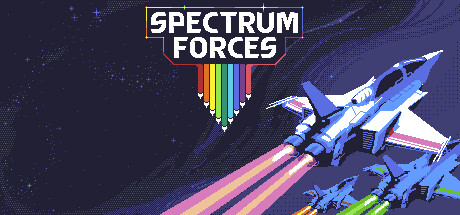
Make up your squads out of 9 unique spaceships and go clear 3 planets from hordes of robots in not-so-classic horizontal shoot-em-up style!
Modeled estimate, not a reported figure. How we estimate →
Media

About
Genres
Stats
All-time low is the lowest price we've recorded for this game since we started tracking it.
Languages: English
Reviews
They gave the gay people guns waltuh
I like this game a lot! It has solid mechanics, it's fun and tight, doesn't hold your hand and lets you discover things on your own, very arcadey which will appeal to a good amount of people. +++Pros+++ +You can play the game your way, with as many or as few pilots you want. Mix-and-match to your heart's content, or plan strategically who you want to use for each particular level. +The overdrive and Last Stand mechanics work really well, giving the player the power to choose when and how they acquire and use their power-ups. This also allows for some strategy in character select, which I love. +Difficulty starts simple but you can scale it up as hard as you want with all the various challenges + taking fewer pilots with you on levels. +Sound is fantastic, the character select screen and level themes are quite strong. Very catchy tunes in here. +The visual design is cohesive and vibrant. The theme of multi-colored pilots and ships works well and everything is crisp and read-able. The HUD is also very minimalist, allowing for more screen-space. +It's simple and cheap. Sometimes you just wanna play a game where you get to shoot robots and play as colorful characters, and this does the job. ---Cons--- -It's short. There's no way around it. There are only 3 levels and once you've played them, you've seen everything in the game. There could have been more levels, but I get why they wanted to keep the scope of this game small, since this dev team makes so many games already. -There's nothing to unlock. All the challenges are open to you from the start, and there are no cosmetics, no bonuses, no gallery, no sound test, no manual. Nothing. I would have liked a jukebox or concept art or something. ~Other~ -One thing I will note is that there is no score system in this SHMUP. You are only ranked on the amount of pilots you have saved at the end and which challenges you self-impose to make the game harder. This makes defeating enemies less satisfying overall, since you know the game is mainly about survival and not score-chasing. Overall, I had a great time playing Spectrum Forces and I would recommend it to people who enjoy small-scale, arcade style SHMUPs. What you see is what you get, so if you like this kind of game, pick it up! 8/10.
Related
Related
Trends
Modeled estimate over time, reconstructed from Steam's monthly review histogram.
I love this game!! You can mix and match over and over till you find the three ships that work with your play style and go for a run, it's an amazing shooter.
This is a fantastic game for quick sessions. Each play takes a couple of minutes, but the large variation of ships and teams, and the challenges give the game a very large replay value. The graphics are cool and the music is on point!
A fun, if not short, bullet hell. Not the most intense bullet hell you'll ever play, but good for quick games.
The game is okay. Not great, but not really bad either. It runs smoothly and works flawlessly from a technical standpoint. The sound is good, too. It’s just that the game mechanics are very experimental and feel unpolished to me. At the same time, the game is also very intense, which isn’t necessarily a bad thing in itself. Let's talk about the mechanics. Mechanic 1, pilots: You can select up to four pilots at once for a mission. But then you also have to keep an eye on all four hit boxes! The game is fast-paced, and there’s usually very little room to maneuver. One pilot is always the squadron leader (though this can be switched on the fly) and thus determines the formation—that is, how the other ships behave/move. Just imagine, your “options” have a hit box and can be destroyed. Fantastic. Before the next mission, all pilots you just had need a break and cannot be selected again. That is, if they survive the mission in the first place. So in your “second mission,” you’ll be playing other pilots anyway! Mechanics 2, shooting: You can change the firing direction of each individual pilot when you stop shooting. In a shoot 'em up! Unfortunately, you can't direct the entire squadron's firepower in one direction with a single button press (for example, using the shoulder buttons). "The elephant in the room": The LGBTQ content in this game is limited to just rainbow colors and impulsive/cheeky character descriptions of the pilots. But these descriptions don’t come across as very likable or funny. Conclusion: The game seems to be desperately trying to be something very special, and in a way, it is. I just don’t know who’s supposed to like it. Maybe experimental shoot ’em up fans with a high level of frustration tolerance? Not for me/10
(have more time off steam via itch) this game is pretty cool and fun, but i dont think my gay power levels are high enough to really see it through as the formation mechanic and being able to turn around mid flight really ♥♥♥♥ with me
Spectrum Forces is the kind of indie shooter that immediately announces its personality within the first few minutes. Developed and published by PUNKCAKE Délicieux, the game embraces chaos, speed, and visual intensity without trying to appeal to mainstream expectations. Rather than focusing on cinematic storytelling or complicated progression systems, it throws players into a fast-moving arcade experience driven by reflexes, survival instincts, and pure sensory overload. The result is a game that feels both old-school and experimental at the same time, capturing the spirit of classic arcade shooters while layering it with a modern psychedelic style that constantly keeps the screen alive with motion and color. The strongest aspect of Spectrum Forces is its presentation. Every level feels like a neon storm of flashing lights, glowing enemies, and explosive particle effects that almost seem designed to overwhelm the player. The game’s aesthetic is intentionally aggressive, using vibrant colors and abstract visuals to create an atmosphere that feels energetic and unpredictable. While some shooters aim for realism or clean readability, Spectrum Forces prefers to bombard players with visual noise in a way that becomes part of the challenge itself. This approach may not work for everyone, but there is no denying how memorable the game looks once everything begins moving at full speed. The visual design creates an identity that stands apart from more generic indie shooters. Gameplay focuses heavily on movement, positioning, and reacting quickly under pressure. Enemies attack from multiple angles while projectiles rapidly fill the screen, forcing players to stay alert at all times. The controls are responsive and smooth, which is essential because the pace rarely slows down long enough for players to relax. Every encounter feels frantic, yet there is still a sense of rhythm hidden beneath the chaos. As players become more familiar with enemy patterns and attack timings, the game starts feeling less random and more skill-based. That gradual improvement becomes one of the most satisfying parts of the experience because survival eventually transforms from pure panic into controlled precision. One of the game’s best qualities is how it handles replayability. Spectrum Forces is designed around repeated runs, experimentation, and personal improvement. Each attempt feels like an opportunity to refine movement, optimize reactions, and push slightly further than before. The arcade structure works extremely well because the sessions remain fast and engaging even after multiple failures. Instead of punishing players with long downtimes or excessive menus, the game keeps the action immediate and accessible. This encourages the addictive “one more run” mentality that many arcade-inspired titles strive for but fail to achieve. The challenge remains consistently demanding, yet the short gameplay loops make failure feel motivating rather than frustrating. The sound design also deserves significant praise because it contributes heavily to the game’s intense atmosphere. The soundtrack is filled with energetic electronic tracks that perfectly match the speed of the gameplay. Every explosion, laser blast, and enemy destruction sound effect adds to the overwhelming sensory experience. Combined with the visual presentation, the audio creates a constant feeling of pressure and momentum that rarely lets the player feel comfortable. The game succeeds at making every battle feel dramatic even when the mechanics themselves are relatively simple. There is an impressive amount of personality packed into the audiovisual design, and it gives Spectrum Forces a unique identity that remains memorable long after playing. However, the game’s commitment to chaos can also create problems. The visual overload occasionally affects gameplay readability, especially during later stages where enemies, effects, and projectiles all compete for attention at once. Players unfamiliar with bullet hell shooters may initially struggle to understand what is happening on screen, leading to deaths that feel confusing instead of fair. The difficulty can also become unforgiving very quickly, and the game does little to ease newcomers into its systems. Spectrum Forces expects players to adapt through repetition and persistence rather than tutorials or gradual progression. For fans of hardcore arcade shooters, this design philosophy will likely feel rewarding, but more casual players may find it exhausting after extended sessions. Despite these frustrations, the game succeeds because it fully commits to its vision. Spectrum Forces never feels like it is trying to imitate larger shooters or dilute its identity for wider appeal. It embraces experimental design choices, relentless pacing, and sensory intensity with complete confidence. That authenticity gives the game a strong personality that many indie titles lack. Even when the experience becomes chaotic or difficult, there is still an undeniable sense of creativity driving every aspect of the design. PUNKCAKE Délicieux clearly understood the type of game they wanted to make, and that focused vision helps Spectrum Forces stand out in a crowded genre. Spectrum Forces is not a game designed for everyone, but players who enjoy intense arcade shooters, bullet hell mechanics, and visually explosive indie experiences will likely find it highly rewarding. Its combination of aggressive presentation, fast-paced gameplay, and replay-focused structure creates an experience that feels both stressful and exhilarating in equal measure. While the overwhelming visuals and punishing challenge may occasionally push players away, the game’s originality and energy make it difficult to forget. Rating: 8/10
Momentum
Pace estimated from the game's recent review growth (our daily snapshots) at its own sales-per-review ratio — a momentum signal, not booked sales.
Related
| Grass Toucher | $992.6 | 64 | 91% | $0.49 |
| Maza | $992.6 | 58 | 95% | $1.00 |
| Ecchi Cards | $991 | 66 | 55% | $0.99 |
| Deez | $991 | 72 | 86% | $0.99 |
| Night Fly | $991 | 66 | 36% | $0.99 |
| Clash of Castle | $993 | 61 | 46% | $0.69 |