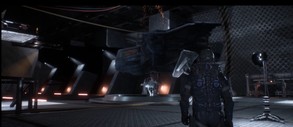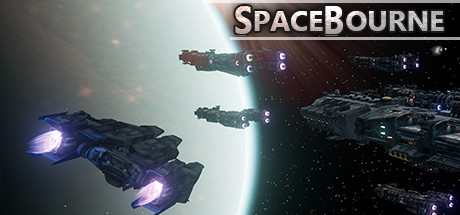
Spacebourne is an open space exploration game with Rpg elements. Its world consists of different factions at war. You as an expert pilot need to choose your side or be on no one's side and create a force of your own. Load up your weapons, Ready your ship and warp to adventure.
Modeled estimate, not a reported figure. How we estimate →
Media

About

Genres
Stats
All-time low is the lowest price we've recorded for this game since we started tracking it.
Languages: English*, Turkish*languages with full audio support
Engagement
Hours played at review time, across 41 reviews with recorded playtime.
Reviews
Themes across 41 recent reviews and how positive each mention is. A keyword signal, not full sentiment analysis.
positive critical· bar length = how often the theme comes up
Reviews
It's just so rough around the edges in every aspect, unoptimized and just not fun - Space stations are a nauseating experience, the follow camera is focused on center of mass of the character instead of higher up on the body like most games have so you're constantly centered on the lower back of your character - Space stations are poorly planned in their layout and leave me wishing there was a way to just stay in my ship and not have to walk around to do things - Mining is incredibly boring and there's nothing unique to this game about it - Combat was fun but most missions just involve fighting swarms of enemies and the targeting system doesn't lend itself well to this since I can't mark a target to follow, I just have a swarm of red arrows on my hud Honestly if this game was released more recently I would assume it was something someone vibe-coded together and then slapped on steam
so first thing off you will need this to make it work on modern systems: https://steamcommunity.com/app/732240/discussions/0/3202622271477953443/ I have about 8 hours as of review despite what steam say's I had tried all three work arounds, one that worked didn't work with steam one didn't work at all one works just fine. with all that said fun little space sim RPG. scratches that itch in a simple way, and a great game for the price!
Easy game to play. While the graphics may be dated, I've seen worse.
So I went to buy Spacebourne 2, because I was vaguely paying attention to it. I didn't even think to check out the original. When I went to buy it Steam said "Hey, with the bundle, you get Spacebourne 2 for LESS and it comes with Spacebourne 1!" I said "Sure..." I installed Spacebourne 1 because I'm the kinda loon that likes to check out rough around the edges games. Colour me surprised when I got kinda lost in Spacebourne 1! It has really great arcade space brawls, fun taking down of vessels, quests that are achievable. Like, the escort/protect quests have YOU in the crossfire most of the time, so you don't immediately lose like in Rebel Galaxy 2. I found the wars that the random factions have worthwhile as well. I honestly thought I would be avoiding the conflicts altogether, just focus on the story quests, but they started attacking the Xsiaxis(sp?) which were like the original race of the galaxy, and they just got out of a war with some other douche bags, so I rolled up my sleeves and ran into a battle and managed to turn the tides by taking out their recovery station. Having that many preoccupied ships to shoot at was a great way to level. Plus a bonus if you help them win. Then I tried wormholes(says Mr. "I'm gonna stick to the main quest"), and THAT was fun too! Multiple caches, kinda bullet hell in their own way, gave me a reason to spam every ability I unlocked as soon as their CD was up. Great fun! Upgrading the skilltree felt worthwhile enough that I found myself excited when I leveled..? That's a feeling I haven't had in a long time, lol. Heck, since Grim Dawn, basically, which is an ARPG! Overall, I rate this game about a 9/10 considering it was made by a solo dev during a time when they had zero AI help. It makes me very excited for Spacebourne 2! I'm just not gonna play it until I beat one(even though I played it already a tad, but that was before purchasing it. More on that when I review Spacebourne 2, lol)
"SpaceBourne" is worth playing as an experience that has good (or at least interesting) "bones," but needs more finish work. I especially found myself appreciating the combat system, which eschews the usual idea of switching from anti-shield to anti-armor, to more of a golden-triangle of quickly choosing the correct armament for the distance and position. But anyway, my main point here is that Burak Dabak clearly had a lot of ambition with this piece of software. There's a galaxy that's big enough to be explorable, and stations that seem in-scale with what you would expect them to do. There's a really heartfelt attempt at a story with a clear nemesis and an arc that actually feels natural. The problems are in the polish. Stations that you can explore tend to be a little too large, with running around that gets irritating when you just want to get something done. Station maps and objective markers are generally unhelpful because of their fixed, 2D projection. System to system travel is oddly obtuse: You can't set a destination and get a marker that takes you to the next appropriate gate. You have to do some flipping back and forth between the galaxy map and the local scan, which is awkward. (To be fair, gates can take you to many galactic destinations, so the frustration level is not as high as it can be.) In general, I feel that "SpaceBourne" tends to structurally feel empty, samey, and soporific. There's not much interesting to look at, enemies that all seem essentially undifferentiated (except for the "Flies," which are just annoying), and systems of mining and salvage that seem good on the surface. That is, you can automate a lot of the flying and collecting, but the monotony ends up putting you to sleep. I've never actually played "Neverwinter Nights" myself, but I have a feeling that "SpaceBourne" could be a similar idea to what I've heard described. It would be a perfectly good framework to have some great art and storytelling built onto. You can see where the parts could go. What you get out of the box is mostly a demonstration of the framework, rather than a whole product where every inch has been fine-tuned.
Starts with a dogfight. Then a dogfight. Then a dogfight. Then a dogfight. Basically, the 1950 idea of space action, i.e., Earth aerial combat without Earth. This one seems stuck in a time loop though, to explain how we space dogfight 5 times in 20 minutes. Either that or space is much smaller than anticipated. Sometimes, you do get to click "Warp" before the next dogfight. Apart from that, you'll struggle with messy controls, find nothing interactive, and yet suffer from bugs and glitches.
Makes Empyrion look professional and polished. Terrible controls. Doesn't really support joystick/hotas. Graphics look like 2003 which I expect from a low budget game but the 2003 graphics should not be as clunky as if I was running Starfield. Stations full of generic Unreal asset aliens (you might recognize them from Empyrion!) and I cannot figure out how to actually enter my ship. I should not have to watch a youtube video or whatever to learn how to leave the station in my ship, sorry. Maybe the loadout panel at the dock should have a big red button for "ENTER SHIP".
An amazing space game I love it. If you like space games you will like this one.
Just bought. Won't Launch. Turned on DIrectPlay, Ran as admin. Verified files. No Love. Day later: Updated drivers. Confirmed C++ (all years) is good. No Love.
SpaceBourne, developed and published by Burak Dabak, is an ambitious open-universe space simulation that blends sandbox exploration, faction politics, RPG progression, and arcade-style ship combat into a sprawling indie package. Built largely by a solo developer, the game embraces scale over spectacle, offering players an expansive galaxy filled with procedurally generated systems, explorable planets, dynamic events, and numerous career paths. It is the kind of project driven by vision and passion rather than blockbuster polish, and that spirit defines both its strengths and its rough edges. The game opens with a narrative premise rooted in humanity’s turbulent expansion into space. After first contact with an alien civilization leads to catastrophic consequences, war and instability ripple across colonized systems. Players assume the role of a seasoned pilot emerging from crisis aboard a space station, left to rebuild status, influence, and power in a fractured galaxy. While the overarching story provides structure and occasional mission-driven direction, SpaceBourne ultimately leans into sandbox freedom. The plot serves as a backdrop, giving context to faction conflicts and galactic tension without restricting player agency. The scale of the universe is one of its most striking features. Hundreds of star systems populate the map, each containing planets, asteroid fields, space stations, and potential mission hubs. Many planets are landable, offering opportunities for mining, trading, exploration, and combat. The procedural generation system ensures that events, encounters, and resource distributions vary between playthroughs, reinforcing replayability. Whether tracking down pirates, transporting goods between stations, salvaging derelict ships, or simply charting unknown systems, players are free to define their own trajectory. Ship combat forms the mechanical backbone of the experience. Engagements unfold in real time, blending arcade responsiveness with RPG-based progression. A wide variety of weapons, shields, modules, and ship classes allow players to customize loadouts according to preferred playstyles. Some may favor nimble fighters equipped for hit-and-run tactics, while others invest in heavier vessels capable of sustained damage output. Combat scenarios range from small skirmishes to larger faction conflicts, and success depends on managing positioning, targeting, and equipment synergy. Character progression systems enhance this loop, with skill improvements tied to piloting, trading, diplomacy, and combat specialization. Beyond dogfighting, the economic and faction systems add strategic layers. Players can align themselves with major factions, influencing political outcomes and participating in territorial disputes. Reputation impacts mission availability and pricing in trade hubs, creating a dynamic relationship between diplomacy and profitability. Alternatively, players can pursue independence, building wealth through mining operations or bounty hunting. The open-ended design encourages experimentation, allowing individuals to pivot between careers depending on mood or opportunity. Exploration extends beyond space travel. Landing on planetary surfaces introduces resource gathering, anomaly scanning, and occasional ground-based encounters. While these segments are mechanically simpler than space combat, they contribute to the sense of scale and discovery. The universe feels inhabited and reactive, with events unfolding across systems rather than confined to static mission boards. However, the game’s indie origins are apparent in presentation and interface design. Visual fidelity, while functional, does not rival larger space simulation titles. Textures and environmental assets can feel dated, and certain UI elements lack refinement. Controls, particularly for ship handling and camera management, may require adjustment and patience. Yet for many players, these limitations are outweighed by the sheer breadth of content and systemic ambition. Community reception reflects this balance between vision and execution. Players often praise the depth of mechanics, the size of the galaxy, and the freedom offered at a modest price point. Criticism typically centers on performance inconsistencies, occasional bugs, and uneven polish. Nevertheless, ongoing updates and the dedication of its developer have sustained a loyal audience appreciative of the project’s scope. Ultimately, SpaceBourne stands as a testament to what focused indie development can achieve within the space simulation genre. It does not deliver cinematic spectacle or AAA production values, but it offers something arguably more enduring: a vast sandbox where player-driven stories unfold organically. For those who prioritize exploration, customization, and freedom over graphical refinement, it provides a rich and rewarding journey through a galaxy shaped as much by player choice as by narrative design. Rating: 7/10
Related
Related
Trends
Modeled estimate over time, reconstructed from Steam's monthly review histogram.
Audience
Estimated from the language of this game's reviews — a proxy for where players are, not official Steam demographics.
Related
| Anomaly Collapse | $321.7K | 637 | 86% | $19.99 |
| Karate Survivor | $321.7K | 3.3K | 85% | $1.69 |
| Jet Lancer | $321.8K | 1.2K | 92% | $14.99 |
| Fuga: Melodies of Steel 3 | $321.5K | 225 | 91% | $39.99 |
| Hidden Through Time | $321.5K | 3.1K | 94% | $7.99 |
| The Dark Queen of Mortholme | $321.9K | 4K | 83% | $4.99 |