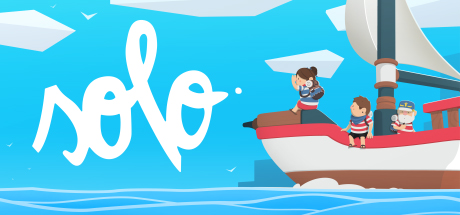
Solo is an introspective puzzler set on a gorgeous and surreal archipelago. Reflect on your loving relationships by exploring contemplative, dream-like islands.

Modeled estimate, not a reported figure. How we estimate →
About


Stats
All-time low is the lowest price we've recorded for this game since we started tracking it.
Languages: English*, Spanish - Spain*, Simplified Chinese**languages with full audio support
Engagement
Hours played at review time, across 40 reviews with recorded playtime.
Reviews
Themes across 40 recent reviews and how positive each mention is. A keyword signal, not full sentiment analysis.
positive critical· bar length = how often the theme comes up
Reviews
Like many others I've experienced the bug where upon loading a mid-game save, you no longer have items required to complete some of the puzzles, thus making the game unbeatable. Also, though I never completed the game, a lot of the message that I was getting from it seemed to be "those who don't experience love just haven't been in a relationship yet" when that is far from my own experience at all. I've been in several relationships, none of which have ever felt very fulfilling or different from not being in a relationship. It just was. Since realising my lack of interest in it (and I guess aromanticism / demisexuality) I've more fully embraced my lack of interest in it. If it happens, great! If not, cool! Though initially I was sceptical that the game would cater towards the interest of people who aren't looking for romance, which changed to excitement when some of the responses seemed to veer in that direction, and then quickly plummeted back down at the responses that the game seemed to suggest at it. If you can get it very cheap, then sure. Otherwise, eh.
Took me several attempts to be able to even get in the game because it kept detecting random controller inputs from an unplugged controller. After that, I ran into the same bug others mentioned: I lost my items on reloading my save making this save unable to progress any further. From what I saw in the game, I wouldn't really recommend it anyways. The low-poly and indie aesthetic only seems to exist to cover up the game's lack of polish. Controls feel clunky, animations are stiff, UI is awkward, dialogue feels preachy, and the puzzles that I've seen so far are dead simple.
game-breaking bug
Bugged game, dont buy
Es un juego que tiene corazón y se nota lo que busca transmitir o hacer comprender. Por estos motivos me gustaría recomendarlo PERO no puedo. Cada vez que guardaba e intentaba continuar en otro momento, algunas mecánicas del juego se bloqueaban y no podía avanzar. De modo que tuve que intentar acabarlo varias veces pero todo fue inútil. Y cuando por fin decidí acabarlo en un día, me ocurrió que los últimos puzzles me parecieron complicadamente injustos ya que, a mi juicio, estaban mal diseñados y no era porque al final dijera ¡Eureka! ¿Cómo no se me había ocurrido?. -_- Es por estos motivos que el mensaje que pudo haber sido muy profundo y sacarme unas lágrimas. Se diluyó en la frustración y molestia. Si llegasen a corregir el problema del guardado lo recomendaría sin problemas aunque los últimos puzzles se quedaran igual.
💋
열심히 퍼즐풀고 사진찍고 퍼즐풀고 .. ㄱ귀여운 퍼즐게임 나는 좋았지만 남에게 추천해줄수있냐 하면 글쎼 .. ?
Solo is a quiet, introspective puzzle-adventure that sets out to explore one of the most abstract and personal themes a game can tackle: love. Developed and published by Team Gotham, it deliberately steps away from traditional storytelling structures, choosing instead to guide players through a reflective journey across a series of dreamlike islands. Rather than pushing objectives, conflict, or challenge, Solo invites players to slow down and engage with questions about relationships, commitment, vulnerability, and emotional connection, using gameplay as a mirror for self-reflection rather than a vehicle for spectacle. The game is structured around exploration of a colorful archipelago made up of small, self-contained islands. Each island presents a light environmental puzzle that must be solved to reach a Sleeping Totem, which then poses a question related to love or emotional experience. These questions are often open-ended and personal, encouraging players to respond honestly rather than “correctly.” Your answers do not radically alter the world or lead to branching endings in a conventional sense, but they do shape the tone of the game’s narration and the way subsequent prompts are framed. This design reinforces the idea that Solo is less about winning or failing and more about engaging with your own thoughts and feelings as you progress. Puzzle mechanics are intentionally gentle and accessible. Most challenges revolve around manipulating boxes with different properties—such as weight, movement, or structural support—to create paths and reach higher ground. The puzzles rarely demand strict logic or precise solutions, often allowing multiple approaches that reflect the game’s thematic emphasis on interpretation and flexibility. This lack of rigidity can feel refreshing, as it removes the stress commonly associated with puzzle games, but it can also lead to a sense of repetition over time, as the mechanical variety remains fairly limited throughout the experience. Beyond the main puzzle flow, Solo offers a range of optional interactions that deepen its sense of place and mood. Players can feed animals, photograph landscapes, play music, or help reunite animal pairs by building bridges. These activities are not mechanically deep, but they add texture to the world and reinforce the game’s meditative pace. They also serve as quiet metaphors for care, attention, and connection, subtly echoing the emotional themes explored through the narrative prompts without explicitly spelling them out. Visually, Solo is one of its strongest elements. The art direction favors bright colors, soft shapes, and stylized environments that feel both playful and serene. Each island has a distinct identity, and the overall presentation creates a sense of calm curiosity that encourages exploration without urgency. The soundtrack complements this aesthetic with gentle, ambient music that enhances the feeling of solitude and contemplation, making even simple traversal feel purposeful and emotionally grounded. However, Solo’s abstract approach is also its most divisive aspect. For some players, the emotional questions resonate deeply, prompting genuine reflection and a sense of personal connection to the journey. For others, the prompts may feel vague or underdeveloped, lacking enough narrative context to carry emotional weight. The game does not provide characters, dialogue-driven drama, or concrete story arcs to anchor its themes, which means its impact depends heavily on the player’s willingness to engage introspectively rather than passively consume a story. There are also moments where the experience is hindered by mechanical roughness. Controls for manipulating objects can feel imprecise, and camera behavior occasionally works against the calm tone the game strives to maintain. When puzzles require more careful placement or timing, these issues can briefly pull players out of the reflective mindset, reminding them of the game’s technical limitations. Ultimately, Solo is best understood as an interactive meditation rather than a conventional puzzle-adventure. It prioritizes atmosphere, mood, and personal interpretation over challenge or narrative clarity. Its puzzles are means to an emotional end rather than the main attraction, and its success depends largely on how open a player is to introspection and ambiguity. For those seeking a peaceful, thought-provoking experience that encourages self-reflection through gentle gameplay and evocative presentation, Solo offers something rare and sincere. For players looking for structured storytelling or mechanically rich puzzles, its abstract nature may feel too insubstantial to leave a lasting impact. Rating: 6/10
This game calls itself an "introspective puzzler" and I think it absolutely crushes that goal. Cute and fun game!
The game has a major game breaking bug that a LOT of people struggle with. If you don't intend to play through this game in one single sit, don't bother. If you save and start the game later to continue playing, the sound is completely gone and the items you need for the actual gameplay and continuing (a staff and a parachute) are no longer in your inventory or useable. Until this gets fixed my review will sadly have to remain as it is. It's a real let down, because I really enjoyed the game at first and looked forward to continue playing it. Here is hoping the dev's can atleast fix a bug this massive. TLDR: NOT RECOMMENDED, unless you plan on playing the full game in one sit.
Related
Related
Trends
Concurrent players on Steam, sampled daily since tracking started.
Audience
Estimated from the language of this game's reviews — a proxy for where players are, not official Steam demographics.
Related
| 7 Days to Die | $425.3M | 403.5K | 87% | $44.99 |
| Euro Truck Simulator 2 | $421.6M | 932.1K | 97% | $19.99 |
| Mount & Blade II: Bannerlord | $309.8M | 293.9K | 88% | $49.99 |
| Palworld | $279.6M | 445.8K | 94% | $20.99 |
| Clair Obscur: Expedition 33 | $263.7M | 178K | 95% | $47.99 |
| The Forest | $254.8M | 678.5K | 96% | $19.99 |
Related
| Incredible Mandy | $32.8K | 130 | 92% | $14.99 |
| Highly Likely | $32.8K | 156 | 71% | $14.99 |
| The Secret Order 8: Return to the Buried Kingdom | $32.8K | 156 | 82% | $14.99 |
| At the Mountains of Madness | $32.8K | 65 | 34% | $19.99 |
| Faraday Protocol | $32.8K | 117 | 85% | $19.99 |
| Reincarnated as a Dark Lord Before Taking Over the World with Power 999999999 | $32.8K | 240 | 90% | $3.99 |