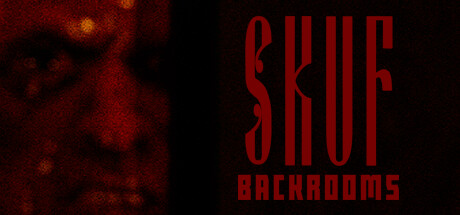
SKUF BACKROOMS is a psychological horror experience that fully embraces the unsettling nature of liminal spaces and internet-inspired surreal horror. Developed and published by akhsotoen, the game places players inside an endless maze of abandoned apartments, dim hallways, stairwells, and distorted environments heavily inspired by Backrooms mythology but filtered through a bleak post-Soviet aesthetic. Rather than relying entirely on cheap jump scares or constant action, the game focuses on isolation, confusion, and the oppressive feeling of wandering through spaces that seem disconnected from reality itself. The result is an indie horror title that feels rough in certain areas but succeeds at creating a strange and memorable atmosphere that lingers long after the game ends.
The basic premise is intentionally mysterious. Players explore a labyrinth of decaying environments while being stalked by a terrifying entity known as Skuf, a former human who supposedly lost his mind after becoming trapped inside these endless transitional spaces. The game slowly feeds players fragments of information through environmental details and scattered clues, but much of the horror comes from uncertainty rather than direct storytelling. It constantly feels as though the world itself is collapsing or looping in on itself, creating a dreamlike experience where players are never entirely sure whether they are progressing or simply becoming more deeply trapped.
One of the game’s strongest qualities is its environmental design. SKUF BACKROOMS captures the uncomfortable emptiness associated with liminal horror extremely well. Endless apartment corridors, abandoned living spaces, flickering lights, stained wallpaper, and repetitive architecture all contribute to the sensation of being trapped inside forgotten places frozen in time. The environments feel disturbingly believable despite their surreal structure, which makes exploration surprisingly immersive. The game understands how powerful ordinary locations can become when stripped of human presence and distorted just enough to feel wrong.
The atmosphere carries the entire experience. Large sections of the game involve simply walking through quiet spaces while listening to distant noises, low ambient hums, distorted sounds, and sudden environmental shifts. The silence itself becomes threatening because players are constantly expecting something horrifying to emerge from the darkness. Instead of overwhelming players with nonstop scares, the game builds tension gradually through uncertainty and isolation. Even moments where nothing actively dangerous is happening can feel deeply uncomfortable because of the oppressive mood created by the environments.
Visually, the game mixes realism with surreal horror effectively despite its limited budget. The graphics themselves are not especially advanced, but the lighting, environmental composition, and repetitive layouts work together to create a strong psychological effect. Certain rooms initially appear completely ordinary before subtle details reveal that something is fundamentally wrong. The repetitive structure of the environments also reinforces the feeling of being trapped inside a nightmare where locations endlessly repeat with slight disturbing variations.
The creature design for Skuf is another memorable aspect of the game. Rather than behaving like a typical horror monster, Skuf feels more like a broken human transformed by the environment itself. Its appearances are unsettling because the game rarely gives players complete information about where the creature is or how close danger might be. The uncertainty surrounding the entity helps maintain tension throughout the experience, especially during sections where players hear distant sounds but cannot tell whether they are actually being hunted.
The game also stands out because of its unusual tonal balance. While much of the experience is genuinely eerie and psychologically unsettling, there are moments where absurd humor and internet meme culture begin blending into the horror. This creates a strange atmosphere where the game feels unstable in both a narrative and tonal sense. Some scenes shift unexpectedly between dark comedy and psychological horror, making the overall experience feel unpredictable in a way that actually benefits the surreal nature of the world.
Another positive aspect is the simplicity of the gameplay itself. The mechanics focus almost entirely on exploration, observation, and survival rather than complicated puzzles or combat systems. This minimalist design keeps attention centered on the atmosphere and environmental storytelling. The lack of excessive mechanics works in the game’s favor because it reinforces the feeling of helplessness and confusion.
However, the game does suffer from several major weaknesses. The most obvious issue is the repetitive gameplay loop. Much of the experience involves slowly walking through similar-looking corridors and apartments while waiting for something unsettling to happen. Players expecting more complex gameplay systems, elaborate puzzles, or dynamic encounters may eventually become frustrated with the lack of variety. The atmosphere is strong, but the game depends on it heavily because mechanically there is not much happening beneath the surface.
Technical polish is another inconsistent area. Animations, transitions, and interactions occasionally feel rough or unfinished, reminding players that this is a smaller indie project. Some sections lack refinement, and minor bugs or awkward visual moments can interrupt immersion during otherwise tense scenes. While these problems do not completely ruin the experience, they make the game feel less polished than higher-budget psychological horror titles.
The narrative structure may also divide players. Much of the story remains abstract and intentionally vague, leaving players to interpret the meaning behind the environments and the Skuf entity themselves. This ambiguity fits the surreal horror style, but players looking for clear explanations or emotionally grounded storytelling may find the narrative too fragmented or incomplete.
The pacing is another potential issue. SKUF BACKROOMS is deliberately slow and atmospheric, with long periods of quiet exploration between major horror moments. Some players will appreciate the tension this creates, while others may feel that the game drags during sections where very little actively changes. The experience requires patience and willingness to absorb atmosphere rather than expecting constant excitement.
Despite these flaws, SKUF BACKROOMS succeeds at delivering a unique psychological horror experience built around liminal fear and environmental discomfort. It may lack the polish and gameplay depth of larger horror releases, but its oppressive atmosphere and surreal identity help it stand out from many generic indie horror projects. The combination of post-Soviet architecture, Backrooms-inspired design, and unsettling psychological tension creates an experience that feels strange in a way that many horror games never achieve.
For fans of atmospheric horror, surreal exploration games, and liminal space experiences, SKUF BACKROOMS offers an unsettling journey filled with disturbing environments and psychological tension. Its repetitive structure and rough technical edges hold it back from becoming a truly exceptional horror title, but its strong atmosphere and memorable setting still make it an interesting experience for players drawn to experimental indie horror.
Rating: 6/10