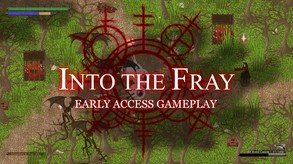
Into the Fray is a fast action-shooter in the vein of Doom and Dark Messiah; using fast combat, reactive environments, and traps. Blast, kick, and dash your way through Rebels and Eldritch creatures to liberate the Isle of Portland; as it becomes consumed by Fog and the horrors therein.
Modeled estimate, not a reported figure. How we estimate →
Media

About
Stats
All-time low is the lowest price we've recorded for this game since we started tracking it.
Languages: English
Engagement
Hours played at review time, across 40 reviews with recorded playtime.
Reviews
Themes across 40 recent reviews and how positive each mention is. A keyword signal, not full sentiment analysis.
positive critical· bar length = how often the theme comes up
Reviews
⠀
Though i prefer the combat in the first two games i still had fun going through this one, took a bit to get used to the ammo/heal mechanic but later on it it felt natural to rush in to kick an enemy and kite out again. This as well as the other games in the Skautold serier have really compelling stories and was the main reason i stuck around after the start. normaly don't play twin stick shooters. as they are cheap enough i would wholeheartedly recommend getting them all and play in order. :)
Great game! You should play the games in the correct chronological sequence. This is the third game chronologically.
oyun hoşuma gitti gayet güzel
Written JUST as I beat it with "True Ending" on "Hard Rock" mode, set to RPG settings. Likely will edit things later when it's not 3 AM for me. TLDR; The game is O-K, I love the story and recommend it for people who kept with the series so far. But the game feels too unpolished in some areas for me to recommend it as an entry point. THE GOOD: -Twin stick shooter action is pretty easy to pick up and generally understand, with most of the difficulty being nicely done in the encounters you face. -Boss fights and environments lovingly give you a place to shine, with certain items being destructible and can even save on precious bullets when fighting hoards of enemies, being very rewarding. Each boss fight has a unique mechanic and feels very rewarding to figure it out. -The story telling is straight forward, but still compelling. It's not the haunted mystery horror vibes of SiS, nor is it the encyclopedia thrown in your face that Usurper was. We are simply getting the world through Knight Hito's eyes, based on what he knows, the questions he asks, and how he reacts to them. I L-O-V-E this and feels like the right way to go moving forward with the writing. Learning about the eldritch and plot feels evenly paced and Hito's little quirks and perspectives of the world come through in a realistic manner. By the end of the game, I know I can have a drink with this snarky, somewhat uncertain, probably an alcoholic, but good-hearted stick-in-the-mud soldier boy. Out of every character in the franchise so far he is the most fleshed out, and for all the right reasons. I can only wish more characters could have gotten the same time and dedication, but it is clear that was not in the reasonable sphere for development at the time which is A-O-K in my book. I want to say he comes across as a typical Marvel movie hero, except he is a bit more opinionated and grounded in reality rather than just being a one-liner engine. -The game is also pretty light-hearted compared to its predecessors. Which makes sense as we, and the characters, have been dealing with all this Cthulhu crap for awhile now so it's starting to normalize. Most characters have somehow or another internalized the craziness and simply accepted the new reality. Cracking dark jokes at the horrible things going on, and taking sane actions given an insane world like having practiced eldritch drills and secret bunkers in improbable places. I'm convinced of the world built up to this point, it's not forced horror reactions like many series fall into the pit of, nor is it to the point of blatant comedy. DA BAD: -I said gameplay was great right? Well, it has a few snags which don't outright kill the experience, buuuut definitely hurt especially when compared to others in its space. #1) You will "die by camera" a lot, you can't see above and below your screen, but enemies can still see you. Other twin stick shooters allow you to "look ahead" to compensate this. It is sorely needed here. #2) Hit boxes are very deceptive at times. Some guns don't fire straight out the barrel, the environment is not clear to when someone is or isn't behind something. "Cave collapse" has an especially bad hit box. -Bosses are good? Well, 2.5 exceptions. #1) The "secret weapon" tank fight frankly sucks, I'm not going to mince words with this one. You will be thrown into a room filled with land mines and bombs next to collapse-able pillars with a tank that will snipe you ON SIGHT, you will often instantly die because you stepped on a land-mine + blew up the pillar collapsing the ceiling on you + got shot in the same 0.2 seconds. You beat this boss by kicking explosive barrels (the ones NOT next to pillars) at the tank, shooting it with the grenade launcher as it passes over a landmine, and strafing it so the gun barrel never "sees" you, the fight is "safe" once its exterior defenses are down and you can just strafe and pelt it to death with grenades. #2) Weiss fight is currently glitched where explosions will stay on the map. You may end up with black ash everywhere, which is a major problem when the boss only uses black colored attacks. This can be fixed by restarting your game for a fresh fight map, but this feels pretty overlooked. #2.5) Final fight almost felt a bit disappointing because it's the only one that DIDN'T have a unique quirk. You go in, shoot up the place, and it's done. No real thinking besides "don't get shot". This is a nit-pick for sure, but it did feel weird considering the rest of the game leading up to this. -The atmosphere leaves much to be desired. While Into the Fray is certainly written well, it feels very bland compared to its predecessors. Most areas certainly have different assets, all of them feel about the same to play through, and it's not because of the gameplay loop. SiS had the visual impairments of the fog and disturbing activity around every corner. Usurper has the grandiose giant environments which border on gaudy with how much over-the-top elements are put into them, but feel right at home given the context. Into the Fray, doesn't really feel special in the world, you're a guy with a gun going to pretty standard places on a British island, and that's about it. I never feel like I'm some outsider looking into landscape that is being ravaged by civil war and eldritch horrors. The ONLY exception to this would be the basalt and asylum levels, but even then those would have just been "normal" rooms in previous games. -The light-heartedness is sometimes pushed too much when it comes to the enemies. I wasn't a fan of the green snot monsters, eyeballs with teeth, and every enemy screaming at me in cthuonic subtitles in Usurper, and I'm still not a fan of them here. It seems goofy and immersion breaking. Even more so is the Americans or "Sons of Washington" (SoW) characters who will shout some pretty inane lines. This would be cute if it was once in a while as a "rare" thing to see, but they call me a "snipper-doodle" pretty consistently and it makes it hard to take anything seriously. Also, "some guy with a shotgun", is more threatening and scarier to me than all of the eldritch monsters in the game, combined. The mechanics DO NOT match what is being told in story. -Finally, the game just, lies to you. It's not too bad at first, but gets more notable as things get more complicated with the environment and what is told. Here are some of many examples: *When "reinforcements" arrive, Hito is excited that they will offer support to your character. The rest of the level you will be avoiding the 2-shot kill bombs from YOUR OWN ALLIES and die to them more than the regular enemies. *The tank boss can "float" and doesn't trigger land mines, except when YOU pilot it. *Kicking bombs point-blank into a wall doesn't damage you, unless it's in the tank boss fight. *We are told to fear the eldritch, but a drunk American with a shotgun will kill you more often than any outsider being. Not a surprise as the eldritch are slow, and usually melee only. This is an annoying dissonance that persists the whole game.
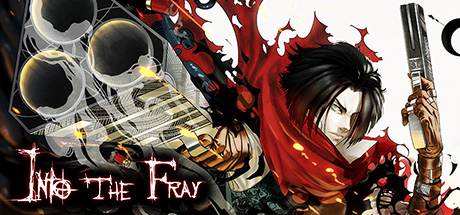
Into the Fray is a fast-paced top-down action shooter created by Steve Gal and published by Pugware. Released on Steam in 2019, the game represents a notable stylistic shift within the larger Skautfold universe. While earlier titles in the series leaned heavily toward exploration and Souls-inspired action, Into the Fray instead embraces the intensity of arcade-style combat. The result is a hybrid experience that combines twin-stick shooter mechanics with gothic horror storytelling, creating a compact but energetic game built around reflex-driven combat and a dark alternate-history setting. The narrative takes place within the same grim fictional world introduced in earlier Skautfold titles, where the Angelic Empire of Britannia exists in a distorted nineteenth-century reality plagued by supernatural forces. In this chapter of the saga, a violent uprising erupts on the Isle of Portland, threatening the stability of the empire. Reports suggest that the rebellion is not merely political but tied to strange phenomena emerging from an unnatural fog that spreads across the island. The player assumes the role of a royal operative dispatched to investigate the chaos, only to uncover a much deeper conflict involving cult activity, eldritch influences, and the growing corruption of the land itself. Rather than presenting its story through lengthy cutscenes, the game unfolds through a mission-based campaign that gradually reveals pieces of the larger mystery. Each mission sends the player into a different section of the island, ranging from abandoned streets and military strongholds to underground tunnels and eerie coastal locations. As players advance through these missions, they encounter both human insurgents and grotesque supernatural entities influenced by the mysterious fog. The fragmented storytelling approach encourages players to pay attention to environmental details and scattered narrative clues, slowly assembling the truth behind the island’s collapse. Gameplay is where Into the Fray truly distinguishes itself from other entries in the franchise. The camera shifts to a top-down perspective, transforming the experience into a twin-stick shooter where movement and aiming are controlled independently. This control scheme allows for fluid combat where players must constantly maneuver through hostile environments while targeting enemies from multiple directions. The pace is significantly faster than previous Skautfold games, emphasizing quick reactions and aggressive tactics rather than slow, methodical exploration. Combat revolves around a mix of melee and ranged attacks that can be used in combination to handle different types of enemies. Firearms provide rapid bursts of damage from a distance, allowing players to thin out enemy groups before they get too close. Meanwhile, melee weapons offer powerful strikes capable of eliminating opponents quickly at close range. Balancing these two approaches becomes essential, as some enemies are easier to handle from afar while others require direct confrontation. The ability to switch between these styles on the fly creates a dynamic rhythm in combat encounters. The battlefield itself often plays an important role in combat strategy. Many areas contain environmental hazards or interactive elements that can be used to the player’s advantage. Explosive objects, narrow corridors, and strategic chokepoints allow players to manipulate enemy movement and reduce overwhelming odds. Because enemies frequently attack in groups, understanding the layout of each area can make the difference between survival and defeat. One of the more interesting features of the game is its inclusion of multiple gameplay modes designed to appeal to different types of players. A “Pure Mode” removes character progression entirely, focusing exclusively on skill-based combat where success depends solely on the player’s reflexes and tactical awareness. In contrast, the RPG mode introduces character upgrades and progression systems that allow players to strengthen their abilities over time. This dual design allows the game to cater both to players seeking a traditional arcade challenge and those who prefer a sense of gradual character growth. Enemy design also contributes to the intensity of the gameplay. Players encounter a variety of opponents ranging from armed rebels to grotesque creatures spawned by supernatural forces. Some enemies rely on brute force, charging directly at the player, while others attack from a distance or attempt to overwhelm the player through numbers. On higher difficulty levels, enemies may even fight among themselves, creating chaotic battles where the player must adapt quickly to shifting conditions on the battlefield. Visually, the game adopts a retro pixel-art style that pays homage to classic action titles from earlier gaming generations. Despite the relatively simple graphical approach, the art direction successfully conveys the bleak atmosphere of the Skautfold universe. Dark environments, ruined structures, and blood-stained battlefields reinforce the sense that the island is collapsing under both political and supernatural pressure. The combination of pixel art and moody lighting helps maintain a strong gothic aesthetic throughout the experience. The sound design complements this dark tone with a soundtrack that blends ominous ambient music with energetic combat themes. During intense battles, the music builds tension and emphasizes the chaotic nature of the gameplay. Sound effects for gunfire, melee strikes, and explosions are sharp and impactful, giving combat encounters a satisfying sense of weight. Even without extensive voice acting, the audio design helps immerse players in the grim world of the game. Despite its engaging mechanics, the game does have some limitations. The difficulty can be quite unforgiving, especially for players unfamiliar with twin-stick shooters. Enemies often attack in large numbers, and mistakes can lead to quick defeat. The aiming system may also require some adjustment for newcomers, particularly during hectic encounters where enemies approach from multiple directions. Additionally, the overall campaign is relatively short, meaning experienced players may complete the story in a modest number of hours. However, the game compensates for its shorter length with replay value. Multiple difficulty settings, alternative gameplay modes, and branching narrative outcomes encourage players to revisit missions and experiment with different strategies. The fast-paced nature of the combat also makes repeated playthroughs enjoyable, especially for players who enjoy refining their skills and improving their performance. Ultimately, Into the Fray stands as one of the most action-oriented entries within the Skautfold series. By shifting the gameplay toward a twin-stick shooter format while preserving the franchise’s dark gothic themes, the game offers a distinctive blend of arcade combat and supernatural storytelling. Its intense gameplay, atmospheric world, and flexible gameplay modes create a memorable experience for players who appreciate challenging action titles with a retro aesthetic. Rating: 7/10
垃圾的游戏 垃圾的作者 不配我评价你
game good
i got sloth like reflexes
Top-down doom.
Related
Related
Trends
Concurrent players on Steam, sampled daily since tracking started.
Audience
Estimated from the language of this game's reviews — a proxy for where players are, not official Steam demographics.
Related
| Blind Justice | $19.7K | 64 | 55% | $9.99 |
| Live Empire | $19.7K | 278 | 45% | $2.99 |
| SugarMill | $19.7K | 80 | 49% | $7.99 |
| Survive the Blackout | $19.7K | 88 | 66% | $7.99 |
| Her Place VR | $19.7K | 53 | 74% | $9.99 |
| Crumple Zone | $19.7K | 80 | 86% | $11.99 |