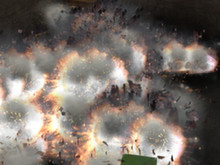
Silent Storm from leading Russian developer Nival is a true 3D tactical turn-based Role-Playing-Game set against the backdrop of WWII. As the conflict rages on the frontlines, you’ll be leading a small multinational squad behind enemy lines to gather information and wreak havoc on your enemies while trying to thwart a mysterious new...
Modeled estimate, not a reported figure. How we estimate →
Media

About
Genres
Stats
All-time low is the lowest price we've recorded for this game since we started tracking it.
Languages: English*, French*, German*, Russian**languages with full audio support
Engagement
Hours played at review time, across 42 reviews with recorded playtime.
Reviews
Themes across 42 recent reviews and how positive each mention is. A keyword signal, not full sentiment analysis.
positive critical· bar length = how often the theme comes up
Reviews
Здравия желаю, товарищи диверсанты всех профессий, званий и национальностей! Сейчас я вам расскажу про Silent Storm! Сюжет переносит вас в Европу в альтернативный 1943 год. Запрещённая в СССР организация "Молот Тора" с помощью грязных методов контролирует руководителей научных и военных программ по всему миру. Она собирает самые передовые разработки и тайно снабжает армии воюющих сторон. Пока стороны заняты взаимным уничтожением, "Молот Тора" готовится запустить спутник с орбитальной лучевой пушкой (o_O). Вам предоставляется выбор: выступать за Союзников или за Ось. Вас назначают командиром небольшой диверсионной группы, которой суждено раскрыть международный заговор и предотвратить запуск спутника. В группу можно набрать не более шести бойцов, включая вас. Все персонажи делятся на шесть классов, каждый со своими уникальными ветками прокачки: Снайпер великолепно стреляет и очень опасен на больших дистанциях, но при этом физически слаб и чувствителен к ранениям. Разведчик мастер маскировки, наблюдения и обращения с холодным оружием, однако плохо в открытом бою. Гренадёр неповоротлив, но очень силён, плохо стреляет, зато отлично метает гранаты и дружит с гранатомётами. Инженер — спец по минированию, разминированию, взлому и ремонту, а также в медицине немного понимает. Медик лечит бойцов и раздаёт допинги, плюс при должной прокачке способен оценивать состояние вражеских бойцов. Солдат хорошо стреляет из автоматов и пулемётов и неплох во всех остальных аспектах, но не лучше других классов. Такую же продуманную боевую систему, как в Silent Storm, трудно будет найти — на ум даже ничего не приходит, а я напомню, что игра 2003 года. Здесь не просто стрельба с типичными шансами попадания, характерными для подобных игр. Пули имеют физику: если вы промахнулись, пуля не исчезает за горизонтом, а летит дальше по своей траектории, пока не встретит препятствие, которое её остановит. Более того, в игре реализована невероятная физика разрушений: ваш инженер не может взломать дверь с помощью отмычки? Не беда — взорвите её динамитом или даже всю стену. На крыше сидит вражеский снайпер и не даёт вам покоя? Плёвое дело — возьмите гранатомёт и снесите его вместе с частью здания! Также персонажи и NPC не только видят, но и слышат — они могут услышать шорохи в кустах или за стеной и стрелять по ним на слух. А с мощным оружием, обладающим высокой пробивной способностью, можно стрелять через стены, поражая противников сквозь преграду. Графику на сегодня уже, наверное, передовой не назовёшь, но для 2003 года всё выглядело просто шикарно. Саундтрек отлично передает атмосферу Второй мировой. Всё звучит великолепно, от взрывов до предсмертных криков. Особенно стоит отметить озвучку персонажей и NPC — она тоже на высоком уровне, чего только стоит озвучка Петренко Тараса xD. Подытожу: Silent Storm — лучший пошаговый тактический шутер, за все эти годы ничто не приблизилось по уровню проработки и вниманию к мелочам. Я до сих пор не нашёл ничего достойного сравнения. Это безусловно легенда российского геймдева, стоящая в одном ряду с Космическими Рейнджерами 2. Маст-хэв для любителей пошаговых боёв и стратегий в целом.
Эта версия игры сломана. Не покупайте ее. Сломан ИИ противников, большая часть противников стоит на месте. По этой причине, так же, сломана финальная битва с боссом. Панцеркляйн босса, имеет оверапнутую скрытность, и начать с Боссом бой можно когда босс начинает активность. В этой версии Боссы пасивен невидим. Пройти финал невозможно. Так же, мелочь, сломаны отражения поверхностей. Заметно на стеклянных банках в инвентаре.
💥 Many popular turn based tactics have destructible environments, but its often tile-based and quite limited. In this game, even the smallest chunks of wall can be destroyed, and it actually plays a big role in gameplay: you can create holes anywhere and attack enemies through them, breach walls to reach objectives from unexpected positions, or deny access to enemies. Its all works in tandem with verticality too! You can ragdoll drop unconscious targets through floor holes to pick them up later, have enemies crushed by collapsed buildings, or even blast them through a hole in the wall with a few bullet shots. Bullets can ricochet and penetrate walls, explosions or gunfire can blow open doors etc. etc. 🪖 This “physicality” applies to many other aspects of gameplay too: how movement affects your accuracy and accuracy aimed at you, how you can see and “hear” enemies behid walls (or not if you blinded or deafened). Great stuff. The gameplay itself actually feels quite modern and easy to get into, even though its already a 20+ y.o. game. Maybe only a few interactions, like bandaging or lockpicking, lack visual feedback and are hard to grasp what is happening, but other than that its a blast. And this game even has [spoiler]MECHS[/spoiler]. it’s common knowledge that every game becomes better with [spoiler]MECHS[/spoiler]. 🔫 Visually, its appealing too: the mix of orthographic view, clipped floors, and small maps makes it look almost like a war diorama, which im a big fan of. It also plays quite well on a Steam Deck, just requiring some initial controls tinkering. In general, its a great and forgotten gem, with mechanics you rarely see in newer tactical games. So give it a try if you are a fan of the genre.
Silent Storm, developed by Nival Interactive and published by THQ Nordic, stands as one of the most ambitious and technically impressive turn-based tactical games of its time. Released in the early 2000s, it dared to combine the meticulous strategy of squad-based combat with role-playing progression, destructible environments, and a semi-fictional World War II narrative that gradually slides into the realm of science fiction. What makes Silent Storm remarkable even years later is how seamlessly it marries tactical precision with systemic chaos—every bullet, explosion, and crumbling wall is simulated with a level of detail that still feels ahead of its era. While it’s occasionally burdened by clunky pacing and uneven balance, its depth and flexibility make it one of the defining entries in tactical gaming history. The game begins with a deceptively simple premise. You command a small squad of elite soldiers operating behind enemy lines, choosing to align with either the Allies or the Axis. Your primary goal is to uncover and dismantle a shadowy organization known as Thor’s Hammer, whose advanced technology threatens to reshape the war itself. The campaign structure is split between main missions and optional side operations, allowing you to travel across Europe, recruit specialists, and upgrade your squad’s arsenal. What’s striking about Silent Storm’s narrative is its tonal shift: it starts grounded in the gritty realism of wartime espionage, but as you dig deeper into Thor’s Hammer’s experiments, the story takes on a pulp adventure quality, culminating in the introduction of futuristic weaponry and powered exosuits known as Panzerkleins. This shift can feel jarring for players expecting a purely historical war story, but it adds a layer of unpredictability that complements the game’s experimental spirit. Where Silent Storm truly excels is in its tactical combat system. Every engagement unfolds in turn-based fashion, with each soldier governed by a pool of action points that dictate how far they can move, how many shots they can fire, and what actions they can perform during their turn. The system encourages careful planning and risk assessment—do you spend valuable points crouching for better accuracy, or sprint forward to gain a flanking advantage at the cost of exposure? Line of sight, sound, and cover play critical roles, and positioning can mean the difference between a clean victory and a disastrous ambush. The ability to target specific body parts adds further tactical nuance, allowing for crippling shots to enemy legs or precise headshots at the expense of higher action point costs. Every decision carries weight, and the tension of each encounter is amplified by the game’s unforgiving lethality. One of Silent Storm’s defining features is its groundbreaking destructible environment system. Virtually every object in the game world can be destroyed—walls can be blasted open, floors can collapse, and cover can disintegrate under sustained fire. This transforms the battlefield into a living, reactive space that rewards creativity. Instead of relying solely on pre-defined routes or chokepoints, you can literally make your own door with a grenade or a burst from a machine gun. Buildings become dynamic puzzles, with verticality playing a major role in engagements: snipers perched in attics can rain death on enemies below, but a well-placed explosive can send the entire floor crashing down. The level of physical simulation was revolutionary at the time, and even modern tactical games struggle to match its combination of precision and destructibility. The diversity of your squad members also enriches the experience. Each soldier belongs to a distinct class—scout, sniper, soldier, grenadier, medic, or engineer—each offering specialized skills that shape your approach to missions. Scouts can move unseen, medics keep your squad alive through brutal firefights, and engineers can disarm traps or unlock valuable equipment caches. Over the course of the campaign, your operatives gain experience and level up, unlocking perks and improving their proficiency with various weapons. This progression system, though straightforward, gives you a sense of ownership over your squad. Watching a rookie sniper evolve into a hardened marksman or a timid medic grow into a fearless combat surgeon lends the game a quiet sense of attachment that balances its mechanical rigor with personal investment. Technically, Silent Storm was ahead of its time but not without flaws. The 3D engine, while impressive, can be clumsy to navigate, particularly in tight interiors or multi-level buildings. The camera occasionally becomes obstructed or requires excessive micromanagement to maintain situational awareness. Enemy AI is competent but inconsistent—sometimes showing impressive tactical awareness, other times charging blindly into your line of fire. Later in the campaign, the introduction of the Panzerkleins—walking suits of armor equipped with heavy weapons—dramatically alters the balance of combat. While these mechanized suits add novelty and spectacle, they also diminish the grounded, methodical nature of earlier missions, turning some late-game encounters into prolonged slugfests that lack the finesse of the game’s earlier firefights. Despite these imperfections, the game’s atmosphere and attention to detail are exceptional. The environments are rich with small touches: the clatter of shell casings, the creak of wooden floorboards under heavy boots, the flickering lights in underground bunkers. The soundtrack complements the tension with understated orchestral cues that never overwhelm the gameplay. The writing and voice acting are serviceable rather than outstanding, occasionally dipping into melodrama or cliché, but they do enough to maintain narrative momentum. What matters most is how the mechanics and presentation work together to immerse you in the rhythm of tactical warfare—every turn feels deliberate, every skirmish tells a story of risk, precision, and improvisation. Silent Storm’s legacy endures because of its willingness to go further than its contemporaries. Its blend of simulation and strategy remains unique, its destructible environments still unmatched in scope and realism. It set a precedent for tactical design that later games like Jagged Alliance 2 and XCOM: Enemy Unknown would build upon, but few have captured the same sense of systemic depth and emergent chaos. Even decades after its release, it continues to attract players drawn to its intricate mechanics and uncompromising attention to tactical realism. In retrospect, Silent Storm feels like a product of rare creative freedom—an era when developers were unafraid to blend genres, experiment with technology, and push design boundaries. It is both a historical artifact and a timeless experience, capable of captivating new players who crave tactical complexity and veterans who appreciate its intricate systems. Though not flawless, it remains one of the finest examples of turn-based combat design ever made—a masterpiece of strategy, ingenuity, and explosive creativity that deserves its place among the classics. Rating: 8/10

Steam版寂静风暴的最终战会有BOSS不出现的BUG,需要手动安装非官方补丁修复,可以在指南找到,也可以在[url=https://www.pcgamingwiki.com/wiki/Silent_Storm] PCGamingWiki [/url]找到
Плюсы Отличная игра даже спустя много лет Разрушаемость физика и взаимодействие с миром на высшем уровне Множество моделей образцов вооружения исторического и не только Харизматичные Персонажи и Простой но Интересный Сюжет Меткость и шансы попаданий лучше чем в Икском Огромное количество разнообразных карт миссий заданий стычек Минусы Графика вероятно многим покажется устаревшей ИИ оставляет желать лучшего (но модом можно поправить) Стимовская версия не без "проблем" Хорошо настолько что все другие аналоги не представляют более интереса А Теперь Подробнее Эта игра где ваш гренадёр одним броском гранаты может как спасти так и угробить весь ваш отряд. Одно из лучших творений русского геймдева и подобного нынче почти не сыскать, потому обязательно стоит познакомиться с этим шедевром хотя бы из уважения к нашему прошлому и конечно же заценить другие части. Лично для меня эта одна из первых игр в которые я поиграл в своей жизни вообще, так что может во мне говорит синдром утёнка но всё же, нельзя не согласиться что сейчас от наших разработчиков ничего подобного уже нету потому давайте не будем забывать то что они подарили нам когда-то.
Игра просто нетленка. Проходил ее 15 лет назад, и с удовольствием играю теперь
utterly stupid game. I had a 100% indicated success at a shot and still missed. then there was the fact some other enemy were supposedly hidden (I couldnt hit them 0%) yet they could hit me (and they killed that recruit).. honestly the 'difficulty' in this game is being able to hit anything as the player. not worth playing
Лучшая РПГэшка того времени, в которую можно и сейчас поиграть. XCOM учились у этих ребят создавать...и, кстати, научились, почти. абсолютно всё работает, а главное процент попадания. Единственно, тематика может не всем зайти. Но через пару часиков втягиваешься. Так классно всё работает.
If Jagged Alliance took place during WW2. The environment destruction is something you don't see in games like this, which is a nice touch. I wish they would make a new one.
Related
Related
Trends
Modeled estimate over time, reconstructed from Steam's monthly review histogram.
Audience
Estimated from the language of this game's reviews — a proxy for where players are, not official Steam demographics.
Related
| Otome * Domain | $329.2K | 902 | 97% | $24.99 |
| Hero of the Kingdom III | $329.1K | 1.6K | 78% | $9.99 |
| Minds of Nations | $329.1K | 563 | 67% | $19.99 |
| I wanna be the Creator | $329.3K | 2.8K | 95% | $5.99 |
| Tales from Toyotoki: Arrival of the Witch (The witch of the Ihanashi) | $329.4K | 903 | 96% | $24.98 |
| Depth Hunter 2: Deep Dive | $328.9K | 987 | 74% | $9.99 |