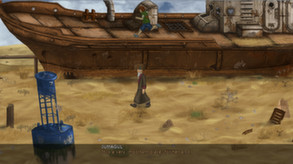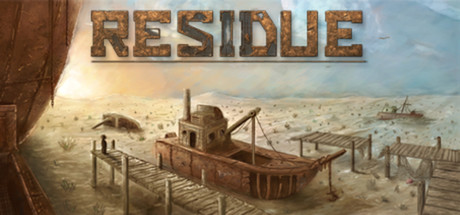
Up-tempo adventuring and family drama ensue when the survivors of a disastrous charity project return to the dead ships in the former Aral Sea in Uzbekistan. Residue tells a personal story by letting you explore a larger-than-life, ridiculously detailed rendition of one of our world's most fascinating (and horrifying) locations.
Modeled estimate, not a reported figure. How we estimate →
Media

About
Stats
All-time low is the lowest price we've recorded for this game since we started tracking it.
Languages: English*, French, German, Japanese, Polish, Russian, Swedish*languages with full audio support
Engagement
Hours played at review time, across 40 reviews with recorded playtime.
Reviews
Themes across 40 recent reviews and how positive each mention is. A keyword signal, not full sentiment analysis.
positive critical· bar length = how often the theme comes up
Reviews
엄마찾아 삼만리!! 재난사고로 실종된 엄마를 찾아 떠나는 소년의 모험. 세명의 플레이 가능한 캐릭터가 등장하며, 약간의 퍼즐과 액션으로 이루어져 있습니다. 조작감이 썩 훌륭하지는 않지만 잔잔한 스토리를 보면서 즐길 수 있는 게임 되겠습니다. 도전과제는 조금 어려운 편이고 공략없이는 거의 불가능한 도전과제가 하나 있습니다. 안한글이라 조금 아쉽습니다.
I am 32 years old. My ex-wife and I have a daughter together, and we adopted our son together. Both are now 4 years old. When we were going through our separation, I felt lost and unhappy. I was self-destructive. One day, I was so angry with everything spiraling out of control that I punched a concrete wall in a moment of overwhelming emotion. This resulted in breaking my fifth metacarpal in my right hand—the hand I worked with, played games with, and used to carry my children to bed—the hand I desperately needed to ensure I could continue providing. Upon learning the severity of the self-inflicted damage, I became almost suicidal. Keep in mind that just a few months before this, I was the happiest man, with no history of depression or anxiety. I had never experienced anger outbursts, nor was I the type to break down and cry, but I was in a tough situation that truly prevented me from seeing the light on the other side. With nothing better to do, I looked for a game I could play WITH ONE HAND while recovering. Somehow, I stumbled upon this game and read some of the comments. I decided it was worth a try... I must admit I didn't beat the game, nor did I play as much as some of you. In fact, I may have played this game for only a day or two. That being said, after doing so, I had a new joy and hope for life. I managed to leave behind the pain and suffering that had been thrust upon me. I could experience the joy and happiness of other people. I relaxed for 5 ♥♥♥♥ minutes listening to this music, long enough to realize that I would be okay. After realizing this, I turned off the game and went back to work. My hand hurt a lot, but I was motivated. I stopped feeling so sorry for myself and became the father I needed to be at that moment, not the weak boy I was behaving like. Today, I am close friends with the mother of my children. We don't fight, argue, or say hurtful things to each other. We are parents and friends. Now I have 3 children. My third child is, wait, ALSO 4 YEARS OLD. The woman I am with was going through a very similar situation at the time of my separation, and we just unexpectedly stumbled into each other's lives. We have been dating for a year and are very happy together. Moral of the story: you never know what life has in store for you, and if I had given up when all odds were against me, I wouldn't be where I am today. This silly little game helped me realize that. Thank you.
Magnifique petit jeu (environ 2 heures et quelques pour finir l'histoire personnellement) constitué d'une histoire prenante, de personnages attachants (chacun ayant un gameplay reflétant leur caractère), d'une splendide patte graphique, le tout porté par une très très belle bande-son, et qui se termine par un final épique et grandiose. Je recommande fortement !
A captivating adventure with dark atmospheric visuals, engaging puzzles, and a compelling story that keeps players immersed from start to finish.
Residue: Final Cut, developed and published by The Working Parts, is a hauntingly atmospheric narrative adventure that examines humanity’s hubris through the lens of environmental ruin. Set in the desolate remains of the Aral Sea—once a vast inland ocean and now reduced to a barren wasteland—the game blends platforming and storytelling to craft an experience that is more meditative than mechanical. It follows three interconnected characters whose personal motivations and traumas converge amid the relics of a failed ecological salvation project. The premise is simple but powerful: in a world drained of its life-giving waters, what remains are echoes of ambition, guilt, and the fragile persistence of hope. The player’s journey through these ruins is both literal and symbolic, exploring the cost of progress and the residues of human failure. The narrative unfolds through the alternating perspectives of three protagonists, each representing a different generation and emotional outlook. Jumagul, an aging man burdened by regret, navigates with the aid of a flashlight, illuminating paths both physical and metaphorical. Emilio, a young boy whose agility and curiosity make him the heart of the story, embodies the innocence and optimism that persist even in collapse. Nikolai, a pragmatic engineer equipped with a grappling hook, personifies the cold rationality and ambition that once drove humanity to reshape nature. By shifting control between these characters, the game encourages players to view the same world through contrasting emotional lenses. This structure allows the story to develop with nuance, revealing fragments of the past through subtle environmental storytelling rather than explicit exposition. The approach works beautifully—the Aral Sea is as much a character as the people inhabiting it, a silent witness to their intertwined fates. The gameplay itself is rooted in classic side-scrolling exploration. It asks for precision in platforming but rarely demands speed or aggression. Each character’s unique abilities define how they interact with the world: Jumagul’s light cuts through darkness, Nikolai’s grappling hook creates pathways over collapsed structures, and Emilio’s climbing and swimming enable him to explore spaces unreachable to others. These abilities are simple to grasp yet used creatively throughout the game’s progression. Rather than challenge players with complex puzzles, Residue focuses on immersion and discovery. The player uncovers documents, navigates through the decaying industrial machinery, and slowly reconstructs the story of a failed experiment to restore the sea. Every rusted pipe, sunken vessel, and desiccated landscape tells a story, emphasizing the futility of humanity’s attempt to dominate nature. The subdued pacing invites reflection rather than adrenaline, asking players to slow down and contemplate what each ruin represents. Visually, the game’s art direction is understated but evocative. The muted color palette—dominated by browns, greys, and pale blues—mirrors the lifelessness of its setting. The world feels grounded, as though lifted directly from photographs of real-world disaster zones. The use of layered backgrounds gives a surprising sense of scale to a 2D environment, suggesting vast expanses of dried seabed and crumbling industrial relics beyond the player’s immediate reach. This grounded realism is complemented by moments of quiet surrealism, where flickers of light, sound, or memory intrude on the desolation. The soundtrack, sparse and atmospheric, heightens the melancholy tone without overwhelming it. Music appears sparingly, letting ambient noises—creaking metal, wind, the distant hum of machinery—fill the silence. When melodies do emerge, they carry emotional weight, marking key revelations or moments of introspection. It is the kind of sound design that emphasizes mood over melody, enhancing immersion through restraint. Narratively, Residue achieves a rare blend of intimacy and scope. It’s a story about environmental collapse, but it’s also about the individuals left behind—the engineers, explorers, and children whose lives were shaped by forces beyond their control. The writing never resorts to didactic moralizing; instead, it presents its world with empathy and ambiguity. The characters are not heroes or villains but ordinary people wrestling with their pasts and their failures. Jumagul’s weary reflections, Nikolai’s obsession with redeeming his work, and Emilio’s childlike wonder all intersect in a narrative that questions whether redemption is possible in the face of irreversible loss. The ending, rather than offering clear resolution, embraces ambiguity, leaving players to interpret whether hope survives or if humanity’s scars are too deep to heal. This lack of closure suits the theme perfectly—like the Aral Sea itself, some wounds cannot be undone, only endured. On the mechanical side, the game is not without flaws. The controls can feel stiff at times, particularly during sequences requiring precise jumps or grappling. Transitions between characters are occasionally abrupt, and navigation can become confusing when environmental cues are too subtle. Some players may find the pacing slow or the progression opaque, as Residue deliberately avoids hand-holding. Yet these imperfections also contribute to its identity; the slight awkwardness of movement reflects the instability of its world and the vulnerability of its characters. It’s less a polished platformer than a narrative experience framed by physical exploration, prioritizing atmosphere and emotion over mechanical smoothness. Residue: Final Cut may be brief, lasting only a few hours, but it leaves a lasting impression. Its strength lies not in complexity or spectacle but in quiet resonance. Every rusted surface and broken mechanism serves a narrative purpose, reminding the player of the cost of human ambition and the fragility of the environment that sustains us. The “Final Cut” edition refines the original release, improving visual fidelity and performance while preserving its contemplative tone. It stands as a poignant example of how games can tell stories that are both globally relevant and deeply personal. By the time the credits roll, the player is left not with a sense of triumph but with reflection—on what humanity creates, what it destroys, and what traces remain after the water is gone. Residue: Final Cut is a small, somber gem that succeeds in transforming ecological tragedy into art, asking us to listen to the silence of a world we once drowned in our own ambition. Rating: 7/10
A frustrating experience. Just awful.
Эта игра оставляет желать лучшего. Все аспекты в ней выполнены некачественно. Графическое оформление ужасное. Существуют игры, где намеренно ухудшают графику, создавая ретро-стиль, пиксель-арт или карикатурную эстетику. Кажется, что здесь также используется подобный подход. Однако это не так. Графика просто не соответствует стандартам качества. Звуковое сопровождение на низком уровне. Создаётся впечатление, что озвучивали сами разработчики, настолько это непрофессионально. Фальшивость звука вызывает отторжение. Управление также вызывает дискомфорт. Хотя оно и не является ключевым элементом, так как игровой процесс довольно примитивен. Это аркада-квест, где основная задача — перемещаться. Иногда требуется нажать пробел. Сюжет. Я не играл долго, прежде чем решил отвлечься. Поэтому о сюжете могу рассказать немного. Насколько я понял, это социальная экологическая тематика. Действие происходит в Каракалпакстане, на высохшем дне Аральского моря. Главные герои — мальчик Эмилио (имя, которое не соответствует культурному контексту), его мама Островская (которую мальчик называет по фамилии), его дедушка в огромной шапке и другие персонажи. Диалоги поверхностные, история подаётся неуклюжими рывками. В общем, сюжет не заслуживает внимания.
It's a gorgeous, bizarre and uniquely human tale of death and redemption
💋
[h1][b]「かつて、ここは海だった。―錆びついた船の墓場で奏でる、干上がった青き世界へのレクイエム」[/b][/h1] [h1]ストーリー[/h1] 中央アジア、ウズベキスタン。かつて世界第4位の湖面積を誇ったアラル海は、無謀な灌漑計画により、今や有害な砂嵐が舞う塩の砂漠と化していた。 その乾いた大地に、一人の女性エレナが降り立つ。行方不明の父を探す彼女、過去の過ちに囚われる老人ニコライ、そして砂漠で暮らす少年。それぞれの運命が、錆びついた船の墓場で交錯し、隠された真実(Residue)を掘り起こしていく。 [h1]概要[/h1] 「20世紀最大の環境破壊」とも呼ばれるアラル海の縮小問題をテーマにした、社会派2Dアドベンチャー。 プレイヤーは能力の異なる3人のキャラクターを切り替えながら、廃墟と化した港町や干上がった海底を探索する。フックショットを使ったアクションやパズルを解きながら、過去と現在を行き来し、なぜ海が死んだのか、その悲劇の深層へと潜っていく。 [h1]感想[/h1] [b]砂に埋もれた船が語る、人間の愚かさと、それでも生きようとする「祈り」[/b] プレイ中、常に胸を締め付けられるような「やるせなさ」を感じずにはいられない。 画面を支配するのは、圧倒的な質量を持ってそこに存在する「干上がった海」という現実だ。かつて水があった場所には錆びた船が立ち尽くし、風が砂を運ぶ。その光景は、人間の愚かさを具現化したモニュメントのようで、ただただ悲しい。 しかし、本作は単なる絶望の記録ではない。 その過酷な環境をどうにかしようともがく人々、過去を償おうとする人々の姿には、泥臭いまでの美しさがある。特に、砂漠で生きる[b]少年のパート[/b]は白眉だ。彼の純粋な視点と、過酷な運命に翻弄される姿には、思わず涙腺が緩んでしまう瞬間があった。 短編映画のような尺だが、大手スタジオには作れない強烈な「作家性」とメッセージ性が込められており、インディーゲームの底力を感じさせる一作だ。 [h1]評価[/h1] 【GOOD】 ・アラル海という現実の悲劇を舞台に、幻想的なピクセルアートと音楽で「喪失」を描ききった、芸術性の高いビジュアルノベル的体験。 ・複数の視点(余所者、当事者、老人、子供)から語られることで、環境問題というテーマを多角的に、かつ感情的に捉えることができる。 ・BGMが非常に素晴らしく、砂漠の孤独感と哀愁を見事に表現している。 【BAD】 ・[b]アクション性の粗さ。[/b] ジャンプやフックの挙動に独特の慣性があり、パズル要素よりも操作ミスでストレスを感じる場面が散見される。
Related
Related
Trends
Concurrent players on Steam, sampled daily since tracking started.
Audience
Estimated from the language of this game's reviews — a proxy for where players are, not official Steam demographics.
Related
| Daily OVR | $4.1K | 65 | 72% | $3.99 |
| Pitty Meaty | $4.1K | 134 | 83% | $1.49 |
| Kinduo | $4.1K | 105 | 96% | $1.99 |
| 3D Hardcore Cube 2 | $4.1K | 68 | 57% | $2.99 |
| Hidden Cats in Istanbul | $4.1K | 64 | 100% | $3.99 |
| Mystic Melee | $4.1K | 51 | 71% | $3.99 |