
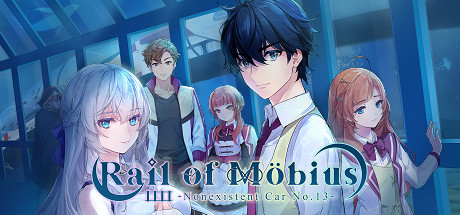
It is an adventure game with multiple endings. An original script written by a well-known light novelist with a total of 400,000 words. With reasoning, suspense, love, and science fiction elements, it allows players to embark on a highly immersive journey of salvation on the submarine train.
Modeled estimate, not a reported figure. How we estimate →
Discounts
Every price cut of more than 20% we have observed, in each market that quoted one, with this game's chart position on either side of it. These are episodes, not a model: a sale is one event, and one event cannot tell you what the next one will do.
Reviews, worldwide (the counter carries no country): 0/day in the week to Sep 1 → 0.14/day in the week after.
Reviews, worldwide (the counter carries no country): 0.14/day in the week to Jul 20 → 0/day in the week after.
For scale, across Steam · Top Sellers · Brazil over the last 30 days: the 25 chart moves that followed a price cut of more than 20% went a median of 10 places towards #1, and the 2,413 moves with no price cut behind them went 2 away. One store, one chart, one country — it is the only place we have enough observations to say even that.
Prices outside the United States have been collected since 6 August 2026 and chart positions since 19 July 2026, so a cut older than that has no market to compare and a market that joined later has no history yet. Nothing here is converted between currencies.
About

Enter a bloody loop of fate deep under the ocean. Will you become everyone’s salvation?
A train shuttling underwater carrying students and teachers on a graduation trip is suddenly trapped in a strange time loop, endlessly experiencing the moment of a derailing accident......
Our protagonist Ren and his friends are onboard a high speed rail train, which is a tourist attraction that goes through the belly of the sea. What they do not know is that once upon a time, the train is a vehicle for time travel experience.
The joyful journey quickly spirals out of control when the train derails, locking everyone in the moment of the bloody incident that endlessly repeats itself.
Ren happens to be the only person that remembers each and every fateful loop. But what’s even stranger — with each repeating loop, one more of his classmates dies before the train’s derailing moment. A mysterious murderer has appeared, and in the name of deliverance hunts down and kills Ren and his friends......
Male protagonist. He loves railroads and trains, especially the epoch-making undersea broad gauge tourist train "Time Traveler".
He has a straightforward personality and up to two friends. He has grown up with
Cecilia and Sol since childhood. No matter what happens, they would face everything together and solve them.

A childhood friend of Ren, she has a therapeutic personality. Her dream is to start a beautiful and ordinary family.

The sole heir to the Caecius Corporation. Also the inventor of the time machine during the time travel on the undersea railway.
She is beautiful and is versed in both literature and military affairs, but under the perfect appearance, there seems to be a hidden side.
There was a rumor on campus that she was conducting some kind of grisly experiment using humans.

The personal maid of Luna. Also an underclassman of Ren, Sol, and Cecilia by one year. Will do anything for Luna, even if it means sacrificing her own life. Seems to have experienced something in her life, making her expression always that of a gentle smile.

A friend of Ren and Cecilia. A star player of the school basketball team. Has a very robust build, but seemingly not too much of a ladies’ man. Always confused about the subtle relationship between Ren and Cecilia. Half of it is out of worry, and the remainder is frustrated watching over the two of them.

???
Story by: LittleDeer
Manager: Springfish Studio
Director & Programmer: Liang Long
Character Design & CG Artist: Yu Shiliang
Super Deformed & Comics Artist: Moco
Translator: Rich Lee
Engagement
Reviews
Themes across 46 recent reviews and how positive each mention is. A keyword signal, not full sentiment analysis.
Reviews
As a huge fan of time loop and time travel Visual Novels, I have been hunting, searching far and wide for VNs that are at least on par with Steins Gate and the Zero Escape series. Saw this one and thought I'd give it a shot. I went in not having high expectations but Rail of Mobius was better than I expected. The pacing of the story was just right and well-balanced. The time travel elements are simple and easier to understand than most games but still interesting and well thought of. Finished it in two sittings. Overall a great experience. Although not a masterpiece like Steins Gate and 999/VLR, it definitely "scratches that itch" and definitely deserves more attention. If you like time loops with themes of great friendship, unconditional love, resilience and sacrifice, I highly recommended that you give this one a shot.
Once in a while, i like getting some barely known VN in search of some new perspectives and spins on various stories, themes and genres, they don't even have to be great once-in-a-decade masterpieces. However, while it is a spike pit of my own making picking up a time travel sci-fi mystery novel in my searches, i have stumbled upon a true "mid". Frankly, even "mid" might be too spicy of a description for Rail of Mörbius. Despite being a very strong derogatory word towards an artistic work, arguably even worse than calling something "bad" or "awful", there are still some interesting ideas in such creations, they're just usually not realized to their full potential. It's not necessarily untrue that there's nothing that caught my interest, but i'm not sure that just ONE somewhat side thing can fix the overall blandness of the rest of the novel. That, of course, being the relationship between Ren and Cecilia. "Finally, a somewhat interesting take on a relationship between childhood friends, neither of who are desperately eager to shag another", i thought naively (albeit, the latter part holds true, credit where credit's due). Alas, even that eventually gets washed away relatively quickly. So, what is there left, then? 5 cardboard cutouts, one of which doesn't even get the most basic background story other than "he's my other childhood friend", trudging through pretty run-of-the-mill time travel related concepts, paradoxes and pseudoscience flair. Although, i'll admit, somehow this is the first time i see the Mandela Effect in particular being mentioned, probably because even for the "what if pseudoscience is not so pseudo after all...." purposes, it's way too silly, considering it's based on people misremembering words' spelling and mascots imagery. And that coming up in a conversation was somehow more of a twist for me than anything the plot actually had to throw at me. I managed to vibe out the we've-got-Zero-at-home's identity without constructing any kind of logical argument for it, and i'm usually pretty bad at it. But ok, the core of everything fails at delivering, however i usually still manage to find some good elements that, while not exactly saving graces, tend to elevate the experience, like music and/or art. Unfortunately, those were the final kickers for me. The art quality is decent on its own, but the character design is forgettable. The music was somehow the most devastating for me personally, probably because i'm just the type of person who pays a lot of attention to the sound in general. All of my most adored VNs take so much of my headspace precisely because of their mastery in elevating emotional moments in the story to a whole new level with the music. Yet when it comes to RoM, I cannot remember a single track from the novel, cannot remember a single scene where the music would hype me up or make me bawl my eyes out feeling for the situation the characters are in. I remember exactly how "IBF Notfall" from Ever17 sounds despite the fact that i last read the novel around 14 years ago. I bring it up to deliberately contrast the track with what plays during a very similar and repeatadly occurring scene in RoM -- the one where the train car begins flooding together with an alarm system blasting (allegedly, because there's no sound effect for the alarm, only visuals). Where "IBF Nofall" immediately puts you in an adrenaline-fueled anxiety state, perfectly reflecting the panic and urgency of the disaster the characters are facing, Morbius' "Flood" merely flaccidly acknowledges the situation at hand, putting me in a near-lethargic mood instead of making me feel for the mc. Honestly, this was supposed to be a somewhat milder review, but i stumbled upon an [url=https://nyxgameawards.com/winner-interview-profile.php?id=36] interveiw [/url] with the... lead writer and planner (it's not made clear who is who and some info is conflicting) which shattered my last goodwill towards the dev company since, apparently, they're very excited about ai-generated art and if not for some copyright issues, they'd already be implementing it. So, if you also care about stuff like this, that alone might be an even stronger argument than my entire review above for saving your money for something else.
Media

Related
Related
Price dynamics, follower growth, revenue and sales trajectories with interactive tooltips
This and every other Pro feature is free until October 20, 2026. A free account is all it takes.
Genres
Stats
All-time low is the lowest price we've recorded for this game since we started tracking it.
Languages: Traditional Chinese, English, Simplified Chinese
Hours played at review time, across 46 reviews with recorded playtime.
positive critical· bar length = how often the theme comes up
立绘精美,剧情颇有打越钢太郎,科学adv风味,人设喜欢,时空循环题材,熟悉的伪科学解释,两位女主都非常喜欢,不过个人还是偏心大小姐。 [spoiler] 可惜真结局里面大小姐输的麻中麻,真结局线里面大小姐和男主羁绊少也就算了怎么大小姐个人线来了个太空恐怖电影似的结尾 [/spoiler]
When I started Rail of Mobius, I didn’t get the best first impression. The art was pretty, but the translation seemed a little shaky, and there were cliches left and right. The plot was looking like “We have Steins Gate at home”. But I really wanted to work on my gaming backlog so I stuck with it and was very pleasantly surprised. With every hour that went by, the characters grew more likeable, the story became more complex and creative, and the game managed to go its own way from Steins Gate while still feeling influenced by it in a good way. The story handles time travel in a way I’ve not seen before, both mechanically and conceptually, and when I realized I had absolutely no idea where the story was headed, I was all in. There are no achievements, but the game features lovely CG’s and art design, a good soundtrack, two regular endings, and a true end that they both set up. If you can get past the sometimes awkward translation, I’d recommend this for fans of mystery Visual Novels or time travel stories.
捏着鼻子玩了半个小时,这文案是初中生写的吗?高中就已经没人这么讲话了
Это было потрясающе! Автор действительно умеет создавать ситуации и проявлять героев в них. Нет ни одного затянутого момента, искуственных задержек или роялей в кустах. Серьезно, я прочёл множество новелл, как классику от Key так и современных, и в этой игре прямо чувствуется уровень. Как я выяснил позже, автор действительно успешный писатель лайт новелл, и игра это новая ступенька его творчества. И пусть вас не пугает что игра на английском, я проходил ее с программой LunaTranslator , это бесплатный софт для захвата текста с экрана и перевода на лету, ставится и используется элементарно.
首先作为轮回悬疑游戏,设定逻辑不严谨是硬伤,无法自圆其说只能怪力乱神,单论这一点就必须给差评了。其次加了很多非常古早的玩笑,有种活在世纪初的感觉。再者就是人设,这个大小姐人设真的有种看不懂的感觉,真的有人会喜欢这种人设吗? 此外,看到评论区还有很多人提到了打越,我只能说这部就算是和打越最早的Never7比都有无限的差距,我甚至没法主动把他们联系在一起。以及厂商用了一堆tag包括:“推理、悬疑、恋爱、科幻”,以上除了青梅的恋爱线还说得过去,其他的你都做了什么阿?还二十五万字,不知道以为你做了一个海猫呢。 综上,本来毕竟处女作么要求是不能太高,但是标题宣传天花乱坠,游戏打完大失所望,只能给差评了。
人生中玩的第一款严格意义上的旮旯给木,体验感还是很不错的。个人觉得剧情的惊艳程度和文案的破烂程度成正比,很多地方文案就是一坨,已经不是小头控制大头的问题了,单纯是把脑子扔掉了写的弱智构史。关于时空倒转的剧情写的很好,很喜欢铯月的分线,一些转折还是挺震撼的,打折的时候十几块可以买,原价买不太值。
好的:idea不错,不算特别严谨但很酷,编剧应该没少吃打越和科A,青梅竹马太好嗑了 不好的:文笔烂完,人设刻板,有股藏不住的直男味,另外你们该招个校对
Rail of Möbius, developed and published by PHOSEPO, is a story-driven visual novel that leans heavily into psychological mystery, emotional introspection, and science-fiction concepts built around repetition and consequence. Set aboard a futuristic submarine train on what should have been a routine graduation trip, the game quickly reveals itself as something far more unsettling and personal. A catastrophic incident traps the cast in a looping disaster, and only the protagonist retains memories between cycles. From that moment forward, the experience becomes less about escape alone and more about understanding people, choices, and the weight of remembering what others cannot. The narrative is the game’s defining strength, unfolding through a dense and carefully structured script that rewards attention and patience. Each loop revisits familiar scenes, but subtle changes in dialogue, character behavior, and internal monologue gradually reshape the player’s understanding of events. Rather than feeling repetitive, the looping structure becomes a tool for discovery, allowing the story to deepen with every iteration. Information that once felt insignificant takes on new meaning when revisited with greater context, and the game excels at making players feel the emotional burden of knowledge carried alone while everyone else resets to ignorance. Character writing plays a crucial role in sustaining this structure. The cast is composed of classmates with distinct personalities, anxieties, and emotional trajectories, and their relationships with the protagonist evolve depending on player choices. Dialogue decisions often feel morally ambiguous rather than overtly “correct,” and the consequences of those choices may not be immediately visible. Some paths prioritize emotional closeness, others uncover hidden truths, and some lead to tragic outcomes that feel earned rather than arbitrary. This branching design encourages multiple playthroughs, not out of obligation, but out of genuine curiosity about how different approaches reshape both events and emotional outcomes. Gameplay mechanics remain firmly rooted in the visual novel tradition, placing emphasis on reading, observation, and decision-making rather than puzzles or action. This minimalist approach keeps the focus squarely on narrative immersion. Choices are spaced thoughtfully, giving players time to absorb scenes and reflect on what they’ve learned from previous loops. The sense of agency comes not from mechanical mastery, but from narrative awareness—knowing when to push for answers, when to comfort someone, and when to let events play out differently than before. Visually, Rail of Möbius adopts a clean, anime-inspired style that complements its introspective tone. Character portraits are expressive, capturing subtle shifts in emotion that mirror the psychological weight of the story. Backgrounds emphasize the claustrophobic nature of the train and the eerie calm of its underwater setting, reinforcing the sense that the characters are trapped not only physically but existentially. While the game lacks full voice acting, the strength of the writing and art direction compensates, allowing players to project emotion and tension naturally as scenes unfold. The soundtrack quietly enhances the experience, using restrained musical cues to underscore moments of dread, reflection, and fleeting warmth. Rather than dominating scenes, the music often fades into the background, letting silence and pacing do much of the emotional work. This restraint suits the game’s themes, emphasizing isolation and repetition rather than spectacle. Over time, familiar tracks take on new emotional significance, echoing the way repeated scenes gain meaning through memory. Thematically, Rail of Möbius explores ideas of fate, responsibility, and emotional exhaustion in a way that feels surprisingly mature. The loop is not treated as a power fantasy, but as a burden. Remembering every failure, every death, and every regret weighs heavily on the protagonist, and the game makes sure the player feels that accumulation of emotional cost. It raises questions about whether changing outcomes is always the right choice, and whether knowledge itself can become a kind of prison. While the experience is deeply rewarding for fans of narrative-heavy games, it is not designed for everyone. The heavy reliance on reading, the slow pacing, and the absence of traditional gameplay systems may deter players seeking constant interaction or audiovisual spectacle. However, for those willing to invest emotionally and intellectually, these qualities become strengths rather than shortcomings, allowing the story to breathe and resonate. In the end, Rail of Möbius stands out as a thoughtful and emotionally rich visual novel that uses its time-loop structure with purpose and restraint. It is less concerned with shocking twists than with gradual realization, less focused on action than on consequence. By combining strong character writing, layered narrative design, and a hauntingly intimate setting, the game delivers an experience that lingers long after the final loop concludes, making it a compelling choice for players who value introspection, storytelling, and psychological depth. Rating: 8/10
Selling now
See how fast this game is selling right now — estimated copies and revenue per day from recent review growth.
Players by region
Where this game's players are, estimated from review languages.
Related
| Game | Estimated lifetime revenue | Reviews | Review score | Price |
|---|---|---|---|---|
| $299 | 4 | 75% | $3.99 | |
| $68 | 2 | 50% | $0.99 | |
| — | 0 | — | — | |
| — | 0 | — | — | |
| — | 0 | — | — | |
| — | 1.1K | 75% | — |
Related
| Game | Estimated lifetime revenue | Reviews | Review score | Price |
|---|---|---|---|---|
| $70.4K | 1.6K | 98% | $1.99 | |
| $70.4K | 267 | 83% | $9.99 | |
| $70.4K | 267 | 76% | $14.99 | |
| $70.4K | 223 | 74% | $6.99 | |
| $70.4K | 370 | 91% | $11.99 | |
| $70.3K | 414 | 87% | $7.19 |