Quickerflak 2, developed and published by Walter Machado, is a brutal and highly concentrated shot of arcade adrenaline. It wastes no time easing players in; instead, it throws them headfirst into its frantic rhythm, where every movement, every shot, and every fraction of a second matters. This top-down, time-attack shooter is built around raw speed, reflexes, and flow, carrying forward the signature style that has come to define Machado’s catalogue of minimalist yet fiercely challenging games. The premise is deceptively simple: clear rooms filled with enemies as quickly and efficiently as possible. Yet within that simplicity lies the addictive loop that makes Quickerflak 2 so effective—every run feels like a sprint through chaos where perfection is measured in milliseconds.
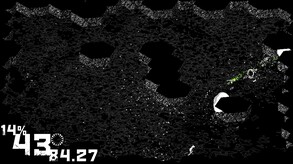
The first thing that stands out about Quickerflak 2 is its visual identity. The game continues Machado’s love for pixel art mixed with strong color contrast and heavy visual feedback. Explosions burst in bright hues, bullets streak across the screen, and enemies collapse into fragments of digital noise. The camera perspective is tight, keeping the action focused on a small area where reaction time is everything. There’s an almost hypnotic quality to how quickly each encounter begins and ends, as if you’re locked into a fever dream of rhythm and violence. The music and sound design amplify this feeling, layering pounding beats and distorted effects over the relentless pace of combat. It’s an aesthetic that celebrates chaos without sacrificing clarity, and it fits perfectly with the game’s philosophy of condensed intensity.
Mechanically, Quickerflak 2 refines and expands upon the foundation of its predecessor. The central concept remains—clear a series of rooms as quickly as possible—but new features such as a stamina system and a melee option introduce meaningful layers of strategy. The player is no longer limited to gunning down foes; now, they must decide when to dash in close for a blade strike, when to conserve energy, and when to use environmental cover. These elements create a delicate balance between aggression and restraint. The best players learn to weave between bullets, slice through enemies, and execute perfect runs that look almost like choreographed dances of destruction. It’s a system that rewards both instinct and planning, allowing skilled players to express mastery in how they chain movements together.
Despite its exhilarating design, the game’s focus on brevity may catch some players off guard. Quickerflak 2 is not built for long sessions or extended campaigns—it’s a distilled experience meant to be replayed, perfected, and dissected. Each run is short, sometimes lasting only a few minutes, but those minutes are crammed with tension. The satisfaction comes from shaving seconds off your best time, discovering optimal routes, and pushing your reflexes to their limit. For players who thrive on repetition and improvement, this design feels endlessly rewarding. However, those seeking a broader narrative, deeper progression systems, or a more conventional sense of advancement may find the game’s minimalist structure too sparse. It is a pure arcade test of skill, and its value lies entirely in how much you enjoy that challenge.
Performance and technical design are generally solid, though not without occasional hiccups. The minimalist art style keeps performance stable on most systems, but a few users have reported frame drops or stutters during moments of heavy particle effects. These minor issues rarely disrupt the flow of gameplay, which remains fluid and responsive overall. The controls are tight, the hit detection feels precise, and deaths—though frequent—are almost always the player’s fault rather than the game’s. It is an experience built for immediate feedback and quick resets, encouraging players to dive right back into the action after every failure.
What sets Quickerflak 2 apart from other indie shooters is its sheer conviction. It knows exactly what it wants to be and refuses to dilute its identity with extraneous features. Every mechanic, every visual cue, and every note of music exists to heighten the intensity of the moment. The result is a game that feels both punishing and empowering, chaotic yet precise. It captures the essence of old-school arcade design while delivering the immediacy of modern indie minimalism. There is no downtime, no filler, just the unrelenting pursuit of speed and mastery.
In the end, Quickerflak 2 is a love letter to arcade purists—a game that strips away everything except the thrill of the challenge itself. It’s short, sharp, and uncompromising, but for those who connect with its design philosophy, it becomes endlessly replayable. Each run tells its own story of precision and recklessness, of failures learned and victories earned through pure reflex. Walter Machado’s creation doesn’t just test your skill; it immerses you in the pulse of speed and tension until you find yourself craving one more run. It may be small in scope, but its impact is immediate, and its energy, relentless.
Rating: 8/10