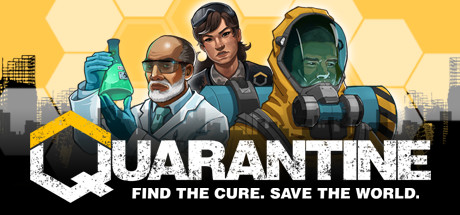
Quarantine takes a different angle on the global outbreak scenario by placing the player not in the role of a survivor or aggressor, but as the coordinator of a worldwide response effort. Developed by Sproing and published by 505 Games, it leans heavily into a turn-based, board game-inspired structure where every decision is deliberate, calculated, and often made under pressure. Rather than relying on spectacle or real-time chaos, the game builds its identity around planning, probability, and the constant tension of trying to stay one step ahead of an evolving crisis.
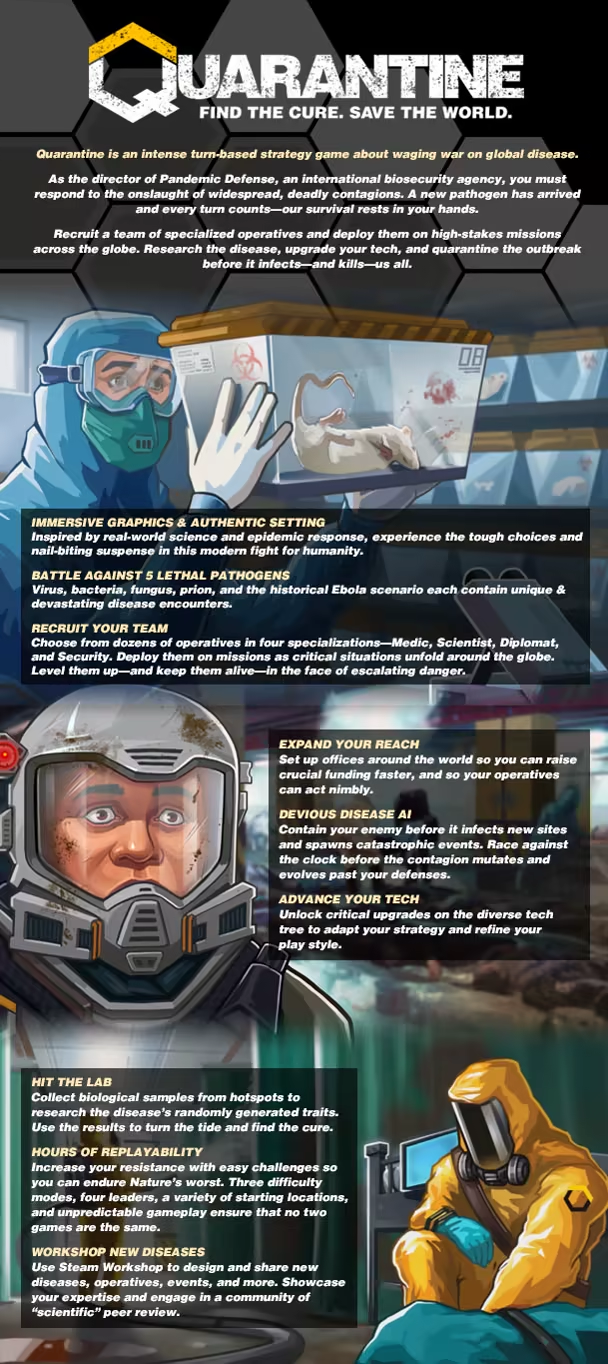
The gameplay unfolds on a global map divided into regions, each vulnerable to infection and escalation. Every turn represents a cycle of decisions, where you deploy operatives, collect samples, treat infected zones, and invest in research. Once your turn ends, the disease responds, spreading unpredictably or intensifying in already affected areas. This back-and-forth creates a rhythm that feels methodical but tense, as even well-planned strategies can unravel quickly when the infection behaves aggressively. The challenge lies not in reacting to what has already happened, but in anticipating what might happen next and positioning your limited resources accordingly.
A key strength of the game is the variety in how outbreaks behave. Different pathogens introduce unique dynamics, forcing players to adjust their approach rather than rely on a single strategy. Some infections spread rapidly across connected cities, while others mutate or escalate in ways that demand a more cautious, containment-focused response. This variability gives each playthrough a slightly different flavor, even though the underlying structure remains consistent. The inclusion of specialized operatives, each with their own abilities, adds another layer of decision-making, allowing players to tailor their team to the specific challenges of each scenario.
The research system acts as the central long-term objective, tying together all of your actions. Collecting samples and investing in analysis gradually moves you closer to developing a cure, creating a constant balancing act between immediate containment and future resolution. This tension is where the game feels most engaging—when you are forced to decide whether to focus on slowing the spread or pushing forward with research, knowing that neglecting either can lead to failure. When everything comes together and a deteriorating situation is brought back under control, the sense of accomplishment is genuine.
Visually, the game adopts a clean and functional presentation that prioritizes clarity over detail. The interface is easy to read, and the global map provides a clear overview of the situation at any given moment. While it lacks the visual depth or immersion of larger strategy titles, it succeeds in supporting the gameplay by keeping information accessible and easy to interpret. The overall aesthetic reinforces the feeling of managing a crisis from a detached, strategic perspective rather than being directly involved in the events on the ground.
However, this same design approach also contributes to some of the game’s weaknesses. The board game-like structure can create a sense of detachment, as there is little narrative context or emotional engagement with the world. Cities and regions become abstract points on a map rather than places with identity, which can make the experience feel somewhat clinical. Additionally, while the mechanics are solid, they do not evolve significantly over time. Once players become familiar with the systems, the experience can start to feel repetitive, especially during longer sessions.
Balance and pacing can also be inconsistent. Certain strategies may prove more effective than others, reducing the need for experimentation, while resource management can feel uneven depending on the scenario. Some playthroughs offer a satisfying level of challenge, while others may feel either too forgiving or unexpectedly restrictive. This variability can impact the overall sense of progression, making the experience less predictable in terms of difficulty.
The relatively short length of individual matches is another double-edged sword. On one hand, it makes the game accessible and easy to pick up for short sessions, which suits its turn-based structure. On the other hand, it limits the sense of long-term development, as each game feels somewhat self-contained. Players looking for a deeper, evolving campaign or more complex strategic layers may find the experience lacking in scope.
Despite these limitations, Quarantine succeeds in delivering a focused and thoughtful strategy experience. It doesn’t attempt to compete with larger, more complex simulations, but instead offers a streamlined approach that emphasizes decision-making and foresight. Its strength lies in the tension it creates within a relatively simple framework, where every turn carries weight and every mistake can have lasting consequences.
In the end, Quarantine is a solid but restrained strategy game that offers a unique perspective on crisis management. It provides engaging, decision-driven gameplay in short bursts, but its lack of depth and variety may limit its long-term appeal. For players who enjoy methodical planning and contained strategic challenges, it delivers a satisfying experience, even if it doesn’t fully realize its potential.
Rating: 6/10