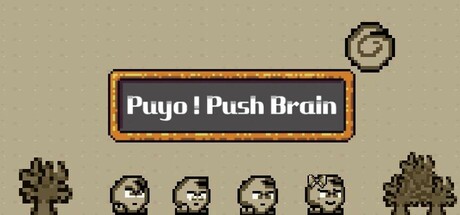
Puyo family challenges you to test your brain! Meet diverse Puyos and conquer tough levels. Top scorers earn a spot on the Brain Power Honor Roll. Aim for the #1!
Modeled estimate, not a reported figure. How we estimate →
Media

About

The Puyo family invites you to exercise your brain together. Conquer over 100 meticulously designed levels and showcase your exceptional mental prowess! Demonstrate your vigor and vitality!
This game features over 100 levels for you to challenge, including puzzle box pushing, various mechanical transformations, block elimination, and special mechanisms for controlling multiple characters simultaneously.
Push boxes to clear a path, use blocks to fill in dark spaces, manipulate various mechanisms, and control multiple characters to work together towards the finish block.
Clearing specific levels unlocks skins and themes, with a total of 5 types available.

Players with the most levels cleared can make it to the leaderboard. Completing all levels and finishing the mental workout will earn you the recognition of the Puyo family. (Of course, as long as you have the courage to try, the Puyo family will also appreciate you!)
Unique gameplay that combines the novel puzzle-solving experience of box-pushing.
Over 100 game levels, providing you with hours of fun.
5 different game skins.
Leave your name on the leaderboard.
Retro pixel art style.
Stats
All-time low is the lowest price we've recorded for this game since we started tracking it.
Languages: English, Simplified Chinese, Traditional Chinese, French, Italian, German, Spanish - Spain, Danish, Ukrainian, Russian, Bulgarian, Hungarian +91 more
Reviews
感谢赠key,不过很遗憾,经群友提醒,本作从机制到关卡完全抄袭了一款名为《Kwirk》,于1989年发布于Game Boy上的游戏,所以是差评。照抄不能说是致敬,对吧? (而且之前商店页是只字不提的,后来补上了一句致敬,但是致敬谁也没说...游戏里也是什么都不提的) 就《Kwirk》本身的质量而言,我打了50关左右,关卡的理念多半是重复的,属于是比较腾挪的推箱那一类,放在今天也已经过时了。不过呢,不考虑时代因素的评价是不公平的,放在过去游戏比较匮乏的时候是个好游戏,要怪就怪那个拿洛阳铲的人吧~
第一关好难!过了第一关理解了规则后痛快了好几关! 感觉像是推箱子变种,又不是华容道,有点意思。 重试的配音不好听,求换。 选关界面建议右边加个箭头,不然可能想不到电脑游戏里用滑屏向右翻页。 点了换装页面再点排行榜页面,点关闭排行榜按钮的时候,第一次一定是关闭LOGO,第二次点击才能关闭排行榜。 不建议加创意工坊,工程量大,得不偿失。 成就是在关闭游戏的时候弹出。
Puyo! Push Brain is a simple bit of shovelware, a 2D retro pixel "I can't believe it's not Adobe Flash" based "I can't believe it's not Sokoban" push puzzle. The gimmick here is that instead of pushing boxes you're rotating panels around... wow, what innovation. Surely this is the future, what a time to be alive. It was a dismal failure. From a technical perspective, the game doesn't meet basic minimum requirements that most PC gamers expect as standard. The implementation here is of such poor quality, the developer couldn't work out how to make the game display in fullscreen, it only runs in a window. A choice was made to use obsolete, decades old retro pixel "art" as a substitute for contemporary PC graphics. It's unclear if this is due to lack of budget or talent, regardless, the overall visual quality of the game is extremely low as a result. There's no option to change the resolution and no useful graphics tweaks. There's no way to ensure this is running at the native resolution of your display. There's no guarantee this game will look right on any PC as a result of this hamfisted design decision. The controls can't be customised, which will be an annoyance for many, but it can also render the game unplayable for differently-abled gamers, left handed gamers or gamers using AZERTY or other international keyboard layouts. These technical defects push this game below acceptable standards for any modern PC game. The poor quality of this game is reflected by how many people spent time with it. At the time of this review, SteamDB shows the all-time peak player number was only 4 players. This is a remarkably low number, and now, the only player activity occurs once or twice a month, presumably someone loading it up to see what it is then quickly uninstalling it. Considering there's over 120 million gamers on Steam and well over 110,000 games for gamers to choose from, the overwhelming lack of interest in this low quality game is to be expected. So, should you buy this game? Is this one of the best of the 110,000+ games on Steam? Puyo! Push Brain is relatively cheap at $3 USD, but it's not worth it. Given the defects and quality issues with the game, coupled with the unrealistic price, this is impossible to recommend. This is also competing with over 14,000 free games available on Steam, many of them far better than this paid product. [quote][b][url=https://partner.steamgames.com/doc/marketing/profile]Profile Features Limited![/url][/b] Valve have marked this game as "Profile Features Limited" at the time of this review. This is usually caused by poor sales figures and low community acceptance for the game (to date). Until this status changes, this game will not give you +1 to your Game Collector badge count, appear in profile achievements or any other Steam meta-accomplishments, nor can it be displayed in some profile showcases. If these factors are important to you, it may be worth holding off before buying this game.[/quote]
[url=https://store.steampowered.com/curator/44181848/] 【更多适合Steam Deck的好游戏推荐,请关注GPD掌机鉴赏家!】[/url] 非常棒的一款充满创意与挑战的益智游戏,它巧妙地将经典推箱子玩法与新颖元素相结合,为玩家带来全新的解谜体验。游戏拥有超过100个精心设计的关卡,每个关卡都是一道独特的脑力难题,玩家需要推动箱子、操作机关、消除方块,甚至同时操控多名角色,才能找到通往终点的道路。这些关卡难度层层递进,设计巧妙,既考验玩家的逻辑思维能力,又考验其应变能力,让玩家在解谜的过程中感受到成就感与乐趣。此外,游戏还提供了5种不同的皮肤和主题,通关特定关卡即可解锁,为玩家的冒险之旅增添了更多个性化元素。复古的像素画风更是让玩家仿佛置身于掌机游戏的黄金时代,唤起对经典益智游戏《Kwirk》的美好回忆。
good,
咋了,准备当换皮专业户?画面音乐玩法乐趣在当年应该是能打的,如果厂商能有自己的想法,单买3内可考虑入库。 daily indie game,t a o宝,支付宝红包,steam,steam掉卡抵扣,fanatical,杉果,它处自定义包入的本体约5元。爱人如己,目前就这,看以后追评。兄弟萌,强烈建议不要第三方平台的小店买y u额,通过饰品等挂steam市场转的,高概率red信乃至封号,且行且珍惜。
Puyo! Push Brain, developed by SkyStudio and published by Liquid Meow alongside S399TEAM, is a compact logic-driven puzzle game that focuses squarely on mental agility, spatial reasoning, and methodical problem solving. Rather than leaning on story or spectacle, the game positions itself as a pure “brain workout,” presenting a steady stream of challenges designed to make players slow down, think ahead, and carefully consider every move. From the outset, it embraces a minimalist philosophy, prioritizing clarity and puzzle structure over narrative framing, which gives it the feel of a classic logic game reborn in a modern indie context. The core gameplay revolves around pushing, positioning, and clearing objects within tightly designed puzzle spaces. Each level introduces a specific layout with obstacles that must be manipulated in the correct order to reach the goal. While the mechanics themselves are easy to understand, the real challenge comes from how they are combined. Many puzzles punish careless movement, forcing players to restart and rethink their approach if a single push is made in the wrong direction. This emphasis on foresight creates a deliberate pace that rewards patience and planning rather than reflexes, making every successful solution feel earned through logic rather than luck. As players progress, Puyo! Push Brain gradually increases its complexity by layering mechanics and introducing more demanding level designs. Some stages focus on spatial efficiency, requiring minimal moves to avoid trapping yourself, while others challenge players to manage multiple interactive elements at once. This steady escalation keeps the experience engaging across its large collection of levels, encouraging players to refine their problem-solving skills rather than relying on trial and error alone. The satisfaction of finally cracking a particularly stubborn puzzle is one of the game’s strongest hooks, reinforcing its identity as a thoughtful, mentally stimulating experience. Visually, the game adopts a clean pixel-art style that feels intentionally restrained. The environments and objects are clearly defined, ensuring that visual clarity supports the puzzle mechanics rather than distracting from them. This retro-inspired presentation complements the logical nature of the gameplay, evoking memories of classic handheld and PC puzzle games while maintaining modern usability. The interface is straightforward and unobtrusive, allowing players to focus entirely on the puzzle grid without unnecessary menus or visual noise. Sound design and music remain subtle, serving as a background companion rather than a focal point. Audio cues provide feedback for movement and interactions without becoming repetitive or intrusive, which helps maintain concentration during longer puzzle-solving sessions. This understated approach fits well with the game’s overall tone, reinforcing its role as a calm yet mentally engaging title rather than a high-energy experience. Replay value comes primarily from the sheer number of levels and the desire to optimize solutions. While the game does not heavily emphasize scoring or time-based challenges, players who enjoy efficiency can revisit puzzles to find cleaner or more elegant solutions. However, the experience is clearly designed for a niche audience—those who enjoy pure logic puzzles and structured challenges. Players seeking narrative depth, variety in modes, or audiovisual flair may find the presentation sparse, but for its intended audience, this focus is a strength rather than a weakness. In the end, Puyo! Push Brain succeeds as a focused and honest puzzle game that understands its purpose. It offers a substantial set of logic challenges built around simple mechanics that become increasingly demanding through smart design rather than artificial difficulty. While it may not stand out visually or thematically in a crowded indie market, it provides consistent, rewarding mental engagement for players who enjoy thoughtful puzzles and incremental mastery. For fans of classic box-pushing and spatial reasoning games, it delivers a solid and satisfying brain-training experience. Rating: 5/10
Related
Related
Trends
Concurrent players on Steam, sampled daily since tracking started.
Related
| 100 Cats Belgrade | $743.8 | 63 | 90% | $0.69 |
| Last Escape | $743.1 | 60 | 68% | $0.49 |
| Nyasha Valkyrie | $742.7 | 116 | 75% | $0.99 |
| Tankex | $741.8 | 58 | 76% | $0.69 |
| OMNIMUS | $741.5 | 55 | 87% | $0.97 |
| Interstellar Logistics Inc | $741 | 55 | 82% | $0.79 |