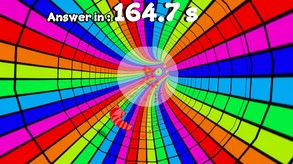
"Short" Arcade Game about the life of a cat named "Zag", who desperately seeks an answer. The evil and unique gameplay is about reversing the controls on the keyboard.
Modeled estimate, not a reported figure. How we estimate →
About
Stats
All-time low is the lowest price we've recorded for this game since we started tracking it.
Languages: English
Engagement
Reviews
Themes across 41 recent reviews and how positive each mention is. A keyword signal, not full sentiment analysis.
Reviews
You can't rebind the controls from the arrow keys or close the game without alt+F4 / tabbing out. Very basic things every game should have. I get not being able to quit is part of the rage bait, but still. The game itself is fine... it's a trippy rage game that'll give you some fair entertainment for $0.49. I personally found it more annoying than anything else, but if you like these types of games this a decent version.
I am 32 years old. My ex-wife and I have a daughter together, and we adopted our son together. Both are now 4 years old. When we were going through our separation, I felt lost and unhappy. I was self-destructive. One day, I was so angry with everything spiraling out of control that I punched a concrete wall in a moment of overwhelming emotion. This resulted in breaking my fifth metacarpal in my right hand—the hand I worked with, played games with, and used to carry my children to bed—the hand I desperately needed to ensure I could continue providing. Upon learning the severity of the self-inflicted damage, I became almost suicidal. Keep in mind that just a few months before this, I was the happiest man, with no history of depression or anxiety. I had never experienced anger outbursts, nor was I the type to break down and cry, but I was in a tough situation that truly prevented me from seeing the light on the other side. With nothing better to do, I looked for a game I could play WITH ONE HAND while recovering. Somehow, I stumbled upon this game and read some of the comments. I decided it was worth a try... I must admit I didn't beat the game, nor did I play as much as some of you. In fact, I may have played this game for only a day or two. That being said, after doing so, I had a new joy and hope for life. I managed to leave behind the pain and suffering that had been thrust upon me. I could experience the joy and happiness of other people. I relaxed for 5 ♥♥♥♥ minutes listening to this music, long enough to realize that I would be okay. After realizing this, I turned off the game and went back to work. My hand hurt a lot, but I was motivated. I stopped feeling so sorry for myself and became the father I needed to be at that moment, not the weak boy I was behaving like. Today, I am close friends with the mother of my children. We don't fight, argue, or say hurtful things to each other. We are parents and friends. Now I have 3 children. My third child is, wait, ALSO 4 YEARS OLD. The woman I am with was going through a very similar situation at the time of my separation, and we just unexpectedly stumbled into each other's lives. We have been dating for a year and are very happy together. Moral of the story: you never know what life has in store for you, and if I had given up when all odds were against me, I wouldn't be where I am today. This silly little game helped me realize that. Thank you.
Media

Related
Related
Price dynamics, follower growth, revenue and sales trajectories with interactive tooltips
This and every other Pro feature is free until October 20, 2026. A free account is all it takes.
Hours played at review time, across 41 reviews with recorded playtime.
positive critical· bar length = how often the theme comes up
I STILL DON'T KNOW THE ANSWER!
Il y a bien trop de choses à dire sur ce jeu, tant de choses positif, je vais donc juste me contenté de vous dire que c'est un excellent jeu qui vaut le coup lorsqu'il est soldé.
i hate this game so much. i have bought it 5 times send it to literally all your friends
Прекрасная игра, в течении которой вы сами найдете ответы на все интересующие вас вопросы, будь то смысл жизни или о сотворение Вселенной, не доходя до конца. А через десять минут вы словите наркотрип. На 1-ой минуте игры, может показаться, что она лёгкая. На 2-ой минуте покажется, что она непроходимая. На 3-ей ты проклинаешь разработчика этой игры. На 4-ой более-менее привыкаешь к управлению. На 5-ой тебя уже начинает тошнить от этого е*аного тоннеля. На 6-ой тебе наконецто удалось пройти хотябы 25 секунд от уровня. На 7-ой тебе хочется выйти из игры, но она буквально не выпускает тебя, пока ты не пройдёшь её, и ты следующие несколько минут пытаешься из неё выйти, а потом просто забиваешь и сворачиваешь её. Моя оценка: 10 наркотических веществ из 10
Ahorrate el disgusto y no juegues a este juego. Los controles, la parte fundamental de este tipo de minijuegos, no responden todo lo bien que deberían, haciéndolo muy frustrante. El tono "oscuro" y misterioso que tiene el juego es una cortina de humo que demuestra que el juego no tiene nada que ofrecerte. La "respuesta" es que se cierra. Y punto. De nada por ahorrarte 0,99€. Si te gustan los matarratos y este estilo de juegos tienes muchas opciones mejores. Este ni te lo plantees.
Psychocat: The Answer is a compact but cleverly constructed arcade experience developed and published by Chewa. Released in 2016, it represents the kind of focused indie design philosophy that builds an entire game around a single, sharply defined mechanic and then refines it into something deceptively demanding. At first glance, the premise appears almost minimalistic: guide a small cat named Zag through a vibrant, twisting tunnel filled with obstacles and survive long enough to uncover “the Answer.” Yet beneath that straightforward setup lies a game that constantly destabilizes the player’s instincts, turning reflex-based gameplay into a test of cognitive flexibility and mental endurance. The central mechanic of Psychocat: The Answer revolves around control inversion. As Zag moves forward through the tunnel, he passes through colored zones that flip or alter directional inputs. What initially feels like a standard left-and-right dodging challenge quickly evolves into something far more disorienting. Forward may become backward; left might suddenly send you right. The game cleverly signals these changes through visual cues and Zag’s shifting colors, but in the heat of the moment—amid flashing lights and increasing speed—those cues can be difficult to process. The result is an experience that demands not only quick reflexes but also rapid mental recalibration. Muscle memory becomes unreliable, and players must consciously override instinct to adapt to constantly changing rules. Structurally, the game is intentionally lean. There are no sprawling campaigns or multiple elaborate modes. Instead, Psychocat: The Answer centers on a survival challenge, typically framed around lasting a specific duration—most notably the 180-second benchmark that serves as a psychological milestone for players. Tutorials introduce the fundamental mechanics, ensuring that newcomers understand the inversion concept before being thrown into full-speed runs. Beyond that, the design philosophy is straightforward: survive, adapt, and improve. The game’s minimalism works to its advantage, stripping away distractions and focusing entirely on the purity of its arcade challenge. Visually, the game embraces a psychedelic aesthetic that complements its destabilizing gameplay. Bright neon colors, rapidly shifting patterns, and a sense of constant forward motion create an almost hypnotic effect. The tunnel’s visual design reinforces the feeling of disorientation, amplifying the impact of sudden control changes. While the graphics are not technologically advanced, they are stylistically coherent and serve the gameplay purpose effectively. Sound design follows a similar philosophy—energetic and rhythmic, helping maintain intensity without overwhelming the player. Together, these elements create a cohesive audiovisual identity that enhances immersion despite the game’s simple presentation. One of the most interesting aspects of Psychocat: The Answer is how it transforms frustration into motivation. Early runs can feel chaotic and unfair, especially when control inversions stack with visual overload. However, the game is meticulously consistent in its rules. Every failure can be traced back to a missed cue or a momentary lapse in adaptation. As players begin to internalize patterns and anticipate changes, a satisfying rhythm emerges. Success feels earned because it stems from mastering one’s own reactions rather than exploiting complex mechanics or upgrades. This emphasis on skill and adaptation gives the game a replayable quality that belies its compact scope. Achievements and incremental milestones further reinforce progression. Although there are no RPG elements or unlockable power-ups, the simple act of surviving longer each time becomes its own reward. The pursuit of perfection—lasting the full duration without mistakes—creates a compelling loop. In many ways, the game captures the essence of classic arcade philosophy: easy to learn, brutally challenging to master, and deeply satisfying when conquered. It invites players to return repeatedly, shaving seconds off their previous failures and refining their response time. Community reception over the years has been notably positive, with many players praising the game’s originality and tight execution. Its low price point and cross-platform availability make it accessible, while its focused design ensures that it does not overstay its welcome. Some critics have noted that its simplicity may limit long-term appeal for players seeking variety or narrative depth. Yet that very simplicity is part of its identity. Psychocat: The Answer does not attempt to be a sprawling epic; it is an arcade experiment built around a single brilliant idea, executed with clarity and confidence. Ultimately, Psychocat: The Answer stands as an example of how a small indie project can leave a lasting impression through smart mechanical design. By centering its gameplay around the inversion of player expectations, it turns a straightforward survival challenge into a mentally engaging experience. It may not offer expansive content or cinematic storytelling, but for players who appreciate reflex-driven arcade tests infused with psychological twists, it provides a sharp, memorable, and rewarding ride through its neon tunnel of chaos. Rating: 7/10
much trippy is
I come back to this game every few months, maybe every year. I still haven't found the answer with all my playtime. It is fun though, a nice little game to pick up once a year and give a few attempts. Well worth the $0.99.
Selling now
See how fast this game is selling right now — estimated copies and revenue per day from recent review growth.
Players by region
Where this game's players are, estimated from review languages.
Related
| Game | Estimated lifetime revenue | Reviews | Review score | Price |
|---|---|---|---|---|
| $5.8M | 83.8K | 94% | $5.99 | |
| $1.8M | 25.1K | 97% | $2.99 | |
| $1.1M | 15.4K | 95% | $2.09 | |
| $1.1M | 2.1K | 98% | $19.99 | |
| $954.4K | 922 | 95% | $29.99 | |
| $830.7K | 2.3K | 86% | $18.99 |
Related
| Game | Estimated lifetime revenue | Reviews | Review score | Price |
|---|---|---|---|---|
| $4.8K | 227 | 78% | $0.99 | |
| $4.8K | 240 | 89% | $0.99 | |
| $4.8K | 68 | 84% | $4.99 | |
| $4.8K | 51 | 90% | $3.99 | |
| $4.8K | 170 | 56% | $0.99 | |
| $4.8K | 53 | 42% | $3.99 |