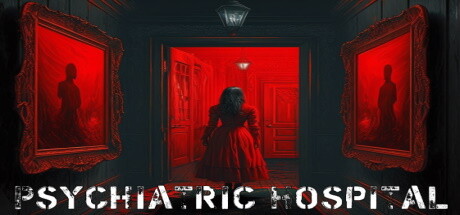
When your madness is not desired, When your madness that you did not want is strangled by the bars in the pit. You go from being a powerless goat to a human being, and the only way to surprise the white coats who want to cure you completely is to take refuge in the craziness you want.
Modeled estimate, not a reported figure. How we estimate →
Media

About
Genres
Stats
All-time low is the lowest price we've recorded for this game since we started tracking it.
Languages: English, Russian
Engagement
Hours played at review time, across 40 reviews with recorded playtime.
Reviews
Themes across 40 recent reviews and how positive each mention is. A keyword signal, not full sentiment analysis.
positive critical· bar length = how often the theme comes up
Reviews
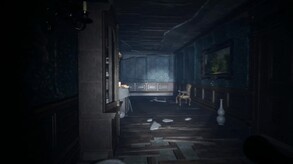
Psychiatric Hospital is an indie first-person horror experience that leans heavily into atmosphere, darkness, and the unnerving isolation of wandering through an abandoned medical facility. From the opening moments, the game frames its setting as a place where fear and confusion dominate every hallway. The environment is intentionally oppressive, built around the idea of being trapped in a psychiatric ward where something has gone horribly wrong. You aren’t given elaborate backstory or cinematic introductions; instead, you’re dropped into dim corridors, flickering lights, and locked rooms, and the game relies on these elements to cultivate dread without relying on jump-scares or elaborate monsters. It aims for emotional discomfort rather than flashy horror, asking players to feel the unease of being vulnerable and hunted by the unknown. The core of the gameplay revolves around exploration and resource management, most notably through the use of a flashlight that becomes your lifeline. Light is scarce, battery life is limited, and the world is designed so that most rooms are shrouded in shadow, forcing you to move slowly and deliberately. The familiar cycle of searching for keys, unlocking doors, and finding the next clue drives the progression. Every new area introduces more uncertainty — narrow hallways, silent rooms with overturned furniture, storage areas with scattered medical tools — and the absence of clear direction pushes you to investigate every corner with caution. Even without enemies directly attacking, the anticipation of danger fuels the tension, making each small discovery feel significant. The asylum itself plays a major role in shaping the experience. While the environments are simple, the layout of the hospital — long corridors, locked wings, and off-limits rooms — gives the space a labyrinthine quality. This design encourages meticulous searching and reinforces the sense of confinement, as if the building itself is closing in on you. Sound design helps build this mood, with distant echoes, abrupt creaks, and the quiet hum of old electrical systems amplifying the anxiety of moving through abandoned spaces. These auditory cues do much of the heavy lifting in establishing tone, particularly because the game’s visual design leans toward minimalism rather than detailed realism. Simplicity is both the game’s strength and its most visible limitation. The mechanics are extremely straightforward: walk, pick up items, unlock doors, and conserve battery power. This makes the game accessible to almost anyone, regardless of gaming experience, and ensures that the player’s attention remains focused on atmosphere over complex controls. But this same simplicity can also make the experience repetitive. Many sequences follow the same pattern, and the absence of additional systems — such as advanced puzzles, enemy encounters, or layered storytelling — means the game depends almost entirely on mood and environmental tension to sustain player engagement. Once you adjust to its rhythm, the unpredictability fades and the experience can start to feel routine. Length and depth are also factors worth considering. Psychiatric Hospital appears designed as a shorter horror experience, one intended to be played in a single sitting or over the course of an evening. It doesn’t attempt to weave complicated plotlines or character arcs, nor does it introduce new mechanical twists as you progress. Instead, the game maintains a consistent structure from beginning to end, offering a brief but focused walk through fear-soaked hallways. This short format will appeal to players looking for a quick dose of atmospheric horror, but it may leave others wanting more substantial narrative or mechanical development. Where the game does succeed is in embracing the raw, stripped-down nature of low-budget indie horror. It doesn’t pretend to be anything more elaborate than what it is — a slow, haunting exploration of a psychiatric ward built to evoke anxiety, discomfort, and the fear of being alone with nothing but a dying flashlight. For players who enjoy these kinds of minimalist horror experiences, the game can be effective in its best moments, delivering uneasy tension and a sense of vulnerability that larger productions sometimes overlook. But players seeking polished visuals, intricate scares, or story-driven depth may find that the experience feels too thin or too constrained by its simplicity. In the end, Psychiatric Hospital works best when approached with modest expectations. It offers a brief, atmospheric journey into a dark, abandoned institution, relying on lighting, sound, and claustrophobic spaces to build its horror. Its straightforward mechanics and short playtime make it an accessible choice for fans of indie horror who appreciate mood over complexity. While limited in scope and occasionally repetitive, the game still delivers a tense and unsettling experience for those who enjoy exploring the shadowy corners of stripped-down psychological horror. Rating: 5/10
Madness fills these dark corridors. Every nook holds its dark secrets. But what is the cause of the nightmare? A series of terrible events or a disease of a clouded mind?
cherche la clef trouve la clef et sauve toi...
Полнейшее недоделанное г#вной, ни в коем случае не берите игры от этого разработчика
Si vous voulez vous baladez dans une vielle maison sans bruit et sans avoir peur je vous recommande ce jeux
If Edgar Allan Poe and a fever dream had a baby, and that baby grew up in a moldy Victorian house with bad lighting — this game would be it. You wander through an abandoned home, creaky floors serenading your paranoia, until you find her. The Lady. Not everywhere — oh no, she’s got boundaries. She’s classy. She only haunts one room, but good luck remembering which one when your bladder’s doing parkour and your hands are slapping the keyboard like jazz musicians on caffeine. And just when you think you’ve escaped her, you find the picture. The dog. The pipe. The silent judgment. He stares like he knows you screamed at pixels. Like he’s seen the things you’ve done. Maybe he’s the real villain. Maybe he’s your only friend. Who can say? The gameplay? Haunting. The ambience? Like being gently strangled by nostalgia and regret. By the time I finished, I wasn’t sure if I’d beaten the game or if it had beaten me. Moral of the story: Don’t play it at 3 a.m. unless you’re ready to go clinically bonkers and write poetry to your radiator. 10/10. Would scream, laugh, cry, and philosophically debate the pipe dog again.
Очень классная игра. Мне понравилась хоррор-составляющая, да и графика тоже отличная. Фонарик выглядит великолепно. Молодцы разработчики!
interesting horror with puzzles. The atmosphere keeps you tense
very confusing game, i didnt even know what to do
This game is absolute trash. I wish I could post video to show you how terrible it is. The diary literally never gets any "notes" despite you finding many notes that do a ham fisted job of giving you the control scheme, which at least is more than I can say for their other games. The "monster" is just some random emo chick that walks slowly towards you with no explanation or reasoning. She also randomly just stops and breathes heavily at you. The description of the key does nothing to tell you which door it might go to, it is just a literal copy paste from the wikipedia of the definition of what a key is in case you are not a human being that has ever been to earth before. One whole floor is nothing but locked doors, the key doesn't open any of them so why does it exist? There is a random woman in a jail cell that you cannot interact with and ignores your presence while seeming to operate a cash register that isn't there. Then you finally open a door with a dead end and some bodies and get teleported into a cell and your character just goes "good, I want to be crazy and I'm staying here" and the game ends. there is no story, there is no direction, there is no threat, there is no horror other than boredom. -1000/10 do not touch with a ten foot pole.
Related
Related
Trends
Concurrent players on Steam, sampled daily since tracking started.
Audience
Estimated from the language of this game's reviews — a proxy for where players are, not official Steam demographics.
Related
| Temporal Purge: Z | $877.8 | 52 | 87% | $0.74 |
| Rage Against The Zombies | $878.6 | 55 | 60% | $0.79 |
| The Last Sin | $878.6 | 66 | 68% | $0.79 |
| Presence | $876.8 | 107 | 76% | $1.99 |
| FIND KITTENS 11: Dollhouse | $876.6 | 51 | 84% | $0.99 |
| Motion Of The Heart | $875.8 | 70 | 67% | $0.99 |
Related
| DayZ | $531.7M | 465.8K | 78% | $49.99 |
| 7 Days to Die | $425.3M | 403.6K | 87% | $44.99 |
| Euro Truck Simulator 2 | $421.6M | 932.3K | 97% | $19.99 |
| Call of Duty®: Black Ops III | $370.1M | 231.3K | 85% | $59.99 |
| Forza Horizon 5 | $317.3M | 278.1K | 89% | $59.99 |
| Mount & Blade II: Bannerlord | $309.8M | 294K | 88% | $49.99 |