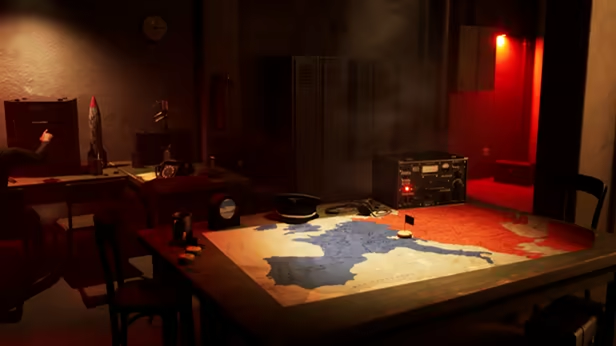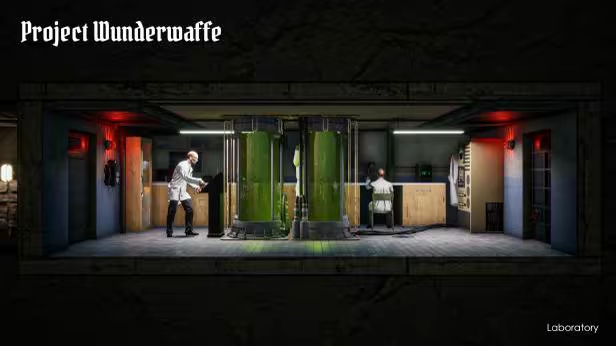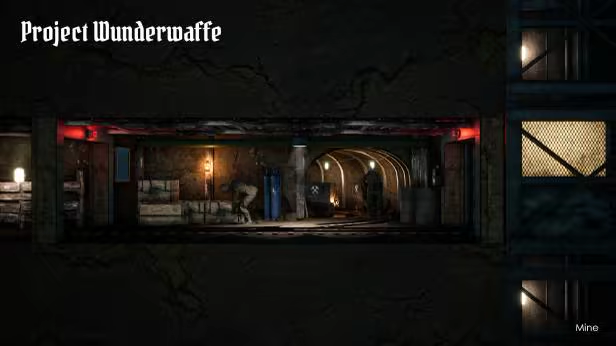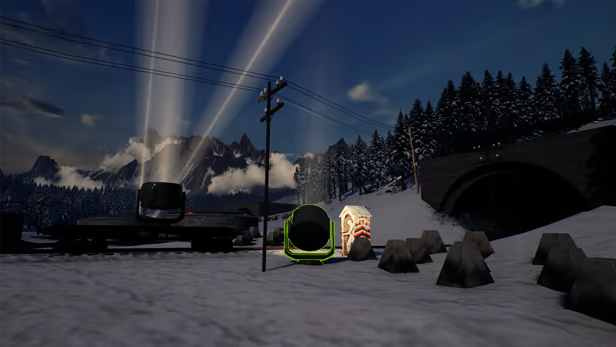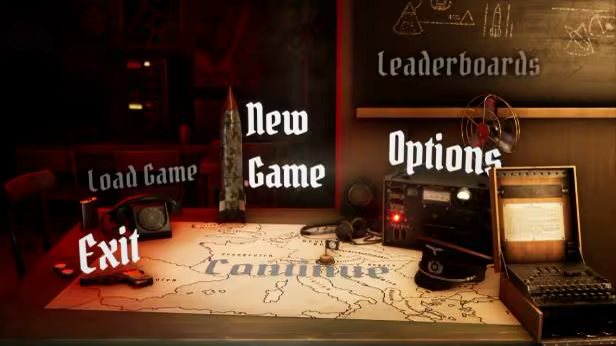
Project Wunderwaffe will take you back into the realities of World War II, the end of which seems to be near. Germany is now just a shadow of its power. Your order is to build a secret military base and construct weapons of unprecedented power. Will you be capable of turning the tide of war?
Modeled estimate, not a reported figure. How we estimate →
About


Stats
All-time low is the lowest price we've recorded for this game since we started tracking it.
Languages: English*, French, Italian, German, Spanish - Spain, Traditional Chinese, Simplified Chinese, Japanese, Korean, Polish, Portuguese - Brazil, Russian +1 more
Engagement
Hours played at review time, across 40 reviews with recorded playtime.
Reviews
Themes across 40 recent reviews and how positive each mention is. A keyword signal, not full sentiment analysis.
positive critical· bar length = how often the theme comes up
Reviews
Ich hab das Spiel wirklich mögen wollen, ehrlich. Aber was mich MASSIV gestört, genervt und am Ende auch ganz klar zum Abbruch gebracht hat, war dieser völlig UNLOGISCHE Forschungsbaum in Kombination mit einer unübersichtlichen, von krankhaftem Mikromanagement geplagten Produktion. Im Grunde musst du für jeden einzelnen Gegenstand fast schon eine eigene Fabrik hochziehen, alles hängt irgendwie zusammen, aber nichts greift sauber ineinander. Und dann stehst du plötzlich da und kommst nicht mehr weiter, weil auf einmal Eisenspulen fehlen oder vorgefertigte Wände gebraucht werden, die laut Forschung eigentlich viel später kommen sollen. Diese seltsame, doofe Forschung bremst den Spielfluss komplett aus und macht aus einer eigentlich guten Idee einfach nur anstrengende Klickarbeit. Wie gern hätte ich dem Spiel eine positive Bewertung gegeben, aber anscheinend will der Entwickler es genau so behämmert handhaben. Schade, denn das ganze System ist nicht nur unpraktisch, sondern wirkt einfach völlig undeutsch in seiner Logik. Der Frust hört da aber nicht auf. Diese Unübersichtlichkeit zieht sich durchs komplette Spiel. Produktion, Lager, Abhängigkeiten - alles wirkt unnötig kompliziert, schlecht erklärt und schlecht kommuniziert. Gebäude hören einfach auf zu arbeiten, Ressourcen fehlen plötzlich, Sabotage löscht Dinge aus, ohne dass dir das Spiel klar sagt was eigentlich weg ist. Du suchst dich durch den halben Bunker, zoomst, hörst Geräusche, klickst Menüs durch und denkst dir irgendwann nur noch: Warum sagt mir hier keiner, was genau das Problem ist? Das ist kein anspruchsvolles Gameplay, das ist einfach schlechte Übersicht. Was dann zusätzlich sauer aufstößt, ist das angekündigte War in Ukraine-DLC, das einfach nur existiert und schon beim Lesen nervt. Da fragt man sich wirklich, was uns dieser EU-Kram hier soll. Viele Spieler haben eh nur ihr Nachkriegsschulwissen im Kopf und keinen Schimmer mehr von Deutschtum, was einfach schade und beschämend zugleich ist. In dieses Bild passt dann auch, dass das Hakenkreuz mal wieder zensiert ist. Es ist und bleibt eine Schande, dass kein Entwickler die Eier hat, ernsthaft dafür zu kämpfen, dass Spieleentwicklung als Kunst oder Kulturgut anerkannt wird, genau wie Film und Fernsehen, wo solche Symbole gezeigt werden dürfen. Es tut niemandem weh, aber dieser ewige Schuldkult lebt weiter, genährt von einem pauschalen Hass auf alles Deutsche. Dabei ist das besonders bitter, weil das Spiel an sich richtig gutes Potenzial hat. Das Arbeiten gegen die Zeit, das Versorgen der Fronten, das Erkämpfen von ein paar zusätzlichen Tagen macht durchaus Spaß. Genau deshalb hab ich auch länger durchgehalten, als ich eigentlich wollte. Aber irgendwann merkt man, dass es im Grunde nur einen funktionierenden Weg gibt. Hat man den einmal raus, baut man eine Wunderwaffe einfach in Serie und gewinnt. Keine echte Herausforderung mehr, kein Wiederspielwert, kein Anreiz, das Ganze nochmal anzufassen. Am Ende bleibt bei mir einfach Ernüchterung. Gute Idee, starkes Setting, aber ein Spieldesign, das sich selbst im Weg steht. Unlogische Forschung, unnötiges Mikromanagement, miserable Übersicht und Entscheidungen, die mehr nerven als motivieren. Nach nicht einmal zwei Stunden war für mich Schluss, weil ich keine Lust mehr hatte, gegen das Spiel statt mit ihm zu spielen. Deshalb ganz klar: Keine Empfehlung, zumindest nicht in diesem Zustand.
The Game is incredibly demanding, either missing resources or workers to complete something. I personally like to build while the game is paused but there is no way to do it. The game blurs your vision and freezes your keyboard and mouse inputs (except for unpausing, saving and leaving the game). I like games that are difficult to master but easy to play/enjoy. This is (for me) easy to play/learn, very hard to be good and impossible to master. Although the Trailers make it easy to say "Wow this looks good and I like the theme/gameplay" the harsh reality hits hard. You´re dropped into the game with an okay-ish Tutorial which only explains the basics, going further, it only pops up in milestones like tier I and how to place that building, how to research and then in tier II again (around 40-50 min gap). Keep in mind I am new and don´t really know how to play the game correctly cause the tutorial is made with long gaps and leaving out tips. Coming to the Interface, it can be better like saying this or this is missing but instead the building stops working and doesn´t say anything why. Also the icons are small and difficult to distingguish from on another. I would think I am crafting ammo crates but i´m actually crafting something completely different. I did a bit of research and the dev team concist of around 4 people also I think there won´t be any updates in the future. There are no real guides on Steam or Youtube just gameplay of people that are just as confused as me. Overall I like the setting and idea of being in a bunker while germany is on its last legs trying to change the fate of the war. The idea of having 3 different fronts instead of just 1 is great. The visuales are good. Sadly there is no real way to win except to lose and do it all over again . In the end the game has incredible potencial but sadly the devs gave up or stopped updating to soon. (Only my personal experience,your´s may be different, do not take me too serious or quote me on this) Wouldn´t recommend sorry.
15 bucks for something akin to an unfinished flash game, i'd be ashamed to publish this garbage one could appreciate the dev at least unmarking it as early access after the updates stopped, but to call this thing finished is just a lie
Unfortunately there are game breaking bugs that are not taken care of from the developers, so stay away.
Wer sich für den zweiten Weltkrieg ( Deutschland ) bezüglich Geheimwaffen + Forschung in einer FalloutShelter Version interessiert ( ohne cartoon Art ) ist hier sehr gut aufgehoben. Hier habt ihr 130Tage zeit euren Bunker so aufzubauen das ihr rechtzeitig die Geheimwaffen Erforschen könnt und Waffen an einer der Fronten senden könnt per Zug. Über Handfeuerwaffen bis hin zur Hanebu, Ratte oder sogar Nuklear Raketen gibt es alles an den Jeweiligen Produktionslinien ( die ihr erforschen müsst ). Desto mehr Waffen ihr an die jeweilige front sendet, sprich West-Ost-Süd Front sendet, könnt ihr den Feind praktisch wie ausbremsen und sogar zurückschlagen. Wen ihr das bis Tag 300 Geschafft habt, endet das Spiel ( aber könnt dannach weiter Spielen wenn ihr möchtet ). Das Spiel ist sehr gut gelungen, das Einzigste "Doofe" ist das man es nach nach knapp 5-7std durch hat wenn man sich mit dem ganzen auskennt und gut zeit Reinsteckt. Ich habe heute meinen zweiten Spielstand fertig gemacht auf leicht. Es gibt folgende Schierigkeitsgrade: Leicht Mittel Schwer Auf "Leicht" könnt ihr euch reinfuchsen und schlau machen, 1-2 Spielstände werdet ihr sicherlich als Übung verhauen aber ist nicht schlimm. Für 2,24€ im Sale aber ein schlager. Wem das nicht zu sagt kann es nach 2 Stunden zurück geben - Wer am game bleiben will - dem Wünsche ich viel Spaß ! PS: Es wäre cool wenn man von diesem Spiel ein DLC oder game rausbringen würde wo man auch in die allgemeine Feuerwaffen+ Panzer+ Flugzeug Produktion gehen könnte, am besten von 1930er Jahre bis 1945. Wäre mega cool. Von der Me109 zur Me262 oder von der einfachen P1 bis zur panzerschreck oder vom Pz1 bis zum Königstiger/Jagdtiger. Bei fragen stehe ich zur Verfügung - Kommentare sind an. Mfg.
Project Wunderwaffe, developed and published by Weasel Games, is a dark and ambitious strategy simulation that places the player in the closing days of World War II, when the German war machine is collapsing under the weight of Allied and Soviet advances. Instead of commanding armies on the battlefield, you take on the role of a desperate commander hidden beneath the earth, tasked with overseeing the construction of an enormous underground fortress designed to create a secret superweapon—the mythical “Wunderwaffe.” The idea is both fascinating and chilling, presenting a grim alternate history where science, desperation, and ideology intertwine to forge a last attempt at changing the course of a doomed war. This mixture of historical context, base-building gameplay, and alternate science fiction gives the game a unique identity in the crowded strategy genre. The structure of Project Wunderwaffe revolves around the building and management of a sprawling underground complex. From the first moments, the player must carve tunnels into the bedrock, erect laboratories, power plants, and workshops, and begin the long process of researching advanced technologies that promise to turn the tide of war. Everything is interconnected: power must be distributed to every room, resources must be mined and refined, and security must be maintained to protect against sabotage and espionage. The deeper you dig, the more complex your operations become. It’s a balancing act between efficiency and survival, and every decision carries weight. Expanding too quickly can leave you vulnerable to power shortages or enemy infiltration, while focusing too much on research might drain the resources needed to keep your base functional. The result is a tense rhythm of expansion and consolidation that captures the anxiety of managing a secret operation under siege. One of the game’s most striking achievements is its atmosphere. The entire experience takes place underground, and the sense of confinement is palpable. You can almost feel the cold concrete walls and the mechanical hum of generators echoing through narrow corridors. The interface presents the base in a detailed cross-section view, allowing you to monitor every level at once, from the bustling laboratories to the armory where prototypes are built. The audio design amplifies the mood perfectly, with the distant sounds of air raids, radio static, and barking orders creating a constant reminder of the world collapsing above. The grim tone never relents, and it successfully communicates the moral and existential weight of what you are building—a weapon that could change the fate of millions, for better or worse. Mechanically, Project Wunderwaffe blends multiple layers of strategy. At its core, it is a management sim, but it also incorporates elements of defense, research, and logistics. You must not only construct new facilities but also maintain them, deal with resource constraints, and anticipate threats from the outside world. Enemy spies may infiltrate your base, Allied bombers may discover your location, and malfunctions can cripple vital systems. Every layer of gameplay feeds into another: your engineers need resources mined by your workers; your scientists depend on the stability of the base’s power grid; your defenses rely on proper logistics and coordination. This interconnectedness makes the game’s design engaging, even when it can feel overwhelming. The constant sense of pressure—knowing that every mistake could lead to collapse—adds a degree of tension that few base builders manage to capture. Despite its promising concept and immersive atmosphere, Project Wunderwaffe struggles with execution in several key areas. The interface can be cumbersome, with clunky controls and limited tutorials that make early progress confusing. Players are often left to figure out the game’s mechanics through trial and error, and while some might appreciate this level of challenge, others may find it frustratingly opaque. The pacing also suffers from repetition; once the basic loop of constructing, researching, and defending is established, it doesn’t evolve as much as it should. There are moments of excitement when new technologies unlock or when enemy attacks intensify, but between these peaks, the gameplay can feel static. Some systems, like espionage and counterintelligence, are underdeveloped, functioning more as background numbers than dynamic gameplay elements. Technically, the game performs decently for an indie project, though it shows its limitations. The visuals are serviceable rather than spectacular, with functional but somewhat dated models and animations. Performance can dip during larger bases or intense moments, and the user interface occasionally lags behind the player’s input. Nonetheless, these flaws are balanced by the creativity of its concept and the depth of its management systems. The historical flavor, enhanced by the alternate reality narrative, lends the experience a layer of intrigue that keeps it from feeling like just another simulation. It’s a game that encourages experimentation and rewards players who can adapt to adversity, even if it sometimes tests their patience. Project Wunderwaffe stands out most for its originality and the moral ambiguity that lingers over every decision. It’s not a typical war game about conquest or glory; instead, it’s a meditation on desperation and the blind pursuit of technological power. As your underground empire grows and your Wunderwaffe nears completion, there’s an uneasy sense of accomplishment—what you are building could end the war, but at what cost? This philosophical undertone, whether intentional or not, gives the game an emotional depth that sets it apart from many of its peers. It transforms what could have been a simple management simulator into something more reflective and unnerving. In the end, Project Wunderwaffe is a game that aims high and almost succeeds in achieving greatness. It combines the meticulous satisfaction of base construction with a moody, oppressive setting and a morally complex premise. Yet its unrefined mechanics, uneven pacing, and occasional lack of clarity keep it from fully realizing its potential. For players who enjoy deep strategy, survival management, and the eerie atmosphere of an alternate World War II, it offers a compelling if imperfect experience. It’s a reminder that ambition and atmosphere can elevate even a flawed game into something memorable—a haunting experiment in control, secrecy, and the heavy cost of innovation born from desperation. Rating: 5/10
Ein entspannendes Spiel am besten mit Musik im Hintergrund spielen und einfach abschalten sehr beruhigend und mit einer ziemlich einzigartigen Idee Sehr empfehlenswert!
It's a pretty fun game but it's very hard to beat, even o. Easy mode
ZUM RUHM DER ARIER...Hm...Entschuldigung
This needs improvments, it has poential but i am dealed with constant bugs and crashes.
Related
Related
Trends
Concurrent players on Steam, sampled daily since tracking started.
Momentum
Pace estimated from the game's recent review growth (our daily snapshots) at its own sales-per-review ratio — a momentum signal, not booked sales.
Audience
Estimated from the language of this game's reviews — a proxy for where players are, not official Steam demographics.
Related
| Advent Rising | $163.3K | 582 | 77% | $9.99 |
| AER Memories of Old | $163.2K | 7.7K | 86% | $1.49 |
| Symphonia | $163.2K | 377 | 91% | $19.99 |
| Thirsty Suitors | $163.2K | 228 | 97% | $14.99 |
| Sands of Aura | $163.4K | 839 | 75% | $9.99 |
| Border Town | $163.4K | 305 | 80% | $14.99 |