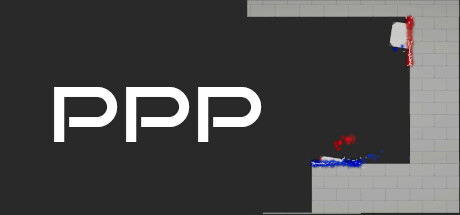
PPP is a 2D puzzle platformer game where you solve your way out. There are 20 different enjoyable levels where each of them offers unique experience.
Modeled estimate, not a reported figure. How we estimate →
Media

About
Genres
Stats
All-time low is the lowest price we've recorded for this game since we started tracking it.
Languages: English
Reviews
A challenging but enjoyable game. It's a real second monitor monster.
Süreme bakmayın, saatimin çoğunluğu betasında. Portal oyununa ne kadar benzesede çok farkı var. Oyunun puzzleları akıllıca düşünülmüş ve sıkmıyor. Şu anda 20 bölüm var. Umarım yeni bölümler de ileride eklenir.
PPP is a small independent puzzle-platformer created and published by STREPH Studio that focuses on compact level design and straightforward mechanical challenges rather than elaborate storytelling or visual spectacle. Released on Steam in August 2023, the game presents a stripped-down approach to the puzzle platforming genre, offering players a series of carefully constructed stages where the primary objective is simply to find a way out of each level. The design is intentionally minimalistic, emphasizing clarity, timing, and experimentation while avoiding unnecessary complexity. Instead of overwhelming players with complicated systems, the game delivers a focused sequence of puzzles that test both platforming precision and logical thinking. The gameplay structure revolves around navigating a series of 2D environments that function as self-contained puzzle rooms. Each level challenges the player to analyze the layout, understand how the environment works, and carefully maneuver through obstacles to reach the exit. Movement mechanics such as jumping, positioning, and environmental interaction form the foundation of the gameplay. At first glance the mechanics appear simple, but the real challenge lies in determining the correct sequence of actions needed to solve each puzzle. Many situations require players to observe the level layout closely and experiment with different approaches before discovering the correct path forward. One of the game’s defining characteristics is its compact set of stages. Rather than presenting dozens of repetitive levels, the game offers around twenty puzzles that each attempt to introduce a slightly different scenario or mechanical twist. Early levels serve as tutorials, gently introducing players to the basic mechanics and the types of environmental obstacles they will encounter. As the game progresses, puzzles gradually combine multiple mechanics, forcing players to think more carefully about timing and spatial awareness. The relatively short structure means the game moves quickly from one challenge to the next, keeping the experience focused and preventing unnecessary padding. The platforming component adds an extra layer of difficulty to the puzzles. Many solutions require precise movement or careful timing, making the player’s control over the character just as important as their ability to analyze the environment. A single mistimed jump or incorrect movement can force the player to restart the attempt, encouraging them to refine their technique. This combination of puzzle solving and mechanical precision places PPP firmly within the tradition of classic puzzle platformers where mastery of movement is just as important as understanding the solution. Visually, the game embraces a minimalist aesthetic that reflects its mechanical simplicity. The environments consist of clean shapes and uncluttered layouts that clearly distinguish platforms, obstacles, and interactive elements. This clarity is essential for puzzle design because it ensures players can easily understand the function of each object within the level. While the graphics are modest and lack elaborate detail, the simplicity helps maintain focus on the puzzle mechanics themselves. The design philosophy favors readability and functionality over visual complexity, making the gameplay easier to interpret even during more demanding platforming sections. The sound design follows the same restrained approach. Background music is subtle and ambient, providing a calm atmosphere that allows players to concentrate on solving puzzles without unnecessary distractions. Sound effects are simple but effective, offering feedback for actions such as jumping, landing, and interacting with environmental elements. Although the audio presentation is not particularly elaborate, it complements the minimalist style of the game and helps reinforce the tactile feel of movement and interaction. The game also includes a handful of achievements that reward players for completing levels and demonstrating mastery of the mechanics. These achievements serve as optional challenges that encourage players to fully complete the game and experiment with different approaches to each stage. For completionists, they add a small amount of replay value by motivating players to revisit levels and improve their performance. However, PPP’s minimalist design inevitably comes with certain limitations. Because the game contains a relatively small number of levels, experienced players may complete the entire experience in a short amount of time. Additionally, while the puzzles are thoughtfully constructed, the limited number of mechanics means that the gameplay variety remains somewhat constrained. Players who prefer puzzle platformers with extensive worlds, narrative elements, or a wide range of abilities may find the experience somewhat brief compared to larger titles in the genre. Despite its modest scope, the game succeeds in delivering a focused and satisfying puzzle platforming experience. The levels are carefully designed, the controls are responsive, and the gradual difficulty curve ensures that players are consistently challenged without becoming overwhelmed. By concentrating on the essentials of the genre, the game demonstrates how effective puzzle design and precise movement mechanics can create engaging gameplay even within a small indie project. Overall, PPP stands as a concise and well-crafted puzzle platformer that highlights the appeal of minimalist design. Its small set of cleverly constructed levels provides a series of enjoyable challenges that reward patience and careful observation. While the game may not offer the depth or length of larger puzzle platformers, it succeeds in delivering a tight and focused experience that respects the player’s time while still offering satisfying problem-solving moments. PPP delivers a clean and thoughtfully designed set of puzzle platforming challenges with solid mechanics and clear presentation, though its limited number of levels and minimal feature set prevent it from reaching the depth and longevity found in more expansive titles within the genre. Rating: 6/10
Related
Related
Trends
Concurrent players on Steam, sampled daily since tracking started.
It was fun
Momentum
Pace estimated from the game's recent review growth (our daily snapshots) at its own sales-per-review ratio — a momentum signal, not booked sales.
Related
| Glasses and Girls | $315.6 | 51 | 82% | $0.49 |
| Food and Girls | $315.6 | 51 | 86% | $0.49 |
| Dances and Girls | $322 | 52 | 83% | $0.49 |
| Anime Sunset Ride | $334.4 | 54 | 67% | $0.49 |
| Carnival and Girls | $334.4 | 53 | 85% | $0.49 |
| Cosmic Journey PC Live Wallpaper | $336.3 | 52 | 71% | $0.49 |