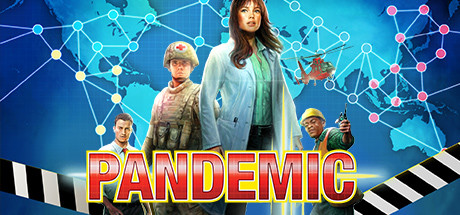
Humanity is on the brink of extinction. As members of an elite disease control team, you’re the only thing standing in the way of the four deadly diseases spreading across the world.
Modeled estimate, not a reported figure. How we estimate →
Media

About


Genres
Stats
Engagement
Reviews
Themes across 40 recent reviews and how positive each mention is. A keyword signal, not full sentiment analysis.
Reviews
Pandemic: The Board Game, developed by Asmodee Digital and published by Asmodee Digital in collaboration with Z-Man Games, is a digital interpretation of a widely respected cooperative tabletop experience that flips the usual competitive formula on its head. Instead of players working against each other, everyone shares a single objective: prevent the collapse of global health systems by containing outbreaks and discovering cures before time runs out. This cooperative framework immediately gives the game a distinct tone, one defined by shared tension, collective responsibility, and the constant pressure of managing a crisis that can escalate at any moment. The gameplay is structured around a world map divided into interconnected cities, each vulnerable to the spread of multiple diseases. Players assume specialized roles within a response team, with each role offering unique abilities that shape how they approach the problem. Some are better at treating infections, others excel at research or movement, and these differences encourage players to think in terms of coordination rather than individual efficiency. Every turn presents a series of trade-offs: do you focus on containing immediate threats, or invest time in progressing toward a long-term solution? This balance between urgency and planning is what drives the game’s tension, as there is rarely a perfect move—only the least risky one. What makes the experience particularly engaging is how it generates difficulty through interconnected systems rather than brute complexity. The spread of disease is governed by a deck-driven system that introduces both predictability and surprise. Players can anticipate certain risks based on previous draws, but epidemic events disrupt that sense of control, rapidly accelerating the spread and forcing sudden changes in strategy. Outbreaks can cascade from one city to another, creating chain reactions that undo careful planning in seconds. This dynamic ensures that the game remains consistently tense, with each decision carrying weight and potential consequences. The cooperative nature of the game is central to its appeal. Success depends on clear communication, shared understanding, and the ability to adapt as a team. When everything comes together—when players coordinate their roles effectively and manage to stabilize a seemingly hopeless situation—the sense of accomplishment is genuinely satisfying. At the same time, this structure introduces an interesting social dynamic. Because all information is shared, there is always the possibility that one player may attempt to direct the entire strategy, which can diminish the collaborative aspect if not balanced carefully. How this plays out often depends more on the group than on the game itself. As a digital adaptation, the game benefits from a streamlined presentation that removes much of the manual overhead associated with its tabletop counterpart. Tasks like tracking infection levels, managing decks, and enforcing rules are handled automatically, allowing players to focus entirely on decision-making. The interface is clean and functional, making it easy to understand the state of the world at a glance. Turns move quickly, and the overall pacing feels smooth, which enhances accessibility for both newcomers and experienced players. Visually, the game takes a restrained approach. The map is clear and readable, with distinct color coding for different diseases, but it doesn’t aim for dramatic flair. Animations are simple and serve a practical purpose, highlighting the spread of infection or the impact of player actions without drawing attention away from the gameplay. The audio design follows a similar philosophy, providing subtle background support rather than a strong atmospheric presence. While this minimalism ensures clarity, it also means the game doesn’t fully capitalize on the potential drama of its global crisis theme. Replayability is one of the game’s strongest qualities. Variable role combinations, randomized card draws, and adjustable difficulty levels ensure that no two sessions play out exactly the same. Increasing the number of epidemic cards can significantly raise the challenge, transforming the experience from a manageable puzzle into a relentless struggle for survival. Even after repeated plays, the game maintains its ability to create tension, largely because outcomes are shaped by both planning and unpredictable events. That said, the experience is not without its limitations. The core gameplay loop remains consistent across sessions, and without additional content or expansions, it can begin to feel repetitive over time. The lack of a narrative layer or evolving campaign structure means that the game relies entirely on its mechanics to sustain interest. For players who prefer a stronger sense of progression or storytelling, this may feel somewhat limiting. In the end, Pandemic: The Board Game succeeds as a thoughtful and faithful digital adaptation of a cooperative classic. It captures the essence of working together under pressure, delivering a gameplay experience that is both challenging and rewarding without relying on competition. Its strength lies in its clarity of design and its ability to create meaningful tension through simple but interconnected systems. While it may not offer the spectacle or variety of larger strategy titles, it remains a standout example of how cooperation can be just as engaging—if not more so—than rivalry. Rating: 7/10
Related
Related
Trends
Modeled estimate over time.
Languages: English, French, Italian, German, Spanish - Spain, Czech, Danish, Dutch, Greek, Japanese, Korean, Polish +3 more
Hours played at review time, across 40 reviews with recorded playtime.
positive critical· bar length = how often the theme comes up
Good way to learn the game, I am ready for Legacy now
no multiplayer makes this suck
There aren't enough player cards to give enough moves to clear more than 2 outbreaks when playing solo. Doesn't matter how you play it, you just run out of "time".
Brilliant co-operative game. Fantastic mechanic with the cards balances the game really well. Almost always a challenge.
It's pandemic but automated. Brutal, nail biting but rewarding when the rng and strat combine as always.
THIS GAME IS SICK!!! THE ILLEST BOARD GAME BROUGHT TO LIFE!
1. This is great game because always random breakoouts, EVERY turn you have to work the most effective actions
Fiel al juego de mesa, te permite rehacer las acciones antes de acabar una jugada
Challenging, but quick.
Momentum
Pace estimated from the game's recent review growth (our daily snapshots) at its own sales-per-review ratio — a momentum signal, not booked sales.
Audience
Estimated from the language of this game's reviews — a proxy for where players are, not official Steam demographics.