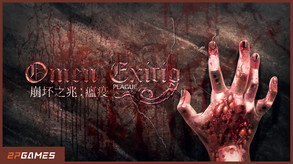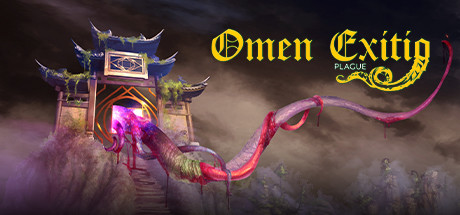
Investigate a paranormal disease that threatens to eradicate humanity in this unsettling Lovecraftian adventure, inspired by the choose-your-own-adventure gamebooks of the 80s and 90s. Your choices will determine the story, your character’s destiny… and the future of humanity.
Modeled estimate, not a reported figure. How we estimate →
Media

About


Stats
All-time low is the lowest price we've recorded for this game since we started tracking it.
Languages: English, Italian, Simplified Chinese
Engagement
Hours played at review time, across 41 reviews with recorded playtime.
Reviews
Themes across 41 recent reviews and how positive each mention is. A keyword signal, not full sentiment analysis.
positive critical· bar length = how often the theme comes up
Reviews
Reviewing (mostly) every game (or DLC) in my library, part 502: ⭐️⭐️⭐️⭐️⭐️☆☆☆☆☆ (5/10) Ah, this is a bummer. I asked the devs for a key, and they very kindly gave me one. So I'm bummed that I have to give this a thumbs down. [i]Omen Exitio: Plague[/i] starts with a cool premise, stylish art, and a vibe that could have carried a great Lovecraftian adventure, but the game fumbles almost everything past the intro. The story railroads you hard, the characters feel like cardboard stereotypes, and the RPG system barely matters. The pacing wobbles between slow, scattered, and downright nonsensical, making the whole thing feel more like a long, messy visual novel than the choice-driven horror mystery it tries to be. It looks good and sounds good, but it just doesn’t play good. [b][h2]Pros:[/h2][/b] ✅ Art and presentation. Rarely do text-based games or choices matter game have such a great UI and images. I loved how there's a little picture to go along with new environments and characters. It fits into the world, too, and makes sense that a soldier will have these little sketches. There's some ambient sounds, as well: campfires crackling, waves crashing, or creaking deck boards. ✅ Interesting early-game premis. The beginning of the game, particularly boot camp and the early military training, allows some meaningful customization. You can improve skills like agility, fighting, or persuasion. There's also a historical and supernatural disease concept that hint at an intriguing Lovecraftian mystery. ✅ Writing has little to no typos. Clearly polished. [b][h2]Cons:[/h2][/b] 🟥 Characters are unrealistic, melodramatic, and shallow. The protagonist and supporting cast behave like caricatures rather than real people. It's just hard to bond with any other character because it's clear they're there for plot circumstances. Secondary characters—such as the Italian cook, cold British officer, drunk Irishman, gluttonous fat man, and exotic “native” women—are stereotypical, underdeveloped, and fail to elicit genuine emotional investment. There's just no backstory, no bonding, no any connection at all. 🟥 Story is overly linear. I thought—and early gameplay seems to imply—that player decisions will matter. But the narrative constantly forces the player down a predetermined path. There's a lot of plot-critical mistakes, e.g. being stolen from, entering into combat, and a lot of fainting. I just felt like my choices didn't matter, except at the end. The map, while super duper cool, serves little purpose. I believe the main character must visit all locations anyway, making exploration feel pointless. 🟥 RPG mechanics feel sorta meaningless. While the game offers five main skills and skill checks, it's quite clear how "gamey" the skill checks are. Get your experience, put them into what you want, pass. There doesn't seem to be much consequence to failing. 🟥 Writing. While technically sound, I wasn't a fan of the prose. It was very dry and clipped. There's a lot of deaths. deus-ex-machina solutions, such as knocking the protagonist unconscious to resolve conflicts, which happened quite a bit. And the Lovecraftian horror is poorly executed, relying on awkward synonyms, tossed-in buzzwords, and fevered dreams—things I've already seen before. 🟥 Pacing and structure. The story jumps erratically between locations, events, and dream sequences. Some important events are resolved in a few sentences, while trivial situations drag on unnecessarily. The narrative feels repetitive, with the protagonist constantly fleeing danger or encountering similar “ominous” events multiple times. 🟥 Some UI issues. Little thing, but every time you got experience, the little animiated icon would show up. I didn't need to see it every page! [hr] If you enjoyed this review, please check out my curator page to find more: [url=https://store.steampowered.com/curator/45814768-Verdict-Play-or-Pass/]Verdict: Play or Pass. [/url] Also, please leave a like and visit [url=https://steamcommunity.com/groups/Indie_Gems]IndieGems[/url] and our YouTube channel for more reviews like this one. [/hr]
大概4小时通关主线 - 算中评吧,可能这游戏有点老了,剧情挺普的,有这时间不如QQ上找个kp跑个比较经典的本 + 背景是1896年,有一些现实中的知名科学家客串,如果对时代风貌感兴趣的话还是可以玩一下的 = 很传统的游戏书,支线比较少,虽然有数值点设置,但是检定成败与否也只影响后续一小段文本,不影响大支线,完全没必要上心加点 - 主角给人感觉就是很典型的英国男的,走到哪个殖民地睡到哪个殖民地,原住民都爱上我,[spoiler]最后靠睡女神拯救了世界[/spoiler],恶俗啊 = 不过我是cdkey三块钱入的,所以也不差评了
有点低质,不推荐给任何人,游戏太多了,轮不到玩这个
Mixed Feelings – Positive Rating But I Cannot Recommend It. A visual novel roughly every 5 pages you are presented with a binary choice, some choices matter while others do not. The writing feels simplified and straightforward, most options are clear opposites like attack or escape, stay or leave, trust or not. I chose the more indirect option to avoid missing information, but the answer gets sloppy sometimes, for example, once when I chose to hesitate instead of straightforwardly trust, the NPC simply answered "We had no choice” and automatically rewound to force the other decision. This is not a good port. You earn exp from certain events and use it to upgrade traits. The protagonist is a physician, yet the plot requires him to have extensive knowledge of chemistry and physics, knowing exactly how to mix chemicals to burn down a medical lab. It's mostly unrealistic. Another issue is female characters from tribes almost immediately trust the protagonist, sharing sorrows and quickly sleeping with him. It happened too abruptly and repeated twice in the game. Early on the plague seemed like the result of illegal pharmaceutical experiments, complete with a suitcase full of cash, reminded me of The Constant Gardener. In the end, however, it connected to a [spoiler]cult, not particularly Lovecraftian[/spoiler] in my view, and the full revelation only comes in the last part of the final chapter. I received a shining achievement in the final confrontation with the cult and achieved a victory ending, I’m unsure what ending most players got. The game shows which achievement you just missed immediately after a choice is made, but there is no way to go back. I'm not fond of this mechanic, it only disrupts the experience, being told immediately that I missed something spoils the story, and feels like the devs nudging me toward their preferred choices. Overall, it is not an exciting game, the story quality could be better. [u] [url=https://store.steampowered.com/curator/43342176-Why-Not-Games/#browse] My curator page[/url][/u]
非常的美式烂片剧情,典得把爷逗乐了
Infected cat with reading wife yells vet beat it overnight now cat mad I yell treatment neighbors think exorcism
Omen Exitio: Plague, developed by Tiny Bull Studios and published by 2P Games alongside the developer, is a narrative-focused interactive experience that draws heavily from the tradition of classic gamebooks while infusing it with elements of cosmic horror and light role-playing mechanics. Rather than functioning as a conventional video game with action-driven systems, it positions itself as a story-first journey where decisions shape both the narrative and the protagonist’s path, creating an experience that feels closer to an interactive novel than a typical adventure title. The story places players in the role of a military doctor confronting a mysterious and rapidly spreading plague during the late nineteenth century. What begins as a grounded medical investigation gradually unfolds into something far more unsettling, weaving themes of paranoia, existential dread, and the unknown into its narrative fabric. The writing leans into a slow, deliberate pace, allowing the tension to build over time as new revelations emerge. This gradual escalation is one of the game’s defining strengths, as it creates an atmosphere that feels oppressive and immersive, drawing players deeper into its world with each decision they make. Gameplay revolves almost entirely around reading and making choices at key moments. These decisions influence how events unfold, determining which paths are available and how the story ultimately concludes. The inclusion of character attributes adds a subtle layer of strategy, as certain choices depend on the protagonist’s strengths and development. This system gives players a sense of agency, encouraging them to think carefully about how they approach each situation. However, the extent to which these choices significantly alter the narrative can vary, with some decisions feeling more impactful than others. One of the most notable aspects of the game is its presentation. The interface is styled to resemble an old journal or manuscript, reinforcing the historical setting and giving the experience a tactile, almost literary quality. Combined with atmospheric sound design and occasional illustrations, this approach enhances immersion without overwhelming the player. The visual simplicity works in the game’s favor, as it keeps the focus on the story while still providing enough detail to establish mood and tone. The narrative itself is expansive, offering multiple branching paths and endings that encourage replayability. Each playthrough can reveal different aspects of the story, allowing players to explore alternative outcomes and uncover hidden details. This structure adds depth to the experience, as it rewards curiosity and experimentation. At the same time, the branching design can sometimes feel uneven, with certain paths offering more depth or resolution than others. This inconsistency can make some choices feel less meaningful, particularly when their consequences are not as fully developed. Despite its strengths, the game is not without its limitations. The pacing, while effective in building atmosphere, can feel slow, especially in the early stages where the narrative takes time to gain momentum. Additionally, the heavy reliance on text means that the overall experience depends entirely on the quality of the writing. While generally engaging, there are moments where the dialogue or transitions feel uneven, occasionally disrupting immersion. The lack of more interactive gameplay elements may also be a drawback for players who prefer a more dynamic experience. Another consideration is the game’s niche appeal. Its focus on storytelling and minimal mechanics means that it caters primarily to players who enjoy narrative-driven experiences. Those looking for action, exploration, or complex gameplay systems may find it lacking, as the interaction is largely limited to reading and decision-making. However, for players who appreciate interactive fiction, this simplicity allows the narrative to take center stage. In the end, Omen Exitio: Plague succeeds as a thoughtful and atmospheric journey that prioritizes storytelling above all else. It captures the spirit of classic gamebooks while incorporating modern elements that enhance player involvement, even if those elements are not always fully realized. Its strengths lie in its mood, its thematic depth, and its willingness to let the story unfold at its own pace. Rating: 8/10
[h3]Do you have guts to fight or will you succumb to madness ?[/h3] I really enjoyed reading/playing the two stories of [url=https://store.steampowered.com/app/668590/Omen_Exitio_Plague/]Omen Exitio: Plague[/url]. The main story has a rich and detailed narrative path, while the side story is the icing on the cake : short but intense, delving into a gore-filled Lovecraftian madness that really sealed the deal for me. Don’t expect to have an enormous impact on the story, but don’t underestimate the repercussions of your choices either. It’s actually much more complex, with a lot of different texts and routes revealed when you replay the game (which I found myself doing a lot while trying to get all the achievements). It has a nice old-school vibe, the music is fitting, and the traditional art (made by humans) is beautiful. So for me, it’s a thumbs up !
翻译不错玩法也不错,但是作为一个故事来讲我觉得并不精彩,基本上前后除了有一个主线连着之外毫无关系,去一个新地方就全是新的人然后莫名其妙出来一堆新的事,之前的事就完全消失不见了。但是玩法选择配上这个加点系统和能影响主角命运倒是给人一种想继续玩下去的感觉,总的来说打折之后还是挺推荐的
我吃屎了
Related
Related
Trends
Modeled estimate over time, reconstructed from Steam's monthly review histogram.
Momentum
Pace estimated from the game's recent review growth (our daily snapshots) at its own sales-per-review ratio — a momentum signal, not booked sales.
Audience
Estimated from the language of this game's reviews — a proxy for where players are, not official Steam demographics.
Related
| KARAKARA2 | $100K | 632 | 93% | $9.99 |
| Sam & Max Hit the Road | $100K | 1.1K | 95% | $5.99 |
| WANDERER: Broken Bed | $100K | 309 | 73% | $14.99 |
| Sakura Cupid | $100K | 297 | 91% | $9.99 |
| Pub Encounter | $100K | 312 | 83% | $17.99 |
| Community Inc | $100K | 198 | 40% | $14.99 |