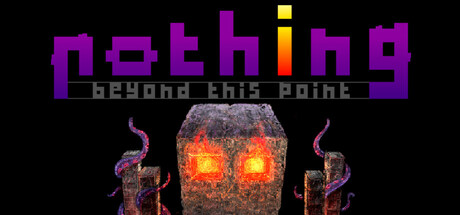
In the Void, everyone is alone, and you're no exception. Use your endless health as damage, create your own strategy with abilities and Sigils, and fight through corrupted entities in this top-down action Metroidvania. Don't be fooled - you're nobody's last hope.
Modeled estimate, not a reported figure. How we estimate →
Media

About
Fight an army of corrupted souls in highly dynamic combat with a unique health system.
Navigate a pitch black world using waypoints, wisdom, and blind luck.
Upgrade your arsenal, Rods, and items by finding Runes and bosses across the Void.
And keep that up.
Maybe you'll get somewhere eventually.
You are stuck in the Void. It's pitch black and there's nothing here. But you're here - a bright, uncorrupted beacon of pure fire. You have a better chance at survival than any human has ever had.
You don't even have a health bar. Or spells. Or as little as a weapon.
You only have Rods.
Rods are fiery, explosive, and in endless supply. Slash or even throw them at enemies to burn them alive. They also must protect you from damage, however - spend too many Rods on offense, and you may not hold yourself together for long. Don't enter fights you cannot handle, but the Void is large and open, so flee if you must.
If you get lucky, you can even harness the environment's strange power to upgrade your Rods, as they are your only measure of health, attack, and defense. That can only be a good thing, right?
For a world with nothing in it, there is a lot of navigation to be done. It's a complete mystery which rooms to go next, just so you can keep moving forward. With little direction from all the help you can get, you mark locations of interest on a black screen, and pray the next room won't lock you in combat...
Navigating blindly, of course, is only one method. Waypoints are scattered across the floor, indicating potential rewards when followed. Beacons reveal maps of your surroundings. Abilities may aid in several strange ways. Learning to recognize routes gradually makes your journey through the Void a bit easier... but even just one room ahead, there could be deadly threats.
Lonely as your position may be, you're not giving up that easily. Upgrade your abilities and stay ahead of the curve - Sigils may really help here. Perhaps your Fireballs should split in three? Maybe deal more damage, and take more damage? Or internalize Scorn and resist a single killing blow... if you really think that's worth it, of course.
Every player has different priorities and access to power, all in order to avoid being corrupted by the endless power of the Void. Any playthrough is your own, thanks to the customization options in ability upgrades, items, Sigils, and even area order. You'll have to become the best survivor in the depths... and find what you must do to leave.
Though you can't help wonder... are you beating the nothingness, or becoming part of it?
Sure, the Void has a reputation for being... empty. Most rooms are completely black, there's no towns, no travelers, absolutely nothing. You simply cannot build a civilization, a workshop, or a home without it all being taken away soon enough. Believe me - some have tried.
And yet, somehow, some have prevailed for longer than they were... supposed to.
Explore 16 areas filled with ruins of other fallen entities
Fight 12 bosses, all with unique movesets and approaches, granting powerful abilities
Beat Void Winds, vaults, Curse, frost, and tentacles
Trace Runes to get access to rooms, maps, items, lore, and more
Use Campfires as access points, save points, and a very brief moment of peace
Worship the Obelisk if you wish to live
Turn the tides with the help of the three ever-so-helpful Gods
And if you're unlucky... you'll run into something that talks back.
You've seen nothing yet.
Stats
All-time low is the lowest price we've recorded for this game since we started tracking it.
Languages: English
Reviews
Distinct in it's minimalist style NBTP surprised me by being sassier than i anticipated for a title that talks of nothingness and isolation in the pitch black. and the minecraft references; honestly I should've seen it coming with the protagonist looking like a blaze. I like these allusions, NBTP's boss fights are fun in the puzzle aspect, with decent enjoyment in strategy creating your build and surviving, with a few minigames along the way to engage exploration some more. If you like early metroid/LOZ you'll enjoy NBTP I do believe.
If you love unique metroidvanias, this is a must play!
Nothing Beyond This Point is a creative and nuanced Metroidvania with a ton of character and personality! As of this review I'm still working through the early game and I'm having a good time with the various enemy types and systems that the game provides to handle them in your own way. Your health and your main ranged attack are one and the same, but you can't just spam it if you don't dodge everything coming at you, and I love that. Simple, effective way to keep the player looking for different ways to fight without forcing a playstyle or making anything overly apparent. The world is pitch black and incredibly cryptic, which helps make you want to explore and figure out what's going on. Lots of small systems interweaved to make the game keep your attention; little minigames here and there, endless labyrinth mechanics, environmental stuff to help with battles, and more. Well done!
Developed and published by Dieuwt, Nothing Beyond This Point is a top-down action RPG and Metroidvania that embraces mystery, exploration, and unconventional game design to create a memorable adventure through a realm consumed by darkness. Rather than guiding players through a clearly defined journey filled with objective markers and constant instructions, the game encourages curiosity and self-discovery. Every step into the unknown feels significant, transforming exploration into one of the most important and rewarding aspects of the experience. The story unfolds within a vast and hostile dimension known simply as the Void. Players control a mysterious being composed of living fire, one of the few entities capable of surviving within this corrupted world. The Void is filled with remnants of forgotten civilizations, powerful creatures, ancient gods, and countless secrets hidden beneath layers of darkness. The narrative avoids lengthy exposition and instead invites players to uncover the world's history through observation, exploration, and interaction with its many strange inhabitants. This approach creates a sense of wonder that remains present throughout the adventure. One of the most original features in the game is its health and combat system. Instead of relying on a traditional health bar, the protagonist's life force exists in the form of magical Rods that orbit around them. These Rods act as both offensive tools and defensive resources. Players can launch them at enemies to deal damage, but doing so also reduces their available protection. Every attack therefore carries a meaningful cost, forcing players to constantly weigh aggression against survival. This simple concept dramatically changes the flow of combat and introduces strategic decision-making into every encounter. Combat is fast, challenging, and surprisingly deep. Enemies are often dangerous enough to punish careless play, encouraging players to learn attack patterns and use their resources wisely. The Rod mechanic ensures that battles never become routine because players must continually evaluate risk. Aggressive tactics may end encounters quickly, but they can also leave the protagonist vulnerable if too many defensive resources are sacrificed. This creates a constant tension that keeps combat engaging throughout the game. Exploration serves as the true centerpiece of the experience. The Void is intentionally difficult to navigate, with darkness obscuring much of the world and limiting immediate visibility. Players gradually uncover routes, landmarks, hidden passages, and valuable secrets as they venture farther into the unknown. Unlike many modern games that reveal every objective automatically, Nothing Beyond This Point places trust in the player's ability to investigate and learn. The resulting sense of discovery is immensely satisfying and gives each new area a feeling of significance. The world itself is remarkably well designed. Ancient ruins, abandoned structures, mysterious shrines, and forgotten monuments are scattered throughout the landscape. Every location hints at a larger history, encouraging players to speculate about the events that shaped the Void. Environmental storytelling is handled with impressive restraint, allowing players to interpret clues and construct their own understanding of the world's past rather than simply receiving direct explanations. Character progression offers substantial flexibility. Throughout the adventure, players acquire new abilities, runes, sigils, and upgrades that can dramatically alter how the game is played. Some enhancements increase offensive potential, while others improve survivability or exploration capabilities. The variety of available options allows players to create builds that suit their preferred style, whether they favor aggressive combat, cautious defense, or balanced versatility. The Sigil system deserves particular praise because it introduces meaningful customization without overwhelming complexity. Different combinations can significantly influence combat effectiveness and exploration strategies, encouraging experimentation and replayability. Discovering powerful synergies between abilities becomes one of the game's most rewarding aspects, particularly during later stages when more options become available. The Metroidvania structure is implemented effectively through gradual ability acquisition and world expansion. New powers frequently unlock previously inaccessible regions, encouraging players to revisit older areas and uncover secrets they could not reach earlier. This constant cycle of exploration and discovery creates a strong sense of progression and ensures that the world feels interconnected rather than fragmented. Boss battles provide some of the most memorable moments in the game. Each major encounter introduces unique mechanics and demands mastery of the combat system. These battles serve as tests of both skill and preparation, often requiring players to make intelligent use of their abilities and resources. Defeating a powerful boss feels genuinely rewarding because success is earned through understanding the game's mechanics rather than relying solely on character statistics. Visually, Nothing Beyond This Point adopts a minimalist yet highly effective style. Darkness dominates much of the world, allowing points of light, ancient structures, and enemy designs to stand out dramatically. The contrast between the protagonist's glowing form and the oppressive environment reinforces the game's themes of survival and perseverance. The aesthetic may appear simple at first glance, but it succeeds in creating a powerful atmosphere that perfectly complements the setting. The audio design further strengthens immersion. Ambient sounds, subtle environmental effects, and carefully composed music contribute to the feeling of isolation and mystery. Exploration tracks often emphasize quiet tension, while combat and boss encounters introduce more energetic compositions that heighten the intensity of important moments. Together, the visuals and soundtrack create a haunting atmosphere that remains consistent throughout the journey. The game's greatest strength is its confidence in allowing players to find their own path. It rarely interrupts exploration with excessive guidance and instead encourages observation, experimentation, and persistence. This design philosophy may not appeal to everyone, particularly those who prefer clearly defined objectives, but it creates a uniquely rewarding experience for players who enjoy uncovering secrets through their own efforts. Nothing Beyond This Point is a remarkable indie adventure that combines innovative mechanics, rewarding exploration, atmospheric world-building, and satisfying progression into a cohesive whole. Its unusual health system, interconnected world, challenging combat, and rich sense of mystery help it stand out within the crowded Metroidvania genre. By encouraging players to embrace uncertainty and venture into the unknown, it delivers an adventure that feels both deeply personal and consistently engaging. Rating: 5/10
A strange and surreal take on a twin-stick MV with some interesting gimmicks, namely that your health pool also doubles as your ammunition for attacks. Definitely unlike a lot of games in the genre, it can be confusing to get the hang of at first, but eventually you'll get used to the chaos of the Void and learn what to prioritize in a fight, when to recover your rods and when to strike, what you can use to your advantage, and all the implications of that upgrade you just picked up. Story's cryptic as hell (in a good way), but what I appreciate is that the player character is just as confused as you (initially) are and not afraid to comment on it.
TL;DR enjoyable metroidvania with great bosses and a central gimmick that, while not for everyone, is done well ——————— Nothing beyond this point is a twin stick shooter metroidvania where you play as a blaze (from Minecraft) stuck in the void, trying to find a way out. Despite the Minecraft connection, you do not need to have played Minecraft to understand the story, or the mechanics of the world. The central mechanic of nothing beyond this point is your health; health is represented by a series of rods spinning around your player, and these same rods are consumed to use three of your four main abilities: a long range fireball attack, a dash, and an explosive special move that can be charged to consume up to all of your rods. Taking damage causes you to lose rods, and taking damage with zero rods kills you, sending you back to the last place you saved. Rods can be regenerated using your healing ability, which locks you in place while using it like focus in hollow knight, though you can stop using it at any time if you need to dodge. You also have a melee that requires at least one rod to use but doesn’t consume it. This mechanic may not be well received by some people; playing too aggressively can easily get you killed, and some enemies attack patterns prevent them from being killed by melee, but the fireball can sometimes feel like it is not worth the rod cost. This gets less noticeable as you progress through the game and maintaining distance becomes more important, but early on just using melee and running at enemies is often sufficient. There are two kinds of combat in NBTP: standard encounters, and void loci (locuses?). Standard enemy encounters respawn when you rest at a campfire, but you can simply run past them. Void Loci, however, are specific rooms which lock you in upon entering, and force you to defeat several waves of enemies before you can proceed. In both cases, the enemies will be different based on the area you are in, and some areas have additional mechanics on top of that. The enemy variety is great; very few enemies feel like simple copies of one another, yet they rarely feel overcomplicated Where NBTP’s combat truly shines, however, is the bosses. Boss fights in NBTP function similar to void loci, locking you in the room until you either win and proceed, or die and return to the last time you saved. Each boss has their own unique attack patterns, and many have mechanics unique to their fight, helping them feel like true adversaries rather than simply elevated standard enemies. One drawback to this, though, is that some of the mechanics are not explained super well, which can be frustrating at times. In NBTP, there are less explicit walls than might be expected. While there are some barriers that can only be passed with a specific item, others can be bypassed with the right knowledge, making it possible to reach areas you earlier than expected, or complete objectives in weird orders, as well as discovering various secrets hidden throughout the void. While I have mostly focused on the positive aspects of NBTP thus far, it is not without flaws. Firstly, void loci and boss fights are rarely, if ever indicated prior to entering them, which can result in you entering one unprepared and losing progress by dying. Second, as mentioned above, boss gimmicks are not explained to the player directly (though hints may be provided), and this can occasionally to frustrating moments for some of the less obvious mechanics (the collapse my beloathed). Third, the potential for exploration mentioned above can also make it difficult to know where you are intended to go next, which can sometimes lead to you making your way through areas blocked by or by passable through knowledge, only to run face first into a wall you have no idea how to pass. Despite these flaws, I thoroughly enjoyed my time with Nothing Beyond This Point, enough that I plan to replay through the game on the harder difficulty, nitrate flame. I suspect there may be additional content exclusive to nitrate flame; if there is, should any of it affect my rating, I will update my review accordingly.
It's great! I would recommend it to anyone.
Related
Related
Trends
Concurrent players on Steam, sampled daily since tracking started.
Related
| Dumbass Drivers! | $2.1K | 109 | 54% | $0.99 |
| Black Sand Drift | $2.1K | 250 | 68% | $0.99 |
| Changeover: Decisions | $2.1K | 52 | 73% | $1.99 |
| Stardiver | $2.1K | 63 | 51% | $2.27 |
| The end is nahual: If I may say so | $2.1K | 75 | 85% | $1.99 |
| Honked: a clown noir | $2.1K | 50 | 98% | $2.99 |