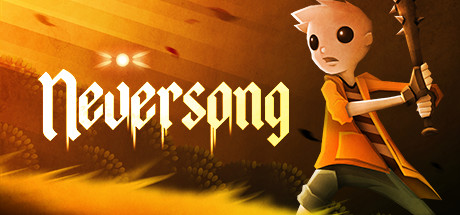
Help little Peet hack-and-slash his way through a beautifully haunting coma. A hand-drawn action-adventure through a dreamy world filled with fleshy monsters, insane grown-ups, and sad children looking for their mommies.
Modeled estimate, not a reported figure. How we estimate →
Media

About
Upon waking from a coma, Peet's girlfriend is nowhere to be found. Thomas Brush, creator of Pinstripe, invites you to investigate the screams coming from the heart of Blackfork Asylum, the increasingly violent behavior of the grown-ups, and the strange truth about Peet's past in this hauntingly dreamlike fable. Discover what's lurking beyond the doorbell in this strange tale that started almost a decade ago.
From Red Wind Field to the haunting halls of Blackfork Asylum, explore six moody, illustrative levels.
Fight your way through hordes of bosses, monsters, and blood thirsty grown-ups with your trusty baseball bat.
Immerse yourself in a breathtaking piano-centric soundtrack.
Join your quirky child-hood pals and trusty pet bird on an adventure to discover the truth about your recent coma.
Genres
Stats
All-time low is the lowest price we've recorded for this game since we started tracking it.
Engagement
Hours played at review time, across 42 reviews with recorded playtime.
Reviews
Themes across 42 recent reviews and how positive each mention is. A keyword signal, not full sentiment analysis.
positive critical· bar length = how often the theme comes up
Reviews
Pretty little game.
Neversong opens with a narrated intro of a pair of young lovers, Pete and Wren, who are torn apart when a mysterious "Mr. Smile" abducts Wren. As if following the pages of a gothic children's picture book, Pete sets out to find Wren and save her from Mr. Smile. The narrative is pretty slim, due to it not only being a game with a potential play time of one hour, but also given its format as largely a platforming adventure. After Wren's abduction, Pete sets about seeking her out by looking for clues from the residents of their village. It doesn't take long to discover that the village is devoid of adults, leaving a handful of children playing about the town. Speaking with these children is... well... it's not a pleasant experience. Despite Neversong's bleak artistic design, these kids have dialogue like they just walked off the set of a Nickelodeon cartoon which got cancelled after a single season. Every supporting character is practically tripping over themselves trying to insert "butt" somewhere into their sentences. They have "character" it's in the most surface level capacity, with one NPC's entire identity being that they're counting to a million. I appreciate when games receive voice performances, but I don't think the pairing of cartoonish line delivery with the equally cartoonish dialogue elevated the experience. While I could continue to harp upon the puerile writing, which extends to monsters designed like farting anuses called "piss boys," the main story is a bit more somber and grounded. There's a nice story at the game's heart about someone who's lost the love of their life, and is trying desperately to get them back. As the game progresses, it cryptically implies that the events playing out on the screen may not align with the "truth," so it keeps the player thinking a bit about why the game might be written in this manner. Despite my criticism regarding most of the performances, the story book narration at several parts of the game was not an unwelcome feature. The constant tonal shifts of Neversong made it hard to really appreciate its story. There's a possibility I'm fundamentally misinterpreting the artistic intent of Neversong's writing. Revelations at the end of the game, which can be surmised sooner, suggest a possibility that these characters are written intentionally badly. A facsimile of children recounted from an unreliable narrator. However, that may be too generous a consideration. The gameplay of Neversong is about as simple as it gets. Pete acquires a bat, which he can swing in the four cardinal directions of a D-Pad. When platforms pose a threat, he has a basic movement system consisting of a single jump, and standard walking speed. In a minor metroidvania fashion, Pete does unlock a few other movement related abilities, which allow him to swing from vines and ride fans on an umbrella. The game is broken up into five chapters, which all share the same world map. In each chapter, Pete unlocks a method of accessing a new area, completes a quest for one of the children, and then fights a boss. After each boss fight, Pete unlocks a musical melody, which he plays to unlock a new ability. Rinse and repeat. Along the way, Pete is obstructed by various mobs, none of which have movements more complex than move, jump, shoot. While they never pose a serious challenge, there were a couple of times when the behavior of the flying enemies was particularly problematic, with them constantly floating away from Pete's range in a locked room environment. When Pete is not fighting mobs, he's usually doing small platforming puzzle segments, most of which I found rather tedious. Pete is often presented with puzzles which use the velocity of an elevator to help him jump higher. What bothered me was having to constantly reset the slow moving elevators back to the bottom of the shafts anytime I missed a jump. There are some puzzles which have the same solution, but yield different results depending on the order of execution. For example, in the final levels of the game, there's a locked door. There is one switch in the room with the door, and two in another room. If Pete activates the switch in the door room first, and then the two switches in the other room, nothing happens; however, if the reverse order is performed, the door opens. There was no indication of a "correct order," and so far as I could tell was simply a design oversight. Finally, the bosses... or I suppose I should call them waiting games. Bosses in Neversong have some of the most bizarre animation windows I've seen in recent memory. A boss will deliver an attack, then hover around the screen invincible for like 10 seconds, before attacking again. Perhaps most pitifully, several of the boss rooms have "safe spots" where you can stand without ever being hit, not that any of the bosses pose enough of a threat to utilize them. Sadly, I would not recommend Neversong. Aside from what I enjoyed being the art design, and a bit of the main story, there are just too many issues I have regarding its tonal shifts and gameplay.
Related
Related
Trends
Modeled estimate over time, reconstructed from Steam's monthly review histogram.
Audience
Languages: English*, French, Italian, German, Spanish - Spain, Dutch, Korean, Portuguese - Brazil, Russian, Simplified Chinese, Traditional Chinese, Turkish +2 more
Estimated from the language of this game's reviews — a proxy for where players are, not official Steam demographics.
Related
| Man O' War: Corsair - Warhammer Naval Battles (Classic) | $258K | 782 | 64% | $13.39 |
| Pluto | $257.9K | 482 | 93% | $13.49 |
| Steel Crew | $258K | 613 | 81% | $14.99 |
| Monobeno | $258K | 653 | 95% | $24.99 |
| A Rose in the Twilight | $258.1K | 524 | 85% | $19.99 |
| Montaro | $257.8K | 12.2K | 95% | $0.99 |