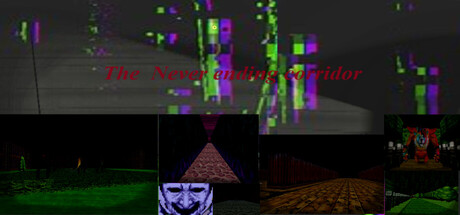
A First-person horror game with multiple endings. Endings and Events might change Every time you Replay it.
Modeled estimate, not a reported figure. How we estimate →
Media

About
You will counter many entities in this corridor. The wonders, Blood bunnies, Miss sweetheart, Shadowalkers and more! You may even Encounter more intelligent creatures That can manipulate the world in the Corridor like Charlie Bear and Neon shy. The place may feel empty at first but the Further you travel the more you realize you're not the only one lost. Every time you become "missing" it will automatically Count as death. Endings and Events might change Every time you Replay it. Doing a certain event will make another unchangeable. move carefully, turn back if you have too and don't make the same decisions
Stats
All-time low is the lowest price we've recorded for this game since we started tracking it.
Languages: English**languages with full audio support
Reviews
Never Ending corridor is a psychological horror experience developed and published by Robert Nieto that transforms one of the simplest concepts imaginable into a deeply unsettling and surprisingly effective nightmare. The game traps players inside a mysterious endless corridor that bends reality, distorts perception, and slowly erodes any sense of safety or logic as exploration continues. Instead of relying on traditional survival horror systems such as combat, inventory management, or action-heavy encounters, the game focuses almost entirely on atmosphere, uncertainty, environmental storytelling, and psychological tension. Every hallway, every sound, and every strange encounter contributes to the growing feeling that the player is wandering through a place that exists outside normal reality. The result is a horror game that succeeds not through spectacle or constant jump scares, but through oppressive mood and the terrifying idea of being trapped somewhere that refuses to let you escape. The premise immediately establishes an effective sense of dread. According to the game’s lore, the corridor is an impossible place where people enter but never return, a shifting dimensional prison filled with supernatural entities and distorted spaces that constantly change around the player. This concept gives the game enormous atmospheric potential because the environment itself becomes the main source of fear. The corridor rarely behaves in predictable ways. Hallways stretch endlessly, familiar rooms suddenly change without warning, and certain areas seem to loop in impossible patterns that gradually make players question whether progress is even possible. The game does an excellent job of creating the sensation that reality itself is unstable. Exploring the corridor feels less like moving through a physical location and more like descending deeper into a psychological nightmare. One of the strongest aspects of Never Ending corridor is its atmosphere. The game consistently maintains tension through careful pacing and environmental design rather than overwhelming players with nonstop scares. Silence becomes one of the most effective horror tools throughout the experience. Long stretches of quiet exploration force players to focus on every distant sound, flickering light, and environmental detail while expecting something terrible to appear at any moment. The corridors themselves feel claustrophobic and oppressive, with dim lighting and empty spaces creating a constant sense of vulnerability. Even during moments where nothing directly threatening occurs, the game keeps players emotionally uncomfortable because the environment never feels trustworthy or stable. The creature design contributes heavily to the surreal and disturbing tone of the game. Strange entities such as Blood Bunnies, Shadowalkers, Neon Shy, Charlie Bear, Miss Sweetheart, and other bizarre supernatural figures appear throughout the experience, each adding to the corridor’s sense of unreality. These creatures are memorable not necessarily because of graphic violence or elaborate animations, but because of how unpredictable and unnatural they feel. Some stalk the player silently, others manipulate the environment itself, and certain encounters are designed more to psychologically unsettle than directly attack. The game rarely explains these entities completely, which makes them even more disturbing because players are forced to interpret their meaning and behavior themselves. The corridor begins to feel inhabited by forces that operate according to rules the player can never fully understand. Exploration forms the core of the gameplay loop. Players wander through interconnected hallways, strange rooms, and shifting environments while uncovering fragments of story and making choices that influence progression and endings. The game places significant emphasis on player decisions, and many encounters or outcomes change depending on how situations are handled. This choice-driven structure adds replay value while also reinforcing the central theme of uncertainty. Every decision feels stressful because players are never certain whether they are moving toward survival, deeper madness, or something far worse. The game constantly encourages second-guessing, which strengthens the psychological horror atmosphere considerably. The sound design is arguably one of the game’s greatest strengths. Ambient noise constantly reinforces tension even when no visible threats are present. Distant whispers, unexplained sounds, footsteps, environmental distortions, and subtle audio cues create an atmosphere where players remain nervous during every moment of exploration. Silence itself is weaponized effectively, creating stretches where the player becomes hyper-aware of every movement and environmental change. The soundtrack remains restrained for most of the experience, relying more on droning ambient effects and unsettling soundscapes than dramatic orchestral music. This minimalist approach works extremely well because it allows the player’s imagination to fill the silence with fear. Visually, Never Ending corridor embraces a minimalist style that fits its psychological horror focus. The graphics are not technically advanced, but the lighting and environmental composition successfully create strong atmosphere throughout the experience. The endless hallways become increasingly surreal as progression continues, shifting between realistic architecture and impossible dreamlike spaces that seem disconnected from physical reality. Certain visual moments are especially memorable because they manipulate perspective and environmental structure in subtle ways that quietly disorient the player rather than relying on loud horror imagery. The corridor itself becomes almost like a living entity, constantly changing in ways that suggest the player is trapped inside something far more dangerous than a simple building. The pacing deserves praise because the game understands the value of restraint. Horror sequences are often delayed long enough to allow tension to build naturally, making encounters with creatures or environmental changes far more effective when they finally occur. The game rarely rushes players forward, instead encouraging slower exploration and psychological discomfort. This slower structure helps immersion significantly because players begin to mentally project fear onto even ordinary environments after spending enough time trapped inside the corridor. However, Never Ending corridor is not without flaws. The most significant weakness is gameplay variety. Much of the experience revolves around walking through hallways, making occasional choices, and encountering scripted events. While the atmosphere remains effective, the actual mechanics can become repetitive over extended play sessions. Players looking for complex puzzle systems, combat mechanics, or more interactive gameplay may eventually feel the experience lacks enough mechanical depth to sustain its runtime fully. Never Ending corridor is ultimately a tense and atmospheric indie horror game that thrives on psychological discomfort, surreal environmental storytelling, and oppressive suspense. While repetitive gameplay and narrative ambiguity may frustrate some players, the game’s commitment to atmosphere and psychological horror creates a uniquely unsettling experience for fans of slower and more experimental horror adventures. It is a game designed less to shock players with sudden scares and more to trap them inside a lingering feeling of anxiety and unease that continues long after the corridor finally ends. Rating: 6/10
Related
Related
Trends
Concurrent players on Steam, sampled daily since tracking started.
Momentum
Pace estimated from the game's recent review growth (our daily snapshots) at its own sales-per-review ratio — a momentum signal, not booked sales.
Related
| I Am The Prosecutor: No Evidence? No Problem! | $309.6 | 50 | 76% | $0.49 |
| Glasses and Girls | $315.6 | 51 | 82% | $0.99 |
| Dances and Girls | $322 | 52 | 83% | $0.99 |
| Bongo Quest | $322 | 52 | 46% | $0.49 |
| Anime Sunset Ride | $334.4 | 54 | 67% | $0.49 |
| Cosmic Journey PC Live Wallpaper | $336.3 | 52 | 71% | $0.49 |