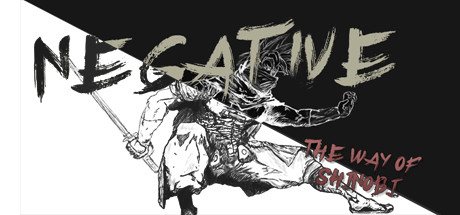
2D action platformer game with ninjas. Stylized graphics and a narrative-driven story will emphasize the gameplay. For those who see themselves as hard core players. This game will make you fail... a lot. Will you accept the challenge?
Modeled estimate, not a reported figure. How we estimate →
Media
About
Genres
Stats
All-time low is the lowest price we've recorded for this game since we started tracking it.
Languages: English
Reviews
This is a textbook example of how a game can do nothing to teach its players how to play. Tried to do the tutorial and it wouldnt go past the initial buttons. Had to figure everything else out from looking up the controls. Once you do figure it out it's somewhat decent. Movement feels a little strange and abilities (Specifically kunai and grapple) feel extremely wonky on Keyboard, almost unplayable. I'm guessing this is a game meant to be played on controller. If you're a keyboard player I wouldn't recommend.
Tried to play the game for 38 minutes then stopped and moved on. [h2]Issue Encountered[/h2] Failed to be able to play it with the default Steam controller and keyboard mappings. [list] [*]Keyboard is a no go for this kind of game in my case, which was quickly confirmed. [*]Steam controller's default mapping apparently was not the one displayed in the game's settings. [/list] So I figured how to run, jump, jump farther, jump on tree leaves... but I couldn't find how to fight properly. Of course, you can't expect not to fight in this game since downing opponents is a condition to progress. [h2]Pros[/h2] [list] [*]The graphics are very nice, I really liked the style and found it refreshing and very welcome. [*]The music, sounds and general ambience are nice too, nothing extravagant, but just fine. Just as I had to, you might need to go to the settings to enable both music and fx. [*]I like the ninja theme and being able to jump from tree leaves to tree leaves was fun (not something I like in movies though, go figure). [/list] [h2]Cons[/h2] [list] [*]I couldn't figure how to play with the default mapping for controller, despite the picture in the settings. [*]To be honest, I am not even sure the character reacts properly/desirably to my input. [*]Menu interface and dialogs are not polished. [*]Tutorial is there but definitely lacking. [*]Tutorial seems only good to teach keyboard mapping, not controller mapping. [/list] [h2]Verdict[/h2] [b]I know I'm gonna keep this game unplayed, which is a shame, for it looked nice and had a good feel. But it will have to do better regarding controls management to not discourage me. I think it is better to wait for a proper tutorial and a means to define your own controller and keyboard mappings before you buy. Some polishing would be nice as well regarding the character's reaction to player input, and perhaps some tweaks to the physics. In the meantime, I cannot recommend the game.[/b]
Game will be removed soon.
I wish there was a proper tutorial or at least prompts in-game to show what buttons do what. Some objectives aren't clear. The controller support felt pretty good, didn't try with keyboard. Got it during steam sale too, Didn't feel like it was worth it still. I couldn't get into it.
Dev u r bad man, let your game hold sell plz. 开放商你是坏人,请让你的游戏保持售卖。 dont leave we, we need u. 不要离开我们,我们需要你。 we need Ach, chinese, cloud save. 我们需要成就,中文,云存档。
This game is poop. Complete nonsense. This should be that game that streamers play to challenge their sanity against the wall of poor design. I know this was made by a small team, but come now....
習作。すでにそれなりに実績のありそうなパブリッシャーがなぜこれを発売したのか謎。「いやあ、うちの子供がゲーム作ったんだよねえ」「へえ、いいじゃない!記念に発売しちゃお♪」みたいなノリだったのか? 権利関係は謎だが音楽は良かった。
Negative: The Way of Shinobi, developed and published by Art Games Studio S.A., is a 2D action-platformer that strives to merge old-school difficulty with a distinct visual identity and a story steeped in tragedy and vengeance. It tells the tale of a young shinobi whose clan is destroyed by an invading samurai army wielding dark, mystical power. Left alone and betrayed, the protagonist sets out to uncover the truth behind his father’s secrets and restore his honor through a perilous journey across a stylized world of blood and shadows. The game’s premise draws heavily from traditional Japanese mythology and the archetypal themes of loss, duty, and redemption, positioning itself as both a punishing test of skill and a narrative about endurance and survival. From the outset, the most striking aspect of Negative: The Way of Shinobi is its art direction. The game adopts a hand-drawn, sketch-like aesthetic, with black ink strokes and contrasting tones giving every environment and character a rough, expressive texture. This style immediately sets it apart from other indie platformers, giving it the feeling of a moving illustration or an animated scroll painting. There’s a raw energy to its presentation—the environments feel alive even when minimalist, and the visual tone amplifies the sense of loneliness and decay that defines the shinobi’s journey. However, the same stylistic choice that makes the game distinctive can also work against it. The high-contrast backgrounds and overlapping outlines occasionally obscure key visual cues, making it difficult to distinguish hazards or platforms during intense sequences. In a game that demands such precision, these moments of visual ambiguity can feel more punishing than atmospheric. Still, the artistic ambition is undeniable, and it contributes significantly to the game’s mood of chaos and despair. Gameplay in Negative: The Way of Shinobi revolves around unforgiving, high-precision platforming and combat sequences that demand patience, timing, and repetition. It is unapologetically difficult, embracing the “die-and-try-again” philosophy that has become synonymous with hardcore indie titles. Every jump, dash, and strike must be executed with accuracy, as even minor mistakes can lead to instant death. The design philosophy rewards mastery but often at the cost of accessibility. Early on, the game establishes that it will not hold the player’s hand—checkpoints are sparse, traps are relentless, and the controls, while functional, can feel slightly unrefined. This can make learning the game’s rhythm both satisfying and frustrating in equal measure. When movement flows as intended, there’s a real sense of accomplishment in surviving a gauntlet of spikes or perfectly chaining a sequence of wall jumps and sword slashes. However, the moments where the controls feel slippery or unresponsive can turn challenge into irritation. The level of precision required sometimes clashes with the imperfections in movement physics, resulting in deaths that feel less like learning experiences and more like the product of mechanical inconsistency. The game’s combat system complements its platforming with a simple but effective set of tools. The shinobi’s attacks are fast and deliberate, focused on close-range encounters that require quick reactions. Enemies are positioned to test reflexes and environmental awareness rather than brute strength, often attacking in narrow corridors or during platforming sequences that demand multitasking. There are occasional boss battles that break up the rhythm of traversal, introducing large, multi-phase fights that test not only your reflexes but your endurance. These encounters are among the game’s highlights—when the mechanics align, they deliver tension and excitement reminiscent of classic side-scrolling action games. Yet, the satisfaction of these battles is often tempered by uneven balance and checkpoint placement. Losing late in a fight can mean replaying long stretches of a level, which adds an unnecessary layer of frustration to an already demanding experience. Narratively, Negative: The Way of Shinobi is minimalistic but earnest. The story unfolds through sparse dialogue and environmental storytelling rather than lengthy cutscenes, reflecting the internal nature of the protagonist’s journey. It’s a tale of revenge and redemption framed through isolation, as the player ventures through desolate landscapes haunted by memories of betrayal. The writing may not be elaborate, but it serves its purpose—each encounter and environment reinforces the tone of a fallen world and a lone warrior’s struggle against it. What the story lacks in complexity, it compensates for with mood. The use of limited color, sharp contrasts, and the somber score combine to create a feeling of melancholy that underscores the theme of futility. The protagonist’s suffering becomes as much psychological as physical, making the act of progression itself a metaphor for persistence in the face of hopelessness. The soundtrack enhances this atmosphere beautifully. Rather than relying on bombastic themes, it opts for restrained melodies that mix traditional Japanese instrumentation with dark, ambient undertones. The minimalist score accentuates moments of silence and tension, allowing the player’s failures and small victories to feel personal and weighty. This careful sound design gives each movement and strike an added layer of intensity, making the experience immersive even during repetition-heavy sequences. The music becomes a companion to the gameplay loop—a subtle reminder of the serenity that lies beyond frustration and the calm that follows mastery. From a technical perspective, Negative: The Way of Shinobi runs smoothly on modest hardware, with few reported performance issues. Its problems stem more from design and control responsiveness than from optimization. The physics, collision detection, and hitboxes occasionally feel imprecise, and in a game that relies on tight execution, these inconsistencies can quickly erode player patience. The game’s structure also leans heavily on repetition, with similar enemy patterns and environmental traps reappearing frequently across different levels. While this contributes to the sense of persistence and endurance central to the experience, it can also make the gameplay feel repetitive for those who prefer variety or a gentler learning curve. Negative: The Way of Shinobi is not a game for everyone, and it never pretends to be. It caters to players who thrive on high-stakes precision and who view failure as a stepping stone rather than a deterrent. For those willing to embrace its challenge, it offers moments of genuine satisfaction—the feeling of finally conquering a seemingly impossible sequence, of moving like a shadow through traps that once felt insurmountable. Its art style, though divisive, gives it an identity distinct from the countless pixel-based indie titles that populate the genre, and its somber tone carries an emotional weight that lingers beyond the frustration of its difficulty. Ultimately, the game’s greatest strength lies in its unfiltered honesty. It promises a difficult journey and delivers exactly that—an experience that demands focus, punishes mistakes, and rewards persistence. While its lack of polish and inconsistent controls prevent it from achieving greatness, Negative: The Way of Shinobi stands out as a bold and atmospheric effort from a small team unafraid to challenge players both mechanically and emotionally. It’s a rough-edged but compelling experiment in minimalist storytelling and punishing design—a test of patience, skill, and endurance that embodies the spirit of the very shinobi it seeks to portray. Rating: 5/10
Related
Related
Trends
Modeled estimate over time, reconstructed from Steam's monthly review histogram.
Momentum
Pace estimated from the game's recent review growth (our daily snapshots) at its own sales-per-review ratio — a momentum signal, not booked sales.
Related
| Glasses and Girls | $315.6 | 51 | 82% | $0.49 |
| Food and Girls | $315.6 | 51 | 86% | $0.49 |
| Dances and Girls | $322 | 52 | 83% | $0.49 |
| Anime Sunset Ride | $334.4 | 54 | 67% | $0.49 |
| Carnival and Girls | $334.4 | 53 | 85% | $0.49 |
| Cosmic Journey PC Live Wallpaper | $336.3 | 52 | 71% | $0.49 |