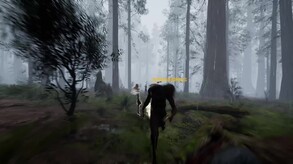
Native Hunter is an ambitious open-world survival sandbox that sets itself apart through its unusual thematic focus and broad mechanical scope. Developed and published by A.P.S, the game places players in the role of an isolated individual living entirely off the land, with no modern technology, no guided narrative, and very few safety nets. Rather than centering on post-apocalyptic ruins or sci-fi survival tropes, the game emphasizes primitive living, ecological balance, and long-term self-sufficiency, offering a survival experience that feels grounded in nature and personal agency rather than scripted objectives.
From the very beginning, Native Hunter makes survival feel earned. Players must immediately concern themselves with basic needs such as hunger, thirst, and shelter, and the game offers little in the way of hand-holding. Food must be hunted, fished, or cultivated, and each option carries its own risks and rewards. Early encounters with wildlife can be dangerous, and inefficient planning can quickly lead to starvation or exposure. This initial vulnerability creates a strong sense of tension and immersion, as even simple goals like securing a steady food supply or crafting a basic tool feel meaningful.
The open world itself is expansive and varied, encouraging exploration as a natural extension of survival rather than a checklist-driven activity. Dense forests, open plains, caves, bodies of water, and scattered settlements provide a range of environments to navigate, each with unique resources and threats. Exploration is rewarded not only with materials but also with environmental storytelling, such as cave paintings, ruins, and signs of earlier inhabitants. These subtle details suggest a deeper cultural history without forcing a linear narrative, allowing players to interpret the world at their own pace.
Crafting and building form the backbone of long-term progression. As players gather materials, they unlock the ability to construct shelters, storage structures, defensive fortifications, and more advanced tools. Building a base is not simply cosmetic; it becomes essential for protection, organization, and sustainability. Over time, players can transform a fragile campsite into a fortified settlement, which reinforces the feeling of carving out a place in an untamed world. The crafting systems are broad and flexible, rewarding experimentation and forward planning.
One of the more distinctive systems in Native Hunter is animal interaction. Wildlife is not merely something to hunt; animals can be tamed, raised, and even bred if properly cared for. Domesticated animals can assist with transportation, protection, or resource production, adding a layer of long-term strategy to survival. Farming further deepens this loop, requiring water management, fertilization, and time investment. These systems work together to create a sense of gradual self-reliance, where survival shifts from daily desperation to long-term stability.
Social elements and human encounters add additional texture to the experience. While much of the game emphasizes isolation, players may encounter villages or other groups that offer opportunities for interaction. These moments break up the solitude and provide contrast, reminding players that survival is not only about nature but also about coexistence and negotiation. In multiplayer modes, other players introduce unpredictability, turning the world into a more dynamic and sometimes hostile environment where alliances or conflicts can emerge organically.
Technically and visually, Native Hunter aims for functional realism rather than spectacle. The graphics are serviceable, prioritizing clear environments and readable interactions over high-end visual polish. Animations and models can feel stiff at times, and performance may vary depending on system and update state, but the overall presentation supports immersion without distracting from gameplay. Sound design relies heavily on environmental audio, such as wildlife and ambient noise, which enhances the feeling of being alone in a living ecosystem.
Despite its strengths, Native Hunter is not without clear limitations. The game’s open-ended design means there are few structured goals beyond survival itself, which can make long-term engagement dependent entirely on player motivation. Those who thrive on narrative direction, quest-driven progression, or highly polished systems may find the experience lacking focus. Additionally, the game shows signs of being a work in progress, with uneven balance, rough edges, and systems that feel deeper in concept than in execution.
Overall, Native Hunter is a bold and distinctive entry in the survival genre that prioritizes freedom, ecological interaction, and emergent gameplay over conventional structure. It offers a rewarding experience for players who enjoy defining their own goals, experimenting with systems, and slowly mastering a hostile environment through patience and planning. While it may not yet reach the refinement or depth of larger survival titles, its unique theme and ambitious mechanics give it a strong identity. For players drawn to open-ended survival grounded in nature and self-sufficiency, Native Hunter provides a challenging and thought-provoking journey that rewards perseverance and curiosity.
Rating: 6/10