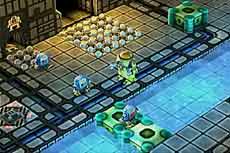
Asimov is a lowly service mechanoid aboard the interstellar colony ship Eidolon. Carrying hundreds of frozen human colonists to a new world. When the Eidolon's computer brain malfunctions, it falls to Asimov to undertake a perilous journey through the bowels of the massive ship to save his robot friends and the precious human cargo. Mr.
Modeled estimate, not a reported figure. How we estimate →
Media

About
Stats
All-time low is the lowest price we've recorded for this game since we started tracking it.
Languages: English
Engagement
Hours played at review time, across 40 reviews with recorded playtime.
Reviews
Themes across 40 recent reviews and how positive each mention is. A keyword signal, not full sentiment analysis.
positive critical· bar length = how often the theme comes up
Reviews
SOUL
Mr. Robot is an unusual, imaginative blend of genres that reflects the ambition and inventive spirit of mid-2000s indie development. Created and published by Moonpod, it casts you as Asimov, a humble service robot aboard the massive colony ship Eidolon. When the ship’s systems begin to fail and the human passengers in cryostasis are placed in jeopardy, Asimov becomes an unlikely hero—navigating malfunctioning corridors, hostile machines, and corrupted digital systems in a desperate attempt to uncover what has gone wrong. The setup is simple but engaging, setting the stage for a journey that is equal parts physical exploration and virtual infiltration, wrapped in a moody, atmospheric sci-fi presentation. At its core, Mr. Robot is a hybrid game composed of two distinct but interconnected parts. The first is a 3D isometric puzzle-platformer, where you guide Asimov through boxed-in rooms filled with hazards, moving platforms, switches, electrified panels, and environmental puzzles. These sections evoke the feel of classic puzzle adventures: precision movement, timed switches, crate manipulation, and hazard navigation form the backbone of progression. The isometric view gives the game a distinct identity but also adds a layer of challenge, as judging height and distance becomes essential for avoiding pitfalls. Much of the tension lies not in enemies but in the ship itself, with environmental dangers presenting as much threat as any antagonist. The second component is the hacking mode—a turn-based RPG system that engages whenever Asimov interfaces with computer terminals or digital locks. Here, the game transforms completely: instead of platforming, you command a team of “ghost” programs that battle corrupted data defenses. These sequences are visually abstract and mechanically different, involving stat upgrades, skill choices, and careful selection of attacks or support actions. The duality between the two modes is striking, but it allows the game to flex different muscles. Physical sections reward dexterity and attention, while hacking battles demand a more methodical, strategic mindset. As progression continues, the connection between the two becomes more meaningful, with success in one influencing your capabilities in the other. This unusual structure helps Mr. Robot stand out, but it is also what creates some of its roughest edges. The isometric platforming, while clever, occasionally suffers from perspective difficulties. Depth and elevation can be tricky to read, leading to misjudged jumps or unintended falls. Some puzzles require relentless trial and error, and repeated failure in the later stages can make progress feel slow or punishing. Conversely, the hacking system—while charming in its retro RPG inspirations—may feel shallow to players expecting deeper customization or more complex enemy behavior. Battles rely on straightforward turn-based mechanics, and once you establish a reliable approach, the sense of danger tends to fade. What bolsters the experience is the strong atmosphere. The Eidolon feels like a living, deteriorating environment: dim corridors hum with failing machinery, automated systems behave unpredictably, and background audio reinforces the sense of isolation. The visual design mixes industrial metallic interiors with glowing monitors, data lines, and sterile maintenance spaces, creating a believable vision of a massive starship on the brink of catastrophe. The tone is more somber than comedic, and as the narrative evolves, there is a growing sense of unease that complements the gameplay loop of delving deeper into the ship’s problems. Yet the game’s pacing can be uneven. Early sections do an admirable job of introducing systems and teaching puzzle mechanics, but as the adventure grows more complex, the flow can slow noticeably. The alternation between platforming and hacking is intriguing but sometimes disrupts rhythm, especially when long platforming sequences are abruptly followed by extended digital battles. Navigation can also become confusing, with the in-game map offering limited clarity on multi-room layouts or long-term objectives, occasionally leaving players wandering until they stumble upon the next correct path. Despite these flaws, Mr. Robot maintains a loyal fanbase for good reason. It is a game with personality—quirky, earnest, and unafraid to take creative risks. It may not be polished to a mirror shine, but its commitment to blending genres and telling a small-scale sci-fi story gives it a distinctive charm. Asimov himself, with his modest role and unexpectedly heroic journey, adds emotional grounding to the otherwise mechanical world. For players willing to embrace its quirks, the game rewards persistence with clever puzzle design, atmospheric tension, and the satisfaction of unraveling a digital mystery piece by piece. Ultimately, Mr. Robot is a project defined by ambition: a puzzle-platformer with RPG layers, a sci-fi story told through both physical and virtual conflict, and an indie game unafraid to experiment. It is uneven in execution but rich in ideas, offering an experience that stands apart from the formulaic tendencies of many modern titles. For players seeking something different—something that challenges both reflexes and strategy while delivering a memorable atmosphere—Mr. Robot remains a unique and worthwhile journey through a troubled starship and the circuits of a small but determined hero. Rating: 7/10
Mr. Robot z pozoru wydaje się dziwnym miksem akcji, platformówki 3d, turowego rpg'a z segmentami rozwiązywania puzzli. (i ten miks gatunkowy DZIAŁA *szok*) w tej krótkiej recenzji chcę się głównie skupić na elemencie który według mnie błyszczy najjaśniej w tej grze i przez który od wielu wielu lat powracam do tej gry (czy to na steam, czy w wersji na płycie bo również takową posiadam i sama gra jest mi bliska praktycznie od początku mojej gamingowej przygody) - a jest to: [h2] turowy RPG [/h2][b] TAK! [/b] uważam walkę w Mr. Robot za pewien fenomen, który wielu graczy grając "normalnie" może po prostu przelecieć, ponieważ aby przejść przez etapy zablokowane za obowiązkową walką to gra wymaga pokonanie tylko odpowiedniego komponentu w sieci neuronowej(?) co pozwala przy odpowiednim szczęściu / umiejętnym używaniu mechanik i/lub przedmiotów na skipnięcie WIĘKSZOŚCI encounterów w grze. W walkę wchodzimy poprzez hakowanie, a hakować możemy terminale (które głównie są wymagane albo fabularnie aby przejść dalej albo ich ukończenie odblokowuje pewne dodatkowe ułatwienia) oraz każdego wrogo nastawionego do Asiimova robota na którego uda nam się wejść, w ekranie hakowania poruszamy się w cyberprzestrzeni i przy przejściu przez dany jej fragment gracz ma szansę na uaktywnienie systemu obronnego danego komponentu (wtedy następuje inicjalizacja walki) do samej walki używamy Duchów (konstrukt naszego robota w cyberprzestrzeni) na przestrzeni gry mamy do dyspozycji duchy: [b]Asiimova[/b] (naszej postaci) który to jest robotem [b]wielozadaniowym[/b] [b]Zeldy[/b] która to jest robotem [b]serwisowym[/b] Kolejnych cybernetycznych wojowników zdobywamy w pobocznych segmentach gry (gdyż gra wymaga od nas jedynie uratowanie Zeldy), należą do nich: [b]Orgus[/b] (klasa [b]Security[/b]) [b]Brutus[/b] (klasa [b]Heavy lifter[/b]) [b]Raistlin[/b] (klasa [b]komunikacyjna[/b]) oraz wiele innych przedstawicieli tych wszystkich klas o randomowo wygenerowanych nazwach (których możemy znaleźć w dobrze ukrytych pokojach) Nasza drużyna składa się z maksymalnie 4 osób, pojedyncze potyczki są generalnie krótkie (w finalnych lokacjach dopiero pojawiają się przeciwnicy którzy mogą stanowić wyzwanie ponieważ mają więcej życia oraz mają dostęp do wielu zaawansowanych programów takich jak grupowe leczenie itp.). Wszystkie jednostki (nasze i przeciwnika) mają [b]energie[/b] (punkty zdrowia) [b]moc[/b] (mana) oraz nasze postacie posiadają pasek [b]EXTRA[/b] (taki ult) i te statystyki zapisują się po każdej walce więc w długiej perspektywie musimy zarządzać życiem oraz ekwipunkiem naszych cybernetycznych wojowników. Każda z klas jest znacząca (a jest ich 5) i w skrócie: [h3]robot wielozadaniowy[/h3] jest okej w każdej sytuacji ale nie jest najlepszy w niczym, [h3]heavy lifter[/h3] jest genialnym tankiem i physical damage dealerem natomiast ma absolutne braki programowe, [h3]robot serwisowy[/h3] jest kluczowy w utrzymaniu drużyny przy życiu oraz potrafi korzystając z swojego EXTRA przywrócić energie i moc drużynie lub wskrzesić poległego towarzysza, posiada konkretny potencjał programowy natomiast ma braki w walce fizycznej oraz z moich obserwacji przeciwnicy są skłonni do częstszego atakowania robota tej klasy, [h3]robot klasy Security[/h3] słaby fizycznie robot o ogromnym potencjale obronnym oraz specjalizujący się w ofensywnym oprogramowaniu, [h3]robot klasy komunikacyjnej[/h3] robot o ogromnych zasobach energii i mocy, zdolny do kontroli tych zasobów u sojuszników i przeciwników (przekazywanie mocy sojusznikom, kradzież mocy i energii od przeciwników) posiada konkretny potencjał programowy natomiast w momencie w którym wyczerpie się jego moc i nie posiadamy zasobów aby ją uzupełnić staje się praktycznie bezużyteczny na polu bitwy. Na dodatek każdego robota możemy wyposażyć w broń i pancerz oraz możemy ulepszać statystyki danych członków drużyny poprzez [b]modyfikatory atrybutów[/b] (których na ogół nie ma zbyt wiele, a zdobywać je możemy jako losowy loot po walce oraz w paru miejscach na mapie są poukrywane). [h2] Walka [/h2] Schemat walki jest dość prosty, przed rozpoczęciem danej tury wybieramy akcje jaką mają nasze jednostki zrobić [b](zaatakować danego przeciwnika wręcz, użyć konkretnego programu, użyć przedmiotu, bronić się, uciekać lub zużyć naładowane EXTRA)[/b] po wyborze akcji dla każdego naszego wojownika następuje czas tury podczas której każdy z uczestników bitwy rzuca wirtualną "kością" i na podstawie wyniku jest określana kolejność w jakich atakują sojusznicy i przeciwnicy (na dobrą sprawę ten opis jest umowny bo my jako gracz nie widzimy tego rzutu kością). Każda walka nagradza gracza punktami doświadczenia, możliwością kumulowania % EXTRA na ważniejsze pojedynki oraz lootem po każdej potyczce (przez walutę po przedmioty użytkowe, ekwipunek czy bardzo pożądane modyfikatory atrybutów)[h2] Levelowanie [/h2]wbicie maksymalnego potencjału programowego naszych wojowników którzy mogą korzystać z programów (wszyscy [b]oprócz[/b] klasy heavy lifter) jest dość łatwo, natomiast nadal możemy levelować naszych wojowników aby zdobywać więcej punktów energii oraz odblokowywać nowe ataki EXTRA (na przykładzie klasy serwisowej, na starcie posiada ona tylko przywrócenie energii i mocy całej drużyny na 100%, po konkretnej liczbie użyć tego EXTRA odblokujemy drugi atak tej kategorii który pozwala wskrzesić jednego poległego bohatera aby na końcu odblokować 3 stage tego EXTRA który pozwala jednocześnie na wskrzeszenie całej drużyny oraz przywrócenie całej drużyny na 100%, dla ciekawskich to klasa power liftera na stage'u 3 odblokowuje zdolność [b]instant kill[/b] (chociaż muszę naprostować bo ten atak po prostu zadaje ogromny dmg a nie jest faktycznym instant killem jak nazwa wskazuje więc final bossa się tym nie pozbędziemy na hita) ) Więc jak widać systemy walki i rozwoju drużyny są jednocześnie proste jak i zważając na całościowy rozmiar gry - [b]rozbudowane[/b] i potrafią wciągnąć gracza w godziny levelowania drużyny[h2] Level Design i zagadki środowiskowe [/h2]no to teraz wypadałoby coś napisać o designie leveli i zagadkach (puzzlach) - no absolutna większość zagadek wymaga przypatrzeniu się patternowi poruszania się wrogich robotów i zręczne ich unikanie, odpowiedniego używania movementu, skoków, dźwigów oraz unikania głębokiej wody (woda która ma głębokość większą niż połowa wysokości naszej postaci po prostu nas instant zabija, a płytsza woda zabiera nam 1/3 życia) więc poza celnymi skokami nad przepaściami wody oraz jednym pokojem w finalnej części gry (gdzie to są taśmy transportowe które układają się w kwadrat a w jego środku jest duży szybki robot i 4 guziki które obniżają filary na końcu pokoju) to [b]gra nie stanowi większego wyzwania[/b], więc jeżeli nie macie problemów z poruszaniem się w trójwymiarowych grach to [b]polecam[/b] od samego początku [b]grać na trudnym[/b] poziomie (mamy jedno życie po którego stracie cofa nas do ostatniego checkpointa, oraz liczba waluty w świecie jest zmniejszona) [h2] POLSKA [/h2] Nie wiem czy jest dostępny w internecie ale ta gra posiada [b]polską wersję[/b] (a przynajmniej na fizycznych płytach jakie były wydawane w naszym kraju ta gra jest po polsku) [h1] WADY [/h1] - gra jest krótka jeżeli pchamy przez fabułę, możemy ją jedynie wydłużyć poprzez czyszczenie cyberprzestrzeni oraz hakowanie wszystkiego co się rusza i na co umiemy wejść [h3] utrata dostępu do scenariuszy społeczności [/h3] - tak ta gra posiadała możliwość ściągnięcia scenariuszy fabularnych które tworzyła społeczność na forum twórcy gry - forum nadal istnieje i nawet da się tam znaleźć scenariusze ale aby móc w nie grać to trzeba posiadać konto na forum którego uwaga - nie da się stworzyć, bo po utworzeniu konta administrator forum musi je zaakceptować oraz wersja gry na steamie oraz wersja fizyczna którą posiadam jest [b] INNA [/b] niż ta którą twórcy sprzedawali bezpośrednio na swojej stronie! (te wersje są "wykastrowane" z funkcjonalności scenariuszy społeczności!!!)
I've tried several times to get into this game, but I just can't get past several things. First, the default controls are bad, and worse, you can't remap them. If it were just that, it wouldn't be the end of the world, but the character movement is very floaty and imprecise, and the game requires precise isometric platforming, which is difficult enough even with good controls. What little I've experienced of the turn-based RPG combat is very vanilla, and the enemies have high block and dodge rates, which makes fighting them an exercise in patience.
The game is a simplistic platformer that has a bad game feel. Movement feels unpleasant in this game, the puzzles aren't intriguing enough.
I will be spreading Zamanova's frozen cheeks tonight bois
Still as fun as it was in childhood. A bit easier now especially that I know English and games much better than when I was a kid but still difficult enough to be challenging in a fun way. Pros: + fun combination of 3d platform logic game + dialogues, characters, story, some shocking moments + nostalgic vibe + fun turn based fighting gameplay + collectible items, rpg looting and equipment vibe + sci-fi theme + can be quite challenging and puzzling at times Cons: - graphics feels a bit low quality - movement feels a bit stiff - long travel times between some key locations
A fun, isometric RPG that reminds me a lot of old Sega Genesis games. The battles are turn based, with puzzels to solve and secret items to find along the way. Very cool game. I got it on sale at some point, but to me the game is worth the $9.99 asking price.
no
2008 was sort of a weird generation of games: the whole concept of a subscription model -- especially for gaming-- was new and no where as good as it is now. The main originator was GameTap. And it was during that time that I was able to play indie darling Mr. Robot. Mr. Robot takes place in the far future as humanity is in cyrogenic sleep as the ship, the Eidolon, is flying through space to an unknown planet for humanity to wake up and populate it. It's during the voyage that our story takes place. The game stars Aismov as he quickly gets wrapped up in solving puzzles and stopping an insane AI. So yes, Mr. Robot is not going to win any awards for originality as the game wears its influences on its sleeve: Final Fantasy, sci fi classics from books and movies, Dragon Quest... Game play is a mixture of Solstice / Equinox / Landstalker (isometric 3-d perspective platforming) and Sokoban mixed in with classic roleplaying tropes. The game is definitely built with the platforming in mind as everything clearly designed around the methodical problem solving. Controlling Asimove is a little tricky due to the isometric perspective as well as him being weirdly heavy as he'll float across an extra tile like a good robot would. It's great for realism, not so great for making an accessible game. There's lots of little clues to help with perspective. Robots and traps are seen on the map and cause damage to our friend. Sometimes you can hack them by getting on their heads and taking out a certain node. Take too much damage while on the ship and Asimov explodes. You have 3 lives to get to the next way point/save spot, otherwise you're sent to the last save. You can recover lives by collecting energon -- which also doubles as your currency. Jumping slightly ahead, I never found myself hurting for money. I digress, the lives system barely worked in 2008, and it definitely doesn't work in 2025. This is also connected to the level design: the game does a pretty job to save the player some grief when backtracking needs to be done; there's usually a short cut. Except when there isn't one. I can think of a few examples that are on the mean side: There's a room that has 2 blocks stacked on each other and getting to the other ledge; the giant robots who press switches in multiple rooms and relentlessly chase Asimov; areas with flame traps and spikes as they are instant death; having to keep certain robots alive as they are part of the solution. Then the hacking portion (roleplaying) is traditional turn based. The robots are filled with various functions when in reality each robot or computer system has it's own critical function node. Take it out that node by destroying the security system, and poof! That robot or computer is crashed. This is accomplished by through traditional turn based RPG combat. The team is made up of "ghosts," images of our hero and friends who use viruses and programs (magic) to destroy the security system in each node. The problem with this system is rough on a multitude of levels. 1) The combat is super slow and ultimately comes down to each side exchanging blows. So what was already a slow paced game is now extra slow. It can make it difficult to feel like progress is being made. 2) While there are multiple copies of the different character classes hidden around the map in secret rooms, there's little need to use them as there's no real character development or differences between the story characters that are present. 3) Experience is awarded at a very slow rate. This makes the beginning time in cyber space very challenging, needlessly so. 4)Programs / spells are close to useless unless it's buffing or healing. The attack spells do not cause enough for the power cost. In fact, the higher tier healing spells are unnecessary as well due to the game throwing items at you as well as the basic healing spell covering hit points, even if it is 1 at a time. Graphically, the game looks rather solid by today's standards. The game is clean and objects are cleanly displayed. The game nails the sci fi theme perfectly. The game likes to show the entire room when encountering a puzzle for the first time, though I didn't find it very helpful when planning my route or figuring out solutions. It is important to note that the game did crash on me a few times in 1 room late in the game. There's also several times where I've died on a screen and the puzzle would be solved for me after Asimov respawned in a room. Musically, the game is rather pleasant to listen to. There's nothing that is offensive. The sound effects are fine. And at the end of the day, there's definitely a certain charm to the game. Even 15 years later after I initially played the game, I still like it. I can see why so many critics and players back in the day liked it. Yes, it's rough around the edges, it's a mostly easy 15 hour playthrough. The game seems to have been designed in mind for other modules in mind that never seemed to have materialized over the years, especially now that Moonpod is defunct. Which is a major bummer. The game occasionally goes on sale for a fraction of the cost and makes it the perfect time to check out this game.
Related
Related
Trends
Modeled estimate over time, reconstructed from Steam's monthly review histogram.
Momentum
Pace estimated from the game's recent review growth (our daily snapshots) at its own sales-per-review ratio — a momentum signal, not booked sales.
Audience
Estimated from the language of this game's reviews — a proxy for where players are, not official Steam demographics.
Related
| Furi Demake - The Chain | $25.4K | 456 | 89% | $1.49 |
| Ground Control Anthology | $25.4K | 204 | 85% | $4.99 |
| Curse of the Sea Rats | $25.4K | 103 | 56% | $9.99 |
| XXX_CYBERRAT_XXX | $25.4K | 145 | 94% | $5.99 |
| Recolit | $25.4K | 98 | 90% | $14.99 |
| Rytmik Studio | $25.4K | 357 | 83% | $4.49 |
Related
| 7 Days to Die | $425.3M | 403.6K | 87% | $44.99 |
| Mount & Blade II: Bannerlord | $309.8M | 294K | 88% | $49.99 |
| Squad | $167.2M | 178.2K | 83% | $39.99 |
| Don't Starve Together | $164.7M | 539.5K | 95% | $14.99 |
| Schedule I | $144.4M | 308.5K | 98% | $19.99 |
| Raft | $144M | 375.8K | 93% | $19.99 |