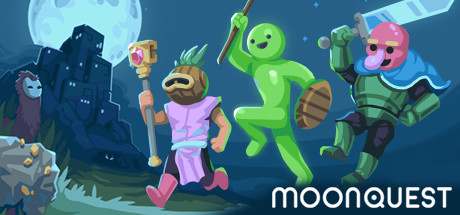
MoonQuest is an imaginative 2D adventure that builds its identity around procedural generation, exploration, crafting, and the freedom to interact with a surprisingly malleable world. Developed and published by Wizard Mode, it combines elements of action games, roguelikes, survival adventures, platformers, and sandbox exploration without allowing any single genre to completely dominate. Instead of guiding players through one carefully predetermined journey, it creates new worlds for successive adventures, making curiosity and adaptation central to the experience.
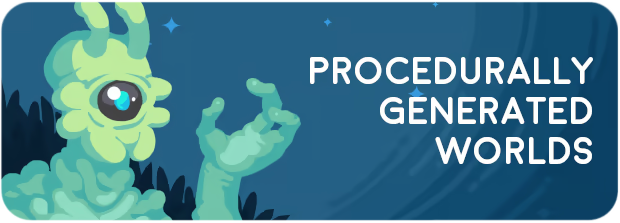
The procedurally generated environments are easily one of its strongest qualities. A world can contain snowy forests, towering mountains, ancient ruins, castles, beaches, villages, underground caves, sewers, tombs, and stranger locations such as sugar-filled caverns or demon-infested cathedrals. Different regions introduce their own combinations of resources, wildlife, enemies, merchants, weather conditions, and environmental characteristics. This variety makes exploration feel meaningful because entering an unfamiliar area can reveal useful materials, dangerous creatures, valuable equipment, or completely unexpected locations.
Environmental destruction gives that exploration additional freedom. Thick vegetation can be chopped apart, caves can be investigated for valuable ores, and structural barriers can be destroyed to create alternative ways into castles and ruins. Rather than treating scenery as an untouchable backdrop, the game encourages players to manipulate their surroundings. This complements the resource-gathering mechanics particularly well because exploration, destruction, crafting, and progression become interconnected parts of the same gameplay loop.
Character selection also changes how individual adventures can unfold. There are numerous playable characters with distinct abilities, equipment, circumstances, and objectives. Moonman can illuminate dark surroundings, Amphibian can breathe underwater, Argonax approaches danger with magical capabilities, while Spartan begins as an armored warrior with an undead-focused mission. Other characters include an astronaut trying to survive and return home, an assassin pursuing a contract, a fiery entity capable of burning its surroundings, and a creature able to sense valuable ore. Some choices can even influence aspects of world generation, giving character selection more significance than simply changing appearance.
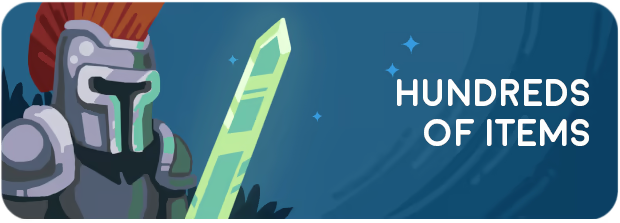
Loot and crafting provide another substantial layer. Hundreds of items can potentially be discovered, purchased, or created, ranging from conventional swords, magical staffs, armor, shields, and helmets to unusual masks, tools, accessories, and navigation equipment. Resources gathered during exploration can be taken to settlements and used with various crafting facilities. Players can forge equipment, prepare useful items, and interact with merchants using the materials and currencies they have accumulated. Finding a powerful or unusual object can significantly alter an expedition, which fits naturally with the game's roguelike influences.
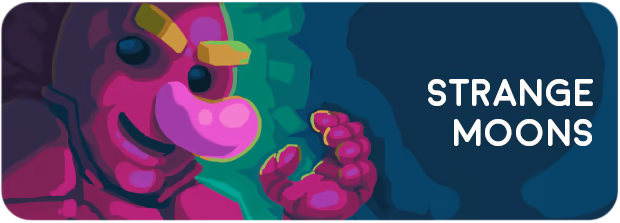
One of the most memorable concepts is the system of unusual moons surrounding each generated world. Different moons subtly influence conditions below them. A Giant Moon can increase the size of various things, a Treasure Moon is associated with greater wealth, and a Water Moon can bring persistent rain and flooding. The wonderfully strange Frog Moon produces exactly the sort of consequence its name suggests: lots of frogs. This system gives procedural generation additional personality because worlds are affected by changing rules rather than simply receiving rearranged geography.
Combat is important, particularly when entering hostile ruins, caves, castles, and other dangerous locations, but the game is arguably at its best when combat remains part of a larger expedition. Preparation, resource collection, equipment discovery, crafting, navigation, and environmental manipulation all contribute to survival. The roguelike and permanent-death elements provide additional tension because careless decisions can have meaningful consequences. Players who primarily want highly technical combat may find the fighting less compelling than the exploratory systems surrounding it, but those who appreciate experimentation should find plenty to engage with.
The pixel-art presentation suits the eccentric nature of the world extremely well. Environments have enough visual distinction to make moving between wilderness, settlements, underground areas, ruins, and supernatural locations feel like genuine travel. More importantly, the unusual characters, creatures, equipment, and environmental ideas establish a playful fantasy atmosphere. The game can move from mysterious exploration to absurd humor without feeling completely inconsistent, which gives it a personality that many procedurally generated adventures struggle to establish.
There are natural limitations to this approach. Procedural generation cannot guarantee that every world will be equally interesting, and repetition eventually becomes possible once players recognize recurring environmental components, enemies, and item types. Anyone who strongly prefers a tightly authored narrative with carefully controlled pacing may also find the sandbox-oriented structure somewhat directionless. MoonQuest works better for players comfortable establishing their own priorities and treating discovery itself as a major reward.
For Steam Deck compatibility, there is currently no official Steam Deck compatibility rating displayed for the game, so it should be regarded as unverified rather than officially Verified or Playable. Full controller support is listed, which is encouraging for handheld controls, but this alone does not guarantee flawless Steam Deck operation. Players specifically purchasing it for Deck use should therefore expect that manual configuration or compatibility adjustments could potentially be necessary.
Overall, MoonQuest is an appealing example of procedural design being used for more than simply rearranging levels. Its destructible environments, diverse characters, enormous assortment of equipment, crafting mechanics, unusual regions, changing weather, and moon-based world modifiers work together to make exploration unpredictable. Its loose structure and inevitable procedural repetition will not suit everyone, but players who enjoy discovering strange places, experimenting with different characters, collecting unusual equipment, and creating their own adventures should find considerable charm here. Wizard Mode has produced a distinctive sandbox adventure whose strongest quality is the persistent feeling that the next cave, mountain, ruin, or bizarre celestial influence could dramatically change the journey.
Rating: 8/10