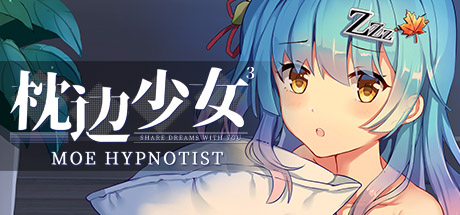
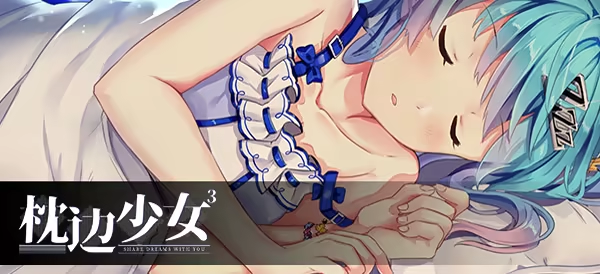
枕边少女 MOE Hypnotist – share dreams with you, developed by 橘子班 and published by PeriScope Game, is an intimate and emotionally driven visual novel that blurs the line between dreams and consciousness, reality and desire. It places the player in the perspective of an individual who encounters mysterious girls capable of sharing dreams through hypnosis. This premise allows the narrative to move fluidly between soft romance, psychological exploration, and the quiet melancholy of human connection. The game is designed around the idea of companionship—the kind that exists in the private, fragile space between sleep and wakefulness—and it succeeds in building an atmosphere that feels deeply personal. Each moment unfolds at an unhurried pace, encouraging the player to sink into its world of whispered confessions, quiet gestures, and introspective emotions.
Visually, the game adheres to the familiar conventions of anime-inspired storytelling, yet it distinguishes itself through its attention to emotional detail. The character art is expressive and finely shaded, with each heroine embodying a different facet of the story’s central theme: the longing to connect. The use of color and lighting plays a subtle but vital role, with warm hues dominating dreamlike sequences and cooler tones underscoring moments of doubt or distance. While the environments are limited, their simplicity reinforces the sense of isolation—every setting feels like a fragment of a dreamscape where the laws of space and time bend quietly around the characters. The carefully drawn CG scenes highlight key emotional moments, offering both tenderness and tension, though the reuse of backgrounds and static imagery occasionally reminds the player of the game’s limited production scale.
The narrative is divided into several routes, each focusing on a different girl and her relationship with the protagonist. These routes—such as those of 梧桐, 薄荷, and 可可—carry distinct emotional tones, from gentle warmth to quiet heartbreak. Each story explores not only romantic affection but also the emotional wounds that draw these characters together in the first place. Beneath the surface-level appeal of affection and hypnosis lies a reflection on loneliness and the human need for understanding. The dream-sharing mechanic becomes more than a plot device; it serves as a metaphor for intimacy and vulnerability, as the characters expose their truest selves in spaces where judgment cannot exist. The narrative pace is deliberate, unfolding through introspective dialogue and delicate shifts in tone rather than overt conflict, which may feel slow to some players but gives the story its contemplative rhythm.
Voice acting plays an essential role in bringing the experience to life. Each heroine is fully voiced, and the performances are delivered with an emotional subtlety that captures the quiet intimacy of the game’s atmosphere. Soft-spoken lines, hesitant laughter, and moments of silence are used effectively to create a sense of realism within the surreal premise. The background music complements this intimacy with a minimalist score built around piano melodies and ambient tones. The recurring lullabies and nocturnal soundscapes help to immerse the player in the dreamlike world, transforming ordinary dialogue into something that feels meditative. Though the soundtrack is relatively short, its repetition feels more like a lull than a flaw—it reinforces the cyclical nature of dreams and routine, echoing the emotional core of the narrative.
Gameplay in MOE Hypnotist follows the traditional structure of a visual novel. The player reads through branching dialogue, makes choices at key points, and unlocks different endings based on their decisions. These choices are often small yet carry emotional weight, reflecting the idea that relationships are shaped not by grand gestures but by quiet moments of understanding or misunderstanding. Each route features multiple endings, encouraging replayability for those who wish to explore every emotional variation. The structure is straightforward, lacking puzzles or mini-games, but this simplicity allows the player to focus entirely on the writing and performance. While the storylines are relatively short compared to larger-scale visual novels, the emotional density of each route ensures that the experience feels complete in its own right.
The writing, though uneven at times, displays a clear understanding of human emotion. Conversations between characters are often poetic yet grounded, mixing sweetness with melancholy. The hypnotism premise gives the writers the freedom to explore abstract ideas like identity and memory without losing the thread of intimacy. Some of the routes delve into surprisingly mature territory, exploring trauma, guilt, and self-perception beneath their romantic veneer. Yet despite these themes, the game avoids becoming overwrought; its emotional peaks are gentle and personal rather than melodramatic. Where the writing occasionally stumbles is in pacing—certain plot points resolve too quickly or fail to expand on interesting ideas, leaving the player wishing for greater depth. Nonetheless, the storytelling remains heartfelt and sincere, carried by its atmosphere and character dynamics.
Technically, the game runs smoothly and presents no significant issues. The interface is simple and accessible, featuring standard features like save slots, quick skip, and a backlog for revisiting dialogue. The art assets are high quality, and the transitions between scenes are seamless. However, the experience is currently limited to Simplified Chinese, which restricts accessibility for non-Chinese-speaking audiences. Given the strong emotional and linguistic nuances of the script, a full English translation would likely expand its reach considerably. As it stands, the game remains primarily a domestic title with a niche international audience.
Ultimately, MOE Hypnotist – share dreams with you is a quiet, introspective visual novel that prioritizes emotional authenticity over spectacle. It offers a delicate portrayal of intimacy and self-discovery, wrapped in the aesthetic comfort of anime-inspired storytelling. While it lacks mechanical variety and may feel short for players seeking a longer or more interactive experience, its combination of expressive artwork, immersive sound design, and emotionally charged writing creates a lasting impression. It captures the strange, fleeting quality of dreams and the tenderness of fleeting human connections. For players who value atmosphere, voice acting, and heartfelt storytelling over complexity, it stands as a memorable and soothing experience—a whispered story meant to be felt more than analyzed, drifting like a dream that lingers just beyond waking.
Rating: 8/10