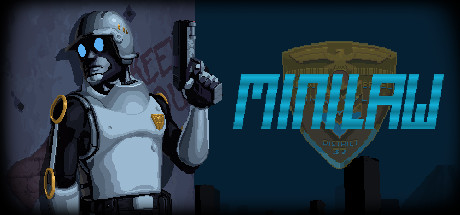
Roam the dystopian future city of New Babel, Mankind's Last Hope, in search of crimes in progress. Use lethal weapons, non-lethal force, and diplomacy to take down bad guys.
Modeled estimate, not a reported figure. How we estimate →
Discounts
Every price cut of more than 20% we have observed, in each market that quoted one, with this game's chart position on either side of it. These are episodes, not a model: a sale is one event, and one event cannot tell you what the next one will do.
Reviews, worldwide (the counter carries no country): 0/day in the week to Aug 4 → 0/day in the week after.
For scale, across Steam · Top Sellers · Brazil over the last 30 days: the 26 chart moves that followed a price cut of more than 20% went a median of 7 places towards #1, and the 2,400 moves with no price cut behind them went 2 away. One store, one chart, one country — it is the only place we have enough observations to say even that.
Prices outside the United States have been collected since 6 August 2026 and chart positions since 19 July 2026, so a cut older than that has no market to compare and a market that joined later has no history yet. Nothing here is converted between currencies.
About
Genres
Stats
Add-ons
Each DLC is estimated with the same model as a game, then summed — a modeled figure, not reported DLC sales.
Engagement
Reviews
Themes across 40 recent reviews and how positive each mention is. A keyword signal, not full sentiment analysis.
Reviews
up is jump, you need to aim in order to shoot your weapon and controls just suck for both KB+M and Controller, which is a shame because the game looks amazing.
After not playing it for a couple of days, i have completely forgotten it exists. The good: The bad: - controls There are too many controls and buttons. Controlling your constable is made more difficult because of it. By now, every platform game should have flawless controls but MiniLaw screws it up completely. Gamepad situation is a little bit better but forget keyb+m unless you've mutated an extra arm and a spare pair of left feet. - cheap and repetitive basic concept There is one bomb you need to locate and defuse, and there is one code you need before you can attempt this so you need the code first. One gang has the code in it's HQ. There are 3 HQs. There are 4 gangs. Each gang is involved in several criminal activities. You'll need to collect a clue or two on every mission related to a gang and it's activity... i am bored just writing this. Sure, you need to gather clues and evidence in order to progress with a terrorist investigation but this is proof-of-concept levels of below average, not really memorable or exciting design. Lots of games have bare bones that are exactly like this, but there's meat on the bone when the game is good. "Go through the motions and perform a sufficient number of missions before you can attempt the final one" I think FTL is more or less exactly that, but it tries to be memorable and engaging. MiniLaw is really a lot of nothing. - upgrades Doing well (or doing badly) rewards Requisition Points that can be spent on weapons, special ammo, cyborg body upgrades and skill upgrades. The game will be over long before you upgrade more than 10% so what is the point? I'm sorry to say the game is both too repetitive and too short. Like a meal that's crap but also too tiny at the same time. If you start with a car speed perk, you'll be far ahead of where you'd get if you spent points on the car upgrades. Time will run out before you get any good use of upgraded speed, and the reason to upgrade it is to save precious time. Who balanced this? - levels and enemies More "proof-of-concept" stuff here. GameMaker prototypes are on about this level. MiniLaw is more polished but the underlying level design is weak. I did enjoy the graphics. A bit. Some of the vision techniques are neat. but all this is moot. Go find the freeware game Iji by remar games. A platformer with simpler graphics, simpler controls and about a million times more ass that it kicks. You won't believe me unless you try to play it. Forget this.
Media

Related
Related
Price dynamics, follower growth, revenue and sales trajectories with interactive tooltips
This and every other Pro feature is free until October 20, 2026. A free account is all it takes.
All-time low is the lowest price we've recorded for this game since we started tracking it.
Languages: English**languages with full audio support
Hours played at review time, across 40 reviews with recorded playtime.
positive critical· bar length = how often the theme comes up
Action-platformer that blends tactical combat and real-time investigation as you race against the clock to find a bomb in the last remaining city on Earth. Set in a dystopian future where Earth has become a smoldering wasteland and a single mega-city remains, the game throws you into the boots of a Law Ministry officer tasked with maintaining order and, more crucially, stopping a nuclear terrorist before it’s too late. You start with basic movement, running, jumping, grabbing ledges, but the simplicity of these actions hides a deeper, more complex gameplay loop. There’s no stamina bar to slow you down, but overconfidence gets punished fast. Streets are teeming with hostile gang members, bullets fly quickly, and cover doesn’t last long. Thankfully, you’re not helpless. You have a dash ability to dart out of harm’s way, a rechargeable power meter that fuels your dash and shield, and a gun that can alternate between single fire and full auto. Ammo, though, is scarce. You’ll constantly be managing your magazine and scavenging for white-square-marked pickups scattered across mission zones. Run dry, and you’ll need to get personal by bashing enemies with your gun or wrestling them into submission with close-quarters grabs, punches, or head-butts. The shield mechanic sounds great, but it’s hard to use due to quick gameplay. While it consumes power like the dash, timing it perfectly lets you reflect enemy attacks. Not every situation has to end in bloodshed. Each enemy has a visible tri-bar display showing their health, stamina, and resolve. Drop their resolve, by shouting commands or overwhelming them, and they might surrender. You can also use fists to knock them out or take the lethal route. The game lets you choose how to handle each encounter, but gun turns out to be the best negotiating tactic. The best strategy is to move from cover to cover and shout when you’re close enough. If the criminal doesn’t react, you can fire a single shot into him to lower his stats. If another shout doesn’t help, you can try running into him with a punch or fire another bullet. Sometimes you’ll receive instructions to take someone alive, but these mini-objectives don’t matter. Enemy variety is interesting, and you’ll see brutes, military guys, secret agents, and even mutants. The overarching goal is to locate a nuclear bomb hidden somewhere in New Babel. Time is your enemy. The game offers three difficulty levels, each adjusting how much time you have to complete your mission and how much damage you can take. Missions pop up around the city, and you fly above it in real time, selecting where to go next. Each mission drops you into a map that might start looking too similar after a while. I’m not sure if it’s random, but there’s always a building with several floors. You’ll take out criminals, rescue hostages, and search for evidence. These pieces of evidence feed into your investigation of major gangs. One of them has the bomb, but you won’t know who until you’ve gathered enough intel, What’s more, time doesn’t stop. Whether you’re in a mission, traveling between objectives, or even healing in HQ, the clock is always ticking. Only hovering above the city or browsing menus gives you a breather. After several missions, it’s a good idea to return to HQ. You can resupply, repair, upgrade stats, or purchase unique gear, but everything costs requisitions. Requisitions, the in-game currency, are awarded during missions. Do things “by the book” and you’ll earn more. Execute a surrendering foe, and you’ll lose some. Health and ammo don’t replenish automatically, so planning is crucial. Dive into too many missions in a row without restocking, and you might find yourself under-equipped and outgunned. Beyond the missions, the game offers subtle world-building through the dispatch system. You can call various contacts by dialing numbers, some provided, some discovered from other sources. These conversations aren’t essential, but they add something extra to the game. Lastly, although achievements are included, they don’t appear to be working. For instance, I completed a mission without killing anyone and broke several windows, but none of the achievements unlocked.
Hidden gem terminator/robocop simulator. Campaign is great, sandbox is amazing. You feel like a dystopian cyber-cop. And it is AWESOME. Impactful and satisfying gunplay, with many different approaches. Juggernaut or tactical strategist? It depends- what do your stats look like? Powerful melee combat with lifts, grabs, grappling, throws, upgradeable stats of your choosing, buy implants with special capabilities to create your own unique playstyle (Auto-injector stimpaks, internal subwoofer for long-distance negotiation, maybe a neural implant to ignore pain?), specialise in different scenarios (negotiation or guns blazing? your choice). Play by the rules (although I use the word "rules" loosely) and you'll earn more requisition points- essentially, your money, which you use to buy new gear, implants and to repair yourself (you are mostly machine, after all). Or don't play by the rules- there's good cops and bad cops. Upgrade and improve your own personal cyber-cop. Take down criminal syndicates in the crime-infested New Babel, the last human settlement on the planet. Patrol a futuristic dystopia and commit obscene amounts of 2D badassery. Definitely 100% recommend. I can't think of anything more this game could possibly offer, a truly complete experience. A 10/10 indie gem.
MiniLAW: Ministry of Law is a bold and energetic indie action game that blends retro sensibilities with dystopian cyberpunk themes, offering an experience that feels both nostalgic and inventive. Developed and published by Lasso Games, the title places players in the role of a cybernetically enhanced law enforcer known as the Constable, tasked with maintaining order in the sprawling megacity of New Babel. From the start, the game establishes a world defined by excess, corruption, and perpetual crisis, drawing clear inspiration from classic science-fiction law enforcement stories while carving out its own identity through gameplay systems and tone. The setting of New Babel functions as more than a backdrop; it is the central engine that drives the experience. Crime is rampant and ever-present, and the city is divided into districts where different threats emerge dynamically. Rather than following a rigid mission structure, players are encouraged to patrol, respond to incidents, and decide how to confront unfolding situations. This open-ended approach gives the game a sense of unpredictability, as crimes can escalate or resolve depending on player intervention, reinforcing the fantasy of being an ever-watchful agent of the Ministry of Law rather than a scripted hero moving from level to level. Combat is fast-paced and multifaceted, combining side-scrolling shooter mechanics with platforming and tactical decision-making. The Constable’s enhanced abilities allow for powerful jumps, heavy strikes, and efficient gunplay, but success depends on positioning, timing, and awareness rather than raw firepower alone. Enemies come in many forms, from street gangs and armed criminals to more heavily armored or mutated foes, each requiring different approaches. The game encourages experimentation by offering both lethal and non-lethal options, rewarding players who arrest suspects and maintain order with greater efficiency rather than simply eliminating every threat. Progression in MiniLAW is handled through a flexible upgrade system that allows players to tailor their Constable to their preferred playstyle. Completing missions and responding to crimes earns resources that can be invested in improved weapons, defensive upgrades, and specialized modules that enhance mobility or crowd control. This progression system adds a strategic layer to the action, as players must decide which upgrades best suit their approach to policing the city. Over time, these enhancements significantly change how encounters play out, making the sense of growth tangible and satisfying. Visually, the game embraces a detailed pixel art style that captures the grit and vibrancy of its cyberpunk world. Neon-lit streets, towering structures, and chaotic urban environments create a strong sense of place, while character animations and effects convey impact and momentum during combat. The presentation balances clarity with flair, ensuring that the fast-paced action remains readable even during intense encounters. Complementing the visuals is a soundtrack infused with electronic and industrial influences, reinforcing the game’s high-energy tone and dystopian atmosphere. The difficulty curve in MiniLAW can be demanding, particularly for players unfamiliar with its mechanics. Early encounters may feel overwhelming as the game offers limited guidance, requiring players to learn through experimentation and failure. Controls can feel stiff at first, but with time they reveal a depth that supports precise movement and combat once mastered. This steep learning curve may deter some players, but for others it becomes a key part of the game’s appeal, making each successful encounter feel earned. Overall, MiniLAW: Ministry of Law is a distinctive and ambitious indie title that thrives on its combination of emergent gameplay, retro action, and cyberpunk worldbuilding. While it may show some rough edges in pacing and accessibility, its core systems are engaging and rewarding, especially for players who enjoy challenging action games with room for creativity and personal expression. By blending law enforcement fantasy with tactical choice and fast-paced combat, MiniLAW delivers an experience that stands out in the indie space as both a homage to classic influences and a confident statement of its own design vision. Rating: 7/10
Un p#tain de bijou.
The whole Judge Dredd thingy is cool, that you can apprehend people instead of gunning everything down is also great. But the controls are so insanely untight, that the game just feels like a chore to play.
It gets repetitive really quickly. Watch some unedited gameplay footage before buying.
Fun and unique little game
.
Selling now
See how fast this game is selling right now — estimated copies and revenue per day from recent review growth.
Players by region
Where this game's players are, estimated from review languages.
Related
| Game | Estimated lifetime revenue | Reviews | Review score | Price |
|---|---|---|---|---|
| $1.3K | 13 | 92% | $4.99 | |
| — | 0 | — | — | |
| $13M | 45.1K | 97% | $9.74 | |
| $760K | 9.5K | 87% | $3.74 | |
| $1.7M | 4.4K | 95% | $19.99 | |
| $953.2K | 3.5K | 90% | $17.99 |
Related
| Game | Estimated lifetime revenue | Reviews | Review score | Price |
|---|---|---|---|---|
| $51.4K | 408 | 83% | $7.49 | |
| $51.4K | 681 | 90% | $2.99 | |
| $51.4K | 201 | 72% | $8.99 | |
| $51.4K | 272 | 78% | $7.00 | |
| $51.3K | 433 | 49% | $4.99 | |
| $51.3K | 311 | 94% | $4.99 |