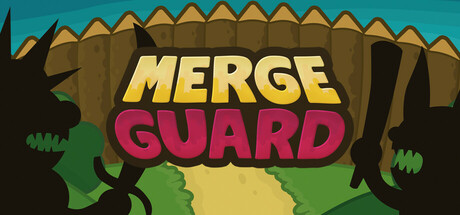
Defend your village from endless hordes of enemies! Merge resources, build your army, and upgrade your village in this fun and addictive casual game.
Modeled estimate, not a reported figure. How we estimate →
Media

About
Defend your village from endless hordes of enemies!
Merge resources, build your army, and upgrade your village in this fun and addictive casual game.
Genres
Stats
All-time low is the lowest price we've recorded for this game since we started tracking it.
Languages: English, Spanish - Latin America
Reviews
Very fun merge game. A little hard to figure out at first. I wish there was a few save slots. to have more than one saved game at a time. I love that there are achievements as well
Content There are two game modes: one is a pure merge game with quests and gold rewards; the other is a merge game where you have to create and equip fighters to defend the city. The money can be spent on minor upgrades for the fighters and on combat rewards. Positive - As soon as a new combination becomes available on the board, you receive a scroll explaining it. So you don’t have to experiment yourself. - The game mechanics themselves are well thought out and somewhat different. There’s definitely potential there. Negative - There is nowhere to look up the combinations. You have to remember everything. Some things are simple, like stacks of stone, coal, or wood, but weapons in particular are needed less frequently and you might forget them over time. An overview would have been useful. - Some items are mergeable but not splitable, such as the different people or the branches. This leads to two problems: → Once the city reaches the maximum level of 6, you rarely receive “basic” people and instead mostly get upgraded ones. However, the basic people are still frequently required for quest upgrades. → In the forest, for example, you don’t need branches as often, but you more frequently need boars and wood. Yet you receive about 50% branches. So both with people and branches, you constantly end up discarding items you don’t need. - This leads to the next issue: there is no shortcut for clearing slots. You have to drag every single item to the trash manually. This becomes really tedious considering you have to do it hundreds, if not thousands, of times. The achievement for discarding 1000 items is certainly not hard to get. - I started with the quest mode and initially had no idea what I was supposed to do until I eventually figured out that you need to drag items onto the city, the forest and the mine. Later I noticed that this is explained in the combat mode. Why not in the quest mode as well? - The quest mode exists purely to farm gold. What is the gold used for? Only to make the combat mode easier by equipping fighters better and making enemies more rewarding. It serves no purpose within the quest mode itself. But you cannot freely switch between quest mode and combat mode: switching resets your current progress (“New Game”). Since you naturally get better quests the longer you play, it really hurts to start over from scratch, including all necessary upgrades to mine, city, and forest. Why can’t this run in parallel? Especially since the quest mode has no purpose of its own and only supports the combat mode. When you get stuck there, you should be able to grind quests for a while. - The combat mode is exhausting. If you’ve previously learned in quest mode what you can and should build, it becomes somewhat easier, but eventually the enemies become too strong and you lose. One would expect to come out stronger afterward… but you don’t. While you can use gold upgrades to make enemies drop gold, the effect is so minimal and so expensive that it doesn’t pay for itself through combat. Each upgrade costs 300 gold just to give enemies a chance to drop 1 gold. Playing without the quest mode is therefore possible, but pointless, which brings us back to the question of why parallel save states for quest and combat modes aren’t possible. I tried. I really did try to like this game. But constantly having to start over, combined with the obstacles in quest mode that force you to keep discarding items, is just too much for me to invest more time in it. As long as this doesn’t change, the game isn’t worth the money, even on sale.
Merge Guard is a surprisingly enjoyable indie strategy game that combines merge mechanics with village defense in a way that feels simple at first but gradually becomes very addictive. Instead of trying to overwhelm players with complicated systems or high-pressure gameplay, the game focuses on creating a relaxing progression loop where every upgrade feels rewarding. It takes familiar mechanics from merge-style mobile games and blends them with light tower defense concepts, resulting in an experience that is easy to understand yet difficult to stop playing once the cycle of upgrading and defending begins. The gameplay revolves around protecting a village from incoming enemy attacks while constantly improving your defenses through merging units and collecting resources. Players combine similar warriors or structures to create stronger versions, allowing the settlement to grow more powerful over time. The controls are straightforward and the systems are introduced gradually, making the game accessible even to players who normally avoid strategy titles. There is very little frustration during the early hours because the game prioritizes steady progression and experimentation over punishing difficulty spikes. This relaxed design philosophy gives Merge Guard a cozy atmosphere that works well for casual gaming sessions. One of the game’s biggest strengths is the sense of progression it delivers. Every successful merge feels satisfying because it immediately results in stronger units or more efficient production. The gameplay loop is built around constant improvement, and the game does an excellent job of rewarding players frequently enough to maintain engagement. Watching a weak village slowly transform into a fortified settlement filled with upgraded defenders creates a strong sense of accomplishment. Even though the mechanics remain fairly simple, the consistent stream of upgrades makes the experience feel active and rewarding almost all the time. Visually, Merge Guard embraces a bright cartoon-inspired art style that perfectly fits its casual tone. The environments are colorful, character designs are charming, and the animations give the battlefield enough movement to keep everything visually appealing. The graphics are not technologically impressive, but the art direction succeeds because it gives the game personality. Many indie strategy games rely on generic fantasy aesthetics, but Merge Guard feels more inviting thanks to its cheerful presentation and smooth visual design. The clean interface also helps players manage resources and units without confusion, which is important in a game centered around constant upgrades and merging. The pacing of the game deserves praise as well. Unlike more intense tower defense titles that demand constant attention and precision, Merge Guard allows players to progress comfortably at their own pace. The battles become more challenging over time, but the game rarely feels stressful. This balance makes it especially appealing for players looking for a strategy game they can enjoy casually without committing to extremely long sessions or mastering complicated mechanics. It creates a relaxing gameplay flow where players can focus on optimization and growth instead of reacting to nonstop chaos. At the same time, the game’s simplicity can also become its biggest weakness after several hours. While the merging mechanics are satisfying, the gameplay does not evolve dramatically as the experience continues. Enemy encounters eventually begin to feel repetitive, and the overall strategy remains fairly limited compared to deeper tower defense or management games. There are moments where the gameplay loop starts feeling predictable because new mechanics are introduced slowly and the core formula changes very little. Players searching for complex tactical depth or highly varied combat scenarios may eventually feel that the experience lacks long-term substance. Content variety is another area where the game feels somewhat limited. Merge Guard works best as a lightweight indie experience meant for short or medium-length play sessions rather than endless replayability. While there are upgrades to unlock and systems to optimize, the game does not offer the enormous scale or complexity seen in larger strategy games. Fortunately, the developers appear interested in improving the experience through updates and additional features, which helps the game feel more supported and alive despite its modest scope. The sound design complements the gameplay nicely without drawing too much attention to itself. The soundtrack uses calm and upbeat melodies that reinforce the game’s relaxing atmosphere, while sound effects provide enough feedback to make merges and combat actions feel responsive. Nothing about the audio presentation is groundbreaking, but it fits the overall tone of the game effectively. The music succeeds at keeping the experience comfortable and lighthearted during extended sessions. What ultimately makes Merge Guard enjoyable is how well it understands its own identity. The game never tries to pretend it is a hardcore strategy masterpiece. Instead, it focuses entirely on being approachable, satisfying, and easy to enjoy. The combination of merge mechanics, village growth, and casual defense gameplay creates a loop that feels consistently entertaining despite its simplicity. It captures the same kind of satisfaction found in incremental or idle-style games where steady progression becomes the main motivation for continuing to play. Merge Guard may not offer enough depth for players seeking advanced strategy systems or endless content, but it succeeds at delivering a charming and addictive indie experience with strong casual appeal. Its accessible gameplay, colorful visuals, and rewarding progression systems make it an enjoyable title for fans of relaxing management and merge games. While repetition eventually becomes noticeable, the overall experience remains fun because the core gameplay loop is polished and satisfying enough to carry the game through its limitations. Rating: 6/10
Related
Related
Trends
Concurrent players on Steam, sampled daily since tracking started.
Momentum
Pace estimated from the game's recent review growth (our daily snapshots) at its own sales-per-review ratio — a momentum signal, not booked sales.
Related
| Candy Crush Saga | $2.3B | 38.9M | 93% | Free |
| My Talking Tom | $1.3B | 17.4M | 86% | Free |
| My Talking Tom 2: Pet Game | $1.1B | 6.7M | 86% | Free |
| My Talking Angela | $1.1B | 14M | 83% | Free |
| My Talking Tom Friends | $824.4M | 4.1M | 86% | Free |
| Talking Tom Cat | $647.3M | 2.9M | 81% | Free |
Related
| I Am The Prosecutor: No Evidence? No Problem! | $309.6 | 50 | 76% | $0.49 |
| Glasses and Girls | $315.6 | 51 | 82% | $0.99 |
| Bongo Quest | $322 | 52 | 46% | $0.49 |
| Dances and Girls | $322 | 52 | 83% | $0.99 |
| Anime Sunset Ride | $334.4 | 54 | 67% | $0.49 |
| Cosmic Journey PC Live Wallpaper | $336.3 | 52 | 71% | $0.49 |