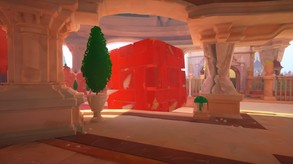
Maquette is a first-person recursive puzzle game that takes you into a world where every building, plant, and object are simultaneously tiny and staggeringly huge.
Modeled estimate, not a reported figure. How we estimate →
Media

About
Genres
Stats
All-time low is the lowest price we've recorded for this game since we started tracking it.
Languages: English, French, Italian, German, Spanish - Spain, Japanese, Korean, Polish, Portuguese - Brazil, Russian, Simplified Chinese, Spanish - Latin America +5 more
Engagement
Hours played at review time, across 44 reviews with recorded playtime.
Reviews
Themes across 44 recent reviews and how positive each mention is. A keyword signal, not full sentiment analysis.
positive critical· bar length = how often the theme comes up
Reviews
Maquette, developed by Graceful Decay and published by Annapurna Interactive, is a first-person puzzle adventure built around a singular, poetic idea: a world nested inside itself, endlessly repeating in shifting scales. The game revolves around a recursive model—an ornate miniature sitting at the center of each environment—and whatever you do to the model is echoed in the full-sized world around you. This creates an elegant foundation for a puzzle system where small actions ripple outward into enormous changes, and colossal obstacles can be influenced simply by repositioning their tiny counterparts. From the start, Maquette establishes itself as a game about perspective, not only in the literal geometric sense but also in its emotional storytelling. The narrative follows the rise and fall of a relationship between two people, Michael and Kenzie. Their story unfolds through vignettes, voiced with naturalistic intimacy, capturing the joy of connection, the weight of expectations, the private doubts, and the quiet heartbreak that often accompany long-term relationships. Rather than dramatizing events in traditional cutscenes, Maquette scatters fragments of their shared life throughout its environments—letters, sketches, transitional moments—asking players to piece together the emotional puzzle as surely as they solve the spatial ones. The world changes as the relationship changes: bright, whimsical colors give way to muted tones, open spaces grow vast and isolating, and the nested maquette that once felt magical begins to feel fragile. The environment itself becomes an emotional map. The puzzle design takes full advantage of the game’s recursive world. Players routinely face obstacles that seem impossible at first glance—a wall too tall to climb, a gate locked with a key nowhere in sight, a gap too wide to cross. The solution nearly always lies in shifting perspective: making use of the tiny model to create a giant object in the world, shrinking barriers by placing them inside the maquette, or leveraging scale to reach new paths. Early puzzles showcase the brilliance of this idea, often delivering moments of sudden clarity when the player realizes how two differently scaled versions of the same object can interact. The game is at its most satisfying when these puzzles feel like visual metaphors, reinforcing the theme that relationships often hinge on small adjustments that echo in bigger, unexpected ways. However, the elegance of the concept doesn’t always translate into consistently engaging gameplay. As the game progresses, the puzzles become more reliant on manipulating objects in ways that feel repetitive rather than inventive. Some sections amount to moving the same type of item back and forth between the model and the world until it fits the desired outcome, and the initial wonder of the recursion mechanic can diminish when its use becomes predictable. Additionally, the act of placing items with precision can be cumbersome. Because the game relies on careful positioning, even minor misalignment can lead to frustration, especially when navigating tight spaces or handling objects that don’t sit comfortably in the environment. The pacing contributes to these mixed feelings. Maquette is a relatively short experience, but its more meditative pacing sometimes clashes with moments where the player becomes stuck not because a puzzle is intellectually challenging but because the solution requires awkward manipulation of objects or trial-and-error interaction with scale. These instances can break the game’s emotional momentum, interrupting the otherwise seamless blend of narrative and spatial design. Yet even in these slower moments, the atmosphere remains compelling, largely thanks to its evocative soundtrack—a mixture of soft vocals, dreamlike instrumentals, and emotional swells timed to match the beats of the story. Visually, the game is striking. With its stylized architecture, vivid zones of color, and dreamlike transitions between environments, Maquette creates spaces that feel lived in yet abstract, familiar yet symbolic. Each chapter looks like a new representation of memory and emotion, and the world’s outward expansion or contraction mirrors the psychological journey Michael undergoes. The art direction successfully turns personal experiences into physical spaces, allowing players to inhabit the metaphor directly rather than simply observe it. By the time the story concludes, Maquette leaves a lingering impression. It is not a puzzle game designed to challenge the mind in escalating difficulty, nor is it a branching narrative with dramatic twists. Instead, it is introspective and conceptual—a reflection on how we grow with others, how relationships shape our perception, and how small shifts in emotional “scale” can redefine entire worlds. For players who appreciate games that merge mechanics and meaning, Maquette offers a thoughtful, sometimes melancholic experience. For those seeking tightly crafted puzzles or mechanical complexity, its simplicity and occasional clumsiness may be limiting. In the end, Maquette stands as a heartfelt and visually inventive exploration of memory, love, and perspective. Its recursive world is more than a clever design—it’s a metaphor made playable, a reminder that understanding often requires us to look at things from both the smallest and largest of scales. While imperfect in execution, the game’s ambition and emotional sincerity give it a resonant power that lasts long after the final puzzle is solved. Rating: 6/10
Movement in the game is very choppy and distracts from the gameplay. As other reviews have reported, this has been known since 2021 and doesn't seem to have been addressed. I've requested a refund.
terrible game but beautiful visuals; the story has good voice acting but glueing it together does not go well and feels artificial; it's similar in vibe to The witness which I also don't like, but nothing even close to Superliminal which is great and deals with similar mechanic of resizing objects; I returned it after the final nail in the coffin which was unblocking wall on the maquette to move through the big wall, it felt so stupid and contrived (the type of bad design puzzle kinda like find the needle in the heystack), just like the other puzzles; also bad performance despite simple graphics
I was really hoping this game would be similar to Superliminal. Only ever so slightly.... Not really sure if you need to be a romantic to enjoy this game? I mean I'm not made out of wood or anything but, dang this turkey blew. Surprised that i absolutely hated the characters from go considering they hired good talent. What's more than that was the actual gameplay that felt so sloooooow and rigid. the game gave up and crashed several times in the end chapter. Not using a crap computer either. Just a real disappointment. Not an entire surprise from Annapurna. They can be pretty hit or miss. If you are expecting a Superliminal-like, Save your time and money and avoid a potentially irritating experience. ugh. Life affirming garbage for simps that need to be reminded of crappy relationships they had. Barf.
So. I should say I recommend Maquette. Lightly. I'll start by what I didn't like about the game. The backstory is really cringy AF. You can skip it, and I was surely off the bandwagon by the 2nd time I heard them. The concept is cool, But I feel better used in other games. Some puzzles are excellent, some puzzles are clunky. But the fun balance is there. I made it through the end in less than 5 hours looking two times for help on the net (both times because the game wasn't clear about what it asked of me) I think there could have been a little more puzzles in the end game, ( The two Red-blues grids I could have had one or two more for example) It surely doesn't help that there is a bug in the very last chapter (as a developper myself, I deeply feel for the devs.) - No spoiler, the last chapter is a gem, and surely the reason it's so good is the reason why it's crashing to desktop. There is a workaround that helped me to get to the end, lower the graphics and set FOV to 90. The mixed status (as of now) should suffice to compensate my "recommend minus" that I don't shoot on the ambulance with a "don't recommend plus".
Didn't like it. Storyline was depressing as hell
TLDR: It's a walking simulator with an ok story with some interesting puzzle elements. This was a complicated review for me to write. Firstly, the game is very pretty. Secondly, it runs pretty smoothly, although I did have two issues. One puzzle had huge framerate drops, but was still playable, and I had one crash. Aside from that, it's important to know that this is very much a walking simulator, then a puzzle game in a very distant second. The story was Ok, I didn't find myself able to engage with it, but the unskippable cutscenes had me scrolling on my phone until they were over. Lastly, you'll want to manually save often, I got most of the way through one level before inadvertently doing something stupid and had to restart the whole level to undo that one mistake. Overall I would say it's an entertaining game as long as you understand they type of game you're getting into.
História muito boa, muito bonita, estilo de arte muito bom e super original, excelente trilha sonora, ambientação incrível, e com certeza uma ótima escolha pra passar raiva com puzzles sem sentido e confusos, toda a atenção que tiveram com o "roteiro" faltou com os puzzles, e por isso a maioria deles depois da metade do jogo é bem chato de fazer e te desafia a bugar o jogo pra passar. Mas vale a pena.
Idk. Disappointed they couldn't come up something original for a narrative, or at least not this played out storyline. The gameplay mechanics were neat and unique, but I'm glad I got it on sale.
这是我今年玩过的第一部不推荐作品,真的算得上被恶心到了,本人17,攥写评测时还有很多寒假作业,把这个时间本来想用在体验这部,看上去很像超阈限空间的作品上的,但现在我觉得我还真不如去把作业卷完。 接下来请听我娓娓道来。(如果你不知道这个游戏的玩法是如何,我推荐你先去看看攻略,真的,攻略很重要,既能帮助你知道这个游戏的玩法类型,又能帮助你很好的避雷很多坑点) 剧情:在这里我并不想剧透,简单来说,就是一对情侣的发展周期而已。尽管非常的唐突,并且会对读者你造成很大的打扰,但是我还是想说,这个游戏里面,两个人之间的冲突期还没我父母折腾呢。 操作:我必须、一定要诟病一下这一点,在游戏里左键负责抓取物品,右键负责调整物品的摆放位置,而物品的摆放位置在很多关卡是相当重要的比如说第五关有三根柱子的摆放,要求你利用它们组成一个楼梯爬到顶端。 那么如果你离物品太近,会怎么样呢? 答案是当你离物品太近的时候,左键和右键都是负责抓取物品!制作组成功的把一个按键无效化了!(不知是本人幻觉,还是实际确实有这个问题,这里的太近不一定是真的很近,说不定也可能很远,反过来,当你离物品太远的时候,也有可能很近),结合上面提到的物品的摆放位置非常重要,这就会使得你在摆放物品的时候,经常出现明明想要把物品的位置摆放好,但是东西却抓到手里头的情况,这个负反馈设计在前4关还好,在第5关这三根柱子这里尤为明显。 解谜难度:这个东西尽管因人而异,但是我仍然要诟病一下这一点。这个游戏的解谜能叫难吗?不,不能叫难(个人觉得第3关可以排外,第3关确实有难度,你需要把一个宝石从由另一宝石控制的半封闭空间里运出来,再运到又另外一个宝石控制的封闭空间里头去),应该算得上是无厘头。或者更确切的说是缺引导,我个人是对缺引导的解谜游戏相当深恶痛疾的,而这个游戏的缺引导程度已经离谱到了,我初见自己玩前前后后看了三次攻略才知道怎么过的地步。 在这里我要举出两个例子。 第1个也是我认为最不应该举出来的是第四关的最后一段。当你发现一个教堂里的顶上的钟响了,我觉得也许只有很少的人会考虑想到前往内部的微缩模型里点这个钟。当然这个也是因人而异,所以我不好评价。 第2个是第三关的最后一段。这里的最后一段需要你借助旁边的石头,跳出正常大小的围栏,然后走到外头去。之所以这里我觉得非常恶心,是因为在此之前,我专门在剩下的三个部分的墙上都走了一遍,围栏都有空气墙,结果在这个地方唐突搞了一个出图,让我一时想不到。 此外还有一个是第5关,有一个需要你拉小拉杆的地方,但是因为考虑到第2关也拉过,所以这里就不评价了,但是我觉得肯定会有人想不到。 小巧思和系统设计:(以下全为个人评价,不代表主流观点)我觉得这个是这个游戏最值得诟病,最恶心的地方。(尽管踩一捧一不可取,但以下内容并不是踩一捧一,而只是这两种相似的游戏进行比较)《superliminal》里,当你需要进行跳跃操作跳到高处的时候,是会有一个自动吸附的,这个只要玩过的肯定都知道。有些看上去跳不上去的地方,实际上按跳跃是可以靠自动吸附吸上去的。 这个游戏却完全相反,不仅没有自动吸附,还有反吸附,有些明明看上去能跳上去的地方,实际上按跳跃键的时候,可能模型没有够到吧,也可能就是设计问题吧,总之会被强制拉回来。这一点玩起来实在是相当反人类的。也许制作组当初考虑设计的时候,就没考虑到会有人像我一样在整个地图上乱蹦乱跳吧,这也可能是我的问题。 但这个游戏并不是没有好地方的,美术非常抓眼,音乐我觉得也能算得上说得过去。 兼容性和突发问题:这是我为什么现在在这里写这篇评测。就在刚才在第5关最后一段,我的所有操作都突然卡住了,最开始还只是wasd,后来连esc都卡住了。甚至最后连鼠标也没有放过。我个人觉得,这种问题对于破坏游戏体验来说还是挺严重的,更别提还是在我刚刚过了之前卡了我很久看攻略才过的三根柱子的时候。 总而言之,我个人的观点是,这是一个要剧情有一点点剧情,要美术有美术,要可玩性有美术打底,要兼容性有美术保驾护航的游戏,但是我还是不推荐。如果纯粹要比原价购买的话,你只需要多8块钱就可以去玩superliminal了。
Related
Related
Trends
Modeled estimate over time, reconstructed from Steam's monthly review histogram.
Audience
Estimated from the language of this game's reviews — a proxy for where players are, not official Steam demographics.
Related
| Never Give Up | $52.8K | 182 | 87% | $14.99 |
| Funbag Fantasy 3if | $52.8K | 57 | 96% | $44.99 |
| Trivia Vault: TV Trivia | $52.8K | 112 | 58% | $13.99 |
| Trivia Vault: Literature Trivia | $52.8K | 112 | 63% | $13.99 |
| Raid on Taihoku | $52.8K | 196 | 83% | $12.99 |
| Lazaret | $52.8K | 278 | 86% | $10.99 |