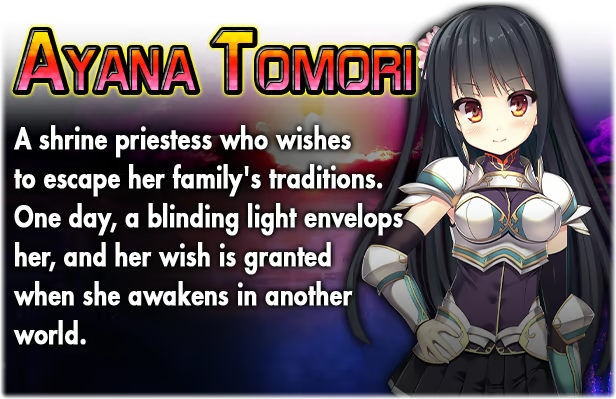

Ayana Tomori wishes for an escape from her regular life. One night, she's awoken by the sound of thunder, and a brilliant light envelops her. When her sight returns, she finds herself in a strange new world, where she's tasked with the role of a hero!
Modeled estimate, not a reported figure. How we estimate →
About


Stats
All-time low is the lowest price we've recorded for this game since we started tracking it.
Languages: English, Japanese, Simplified Chinese
Engagement
Hours played at review time, across 47 reviews with recorded playtime.
Reviews
Themes across 47 recent reviews and how positive each mention is. A keyword signal, not full sentiment analysis.
positive critical· bar length = how often the theme comes up
Reviews
感觉还行,流程也很长
Magna Fortuna, developed by DOPPELGESICHT and published by Kagura Games, is an ambitious blend of classic turn-based RPG structure and visual novel storytelling set within a high fantasy world of gods, demons, and destiny. The game follows the story of Ayana Tomori, a shrine maiden whose peaceful yet unfulfilled life is suddenly transformed when she is summoned to another world by the god Ashkelon. Tasked with restoring balance between humans, elves, and dwarves, Ayana must become a reluctant hero, learning to fight, lead, and make decisions that shape both her future and the fate of the world she’s been thrust into. What begins as a tale of divine intervention and duty gradually becomes a story about identity, empowerment, and the burden of expectation placed upon those chosen by higher powers. At its core, Magna Fortuna is built upon the familiar framework of a Japanese-style RPG. Players traverse a semi-open world composed of towns, forests, and dungeons, interacting with NPCs, completing quests, and engaging in turn-based battles. It carries many of the hallmarks of traditional RPGMaker titles—tile-based environments, 2D sprites, and menu-driven combat—but DOPPELGESICHT injects a notable degree of ambition into the formula. Exploration feels expansive, with an assortment of side quests and secrets scattered throughout, and a large cast of companions who each bring their own storylines and abilities. Characters such as the noble dragon priestess Eleanor, the stoic werewolf seamstress Angela, and the ancient elf princess Elise provide narrative diversity and distinct voices, each enriching Ayana’s journey with emotional subplots. These relationships become the emotional foundation of the game, grounding its worldbuilding with a sense of intimacy and personal growth. The combat system follows the traditional turn-based template but offers a degree of strategic flexibility through its progression mechanics. Instead of leveling up solely through experience points, players acquire special scrolls dropped by enemies that can be used to enhance specific stats or abilities. This system introduces a layer of choice, forcing players to decide which attributes or characters to strengthen and when to invest resources. It rewards thoughtful planning rather than blind grinding, giving players a sense of agency over their team’s development. The battles themselves rely on rhythm and timing—knowing when to attack, heal, or defend becomes essential, particularly during boss encounters that punish carelessness. While the mechanics are straightforward, they have enough depth to keep combat engaging without overwhelming the player. However, pacing can sometimes drag when repetitive encounters occur or when enemy difficulty spikes without sufficient narrative justification. Narratively, Magna Fortuna balances mythic grandeur with a grounded sense of humanity. Ayana’s journey mirrors the classic hero’s arc—an ordinary person forced into extraordinary circumstances—but what gives her story resonance is the emotional complexity beneath it. She struggles not only with external threats but with the weight of divine expectation and her own uncertainty about her place in this new world. The writing often juxtaposes moments of humor and tenderness with scenes of solemn reflection, giving the story a tonal variety that keeps it from feeling one-note. The game’s adult content is woven into the narrative rather than tacked on as a novelty. Romantic and sexual encounters are used as expressions of connection, vulnerability, and transformation, aligning with the game’s larger themes of destiny and choice. While explicit, these moments rarely feel gratuitous; instead, they serve to explore the characters’ humanity in a world that constantly challenges it. Visually, the game’s art direction captures a colorful yet melancholic fantasy aesthetic. Character portraits are beautifully illustrated, rich in detail and emotion, while environments evoke the mood of a classic JRPG—a mixture of quaint villages, ancient ruins, and foreboding dungeons. The visual contrast between divine temples and grim battlefields reinforces the theme of duality between light and darkness that runs throughout the story. Some environmental repetition and technical stiffness are evident, likely due to the constraints of RPGMaker’s engine, but the charm of the artwork and character design compensates for these shortcomings. The music complements the world nicely, with orchestral and ambient tracks that heighten the emotional impact of key scenes and battles. While the soundtrack is not particularly memorable on its own, it enriches the game’s atmosphere and contributes to the sense of immersion. As with many indie RPGs, Magna Fortuna’s ambition sometimes outpaces its execution. Certain quest lines are poorly signposted, requiring players to backtrack or interact with obscure NPCs to progress. The pacing can also fluctuate, with long stretches of dialogue followed by sudden bursts of combat or travel. Balancing is inconsistent in places, with some encounters proving unexpectedly difficult while others feel trivial. Despite these flaws, the overall structure remains cohesive enough to sustain interest. The story’s sincerity and the diversity of its cast help carry the game even when the mechanics falter. Kagura Games’ localization is functional but not flawless—some awkward phrasing and grammatical inconsistencies occasionally disrupt immersion—but the emotional tone of the story remains intact. Ultimately, Magna Fortuna is a passion-driven project that succeeds in capturing the spirit of a classic fantasy adventure while offering its own blend of character drama and sensuality. It is not a polished or groundbreaking title, but it exudes authenticity—a genuine attempt to tell a story about gods and mortals, love and sacrifice, and the struggle to find meaning in a world shaped by divine will. Its imperfections are balanced by its heart, and its simplicity becomes part of its charm. For players who appreciate character-driven RPGs with a mix of mythology, romance, and mature storytelling, Magna Fortuna offers a satisfying journey through a world both familiar and strange, filled with danger, beauty, and the quiet triumphs of human connection. Rating: 6/10
Personally, I'm not a fan of the levelling system. Instead of getting xp in a traditional sense, you instead randomly get these little crystals that you can use to increase stats. You generally need to use them right away because the enemies scale with you. This does mean though that you need to be spending them on the right people, or you can find yourself fall behind the curve as the enemies scale up. Also, enemies are incredibly dangerous from the get-go and are able to kill even your strongest characters in 2-3 hits. The way that the game incentives limiting the use of consumables is novel--each potion/drink use adds to the main character's bladder level--but that results in you having to have the main character relieve herself frequently in a little scene. I felt it got old -real- fast. I didn't feel like there was much variety in the poses in the CGs. There's also some unavoidable intense rape and torture. I also hope you have a defloration kink, because (for reasons) it happens every time. The game might be for you, but it wasn't for me.
* 裝備屬性不明,不能試穿試用 * 戰鬥系統倒吃甘蔗,不合一般的成長思維 * 任務說明與指引過於簡化,沒有攻略就會迷路 * 色色CG大量兼用卡,然後內文冗長,BGM又不夠煽情,很快就感覺疲乏 * 怪物的攻擊性極高,會窮追不捨。迴避戰鬥的聖水又容易揮發掉,探索地圖很容易演變成無限車輪戰
补票。听说是百合向才去玩的,打了纯洁通关,体验虽然不算差但也不能说很好,感觉这款游戏实际上是半成品。 作者在世界观上挖了很多坑,设定很庞大,但是完全没有在剧情中展开;对NPC和boss的塑造也不上心,boss基本就一两句话,连关键NPC都是一次性的,比如一开始去见的国王,给主角分发了任务之后,对话就只剩“呦,之后怎么样?”(矮人国王也是这句话),甚至都要决战了对话也没有更新。虽然是开放世界,但作者仅仅通过游戏内的“命运pedia”补充设定,而不是让玩家在对话和交互中了解这个世界,显得非常单薄。打完最终boss更是让人难受,直接结束游戏了,英雄凯旋就这,都没有通关存档和二周目,跟寸止一样。。[spoiler]合理怀疑是懒得更新对话了( [/spoiler] 战斗系统方面开局刷一下水井,体验还可以,如果不刷水井直接去做任务应该会卡在狼人那里。。 其实可以看出来作者想讲的故事是王道热血的,我也很喜欢这款游戏的设定,但可能是作者功力不足吧,对世界观和人物的塑造不行,并且有一些剧情比较俗套(经典挡刀,或者千钧一发主角救场),该催泪的地方没啥感觉,该燃的地方只能燃一半。作者新作源初之心就是男性主角了,有些可惜,百合+奇幻世界rpg这种题材太少了,有朋友能推荐几个吗?[spoiler](话说这可是小黄油诶,是不是对它要求太高了?!) [/spoiler]
想正常玩的话,需要注意两个点,一个是开挂,修改属性点,战斗做的泰拉了,还有一个是勤存档,不然打不过直接over又要重开,太折磨了,唯一的有点算是女角色还算可爱了
no suelo recomendar juegos, y menos de este genero, pero me parece avisar el juego esta aceptable, no es malo, aunque necesita arreglos 1- las misiones son poco claras (haz esto) pero mas alla de esa informacion, buena suerte como realizas la tarea, te pasaras mas rato corriendo sin saber que mierdas hacer que otra cosa 2- el sistema de combates ENTERO es una mierda, olvidate de jugar con dificultad a mas de 50%, hasta el mas mierder te puede matar de 1 golpe, el juego no tiene ningun sistema para huir de un combate una vez empezado, y el agro de los enemigos es brutal, te van a ver en casi todo el espacio que tu veas, y van a ir a por ti como misiles y son como un bueno pedo, vayas donde vayas te siguen no es raro que te ves en situaciones que te obliguen retroceder HORAS de juego, o que por un error de guardar pierdas todo el avance, es una locura, y desde que el juego empieza al momento en el que realmente puedes jugar son mas de 2h en general, el juego es jugable, no es malo, pero el vagar sin saber que mierdas tienes que hacer, o el sistema de combates, amargan bastante la experiencia
屎味巧克力 立绘和剧情都还凑合 CG素材复用的太多了 最恶心的是这个傻逼数值 纯牛魔用脚填的 打最后那个boss用修改器都打不过 玩完感觉浪费了10小时生命
我就这么说啊,在前期你只能打11,12滴血的时候,他给你设计10000滴血的boos,你自己品去吧,沙比游戏,而且没有引导巨差
我到底是来玩小黄油的还是来打怪的?!玩了一个小时半小时跑图半小时打怪,这游戏真的是小黄油吗?我要玩RPG不知道玩其他的吗?!
Related
Related
Trends
Modeled estimate over time, reconstructed from Steam's monthly review histogram.
Momentum
Pace estimated from the game's recent review growth (our daily snapshots) at its own sales-per-review ratio — a momentum signal, not booked sales.
Audience
Estimated from the language of this game's reviews — a proxy for where players are, not official Steam demographics.
Related
| Luxor: Amun Rising HD | $15.6K | 79 | 77% | $9.99 |
| sunny-place | $15.6K | 91 | 98% | $6.99 |
| Beyond The Evil | $15.6K | 58 | 83% | $12.99 |
| No Longer Home | $15.6K | 441 | 62% | $2.99 |
| The Legend of Pomodoro | $15.6K | 92 | 85% | $4.89 |
| Godly Corp | $15.6K | 58 | 76% | $7.99 |