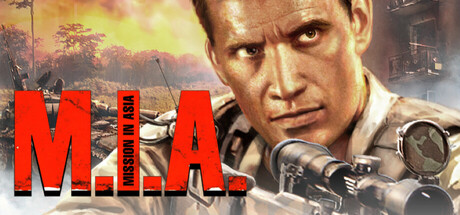
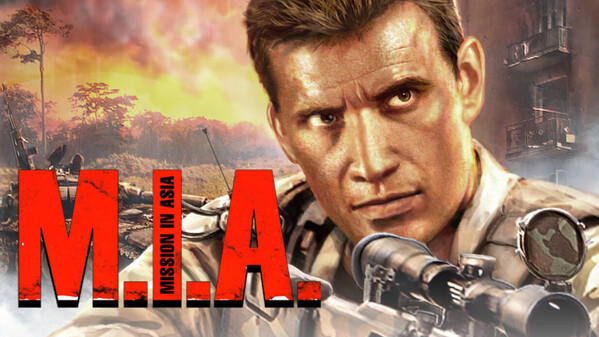
MIA: Mission in Asia is a compact military first-person shooter that reflects an older era of PC gaming, when smaller studios regularly produced straightforward action campaigns without relying on enormous maps, progression systems, or multiplayer-driven content. Developed by Burut Creative Team and published by Game Factory Interactive and Strategy First, the game focuses on a combination of military combat and espionage, delivering a relatively simple experience built around completing objectives and surviving frequent firefights.
The campaign revolves around political instability and intelligence operations involving the fictional territories of Primoria and Slavia. Russia's Federal Security Service discovers evidence suggesting that one of its operatives has switched allegiance and begun working for Primorian intelligence. The suspected agent escapes before authorities can capture him, creating a delicate situation where direct military intervention could escalate the conflict. A special operative is consequently sent to investigate and resolve the problem covertly. From there, the mission expands into a broader conspiracy filled with shifting loyalties and questions about who can actually be trusted.
Gameplay follows the traditional structure of a linear FPS. Players move through predetermined locations, eliminate hostile soldiers, complete mission objectives, and advance through the campaign. There are no elaborate character builds or extensive equipment-management systems to interrupt the action. Most situations revolve around selecting an appropriate firearm, finding useful positions, and dealing with groups of enemies blocking the route forward. This simplicity makes the game immediately accessible, although it also means that the quality of the experience depends heavily on the shooting and encounter design.
The weapon selection draws inspiration from recognizable military firearms and gives combat a grounded flavor. Shooting is generally functional rather than exceptionally refined, and the game tends to emphasize constant action instead of deep tactical simulation. Enemy numbers and placement can create reasonably intense encounters, but artificial intelligence is inconsistent. Opponents do not always react naturally to changing situations, and some battles feel more like scripted shooting galleries than encounters against intelligent soldiers. This becomes one of the clearest signs of the game's age.
Some welcome variety comes from specialized sequences that move beyond ordinary infantry firefights. Sniper scenarios encourage a more deliberate approach, while sections involving heavier weapons provide a change in scale and pacing. Tank-mounted weaponry and other combat situations temporarily interrupt the familiar cycle of advancing through environments and clearing groups of enemies. These additions are relatively simple, but they help keep the short campaign from becoming completely repetitive.
The level design is similarly straightforward. Military facilities, urban spaces, interiors, and other conflict areas provide functional battlefields without offering much freedom to explore. The environments guide players toward objectives and generally prioritize combat over discovery. This approach suits the game's focused structure, but players accustomed to modern shooters with expansive levels, alternate routes, environmental storytelling, and numerous optional objectives may find the stages restrictive.
Presentation is noticeably dated. Character models, textures, animations, environmental detail, lighting, and visual effects cannot hide the game's modest production values. Locations can occasionally appear sparse, and repeated assets reduce the individuality of certain areas. Sound effects and weapon audio perform their basic roles during combat, but the overall audiovisual presentation lacks the cinematic refinement of larger military shooters. For enthusiasts of older Eastern European PC games, however, these rough qualities may contribute to its nostalgic appeal.
One advantage of the game's limited scope is that it does not waste much time. Missions concentrate on combat and objectives, making the experience suitable for players who simply want an old-fashioned FPS campaign without crafting, loot systems, open-world activities, seasonal progression, or extensive customization. The downside is that there are relatively few mechanics to create additional depth once the shooting begins to feel repetitive.
Steam Deck compatibility is currently best regarded as unverified rather than officially supported. There is no established Steam Deck compatibility rating confirming a fully optimized handheld experience. Given the game's age and Windows-focused design, it may potentially run through Proton, but players should expect the possibility of configuration, control, resolution, or compatibility issues. Anyone purchasing specifically for Steam Deck use should therefore treat handheld functionality as uncertain rather than guaranteed.
MIA: Mission in Asia ultimately works best as a curiosity for players interested in lesser-known military shooters from an earlier generation. Its espionage-driven story gives the campaign some context, while conventional gunplay, sniper sequences, heavy weapons, and frequent encounters provide enough variety for a short playthrough. Weak enemy intelligence, restrictive levels, dated production values, and limited mechanical depth prevent it from becoming a standout FPS, but its direct approach has a certain appeal. For someone who enjoys discovering obscure PC shooters and can accept substantial technical and design aging, there is still some uncomplicated entertainment to be found here.
Rating: 6/10